
How we built this comparison
This comparison was crafted by a team of travel experts, synthesizing firsthand experiences, extensive research, and insights from thousands of travelers. We analyze each city across key metrics to provide a balanced and actionable guide for your trip planning.
- Reddit discussion analysis from r/travel, r/solotravel, and destination-specific subreddits
- Real-time cost data and flight routes
- Seasonal patterns and local insights


⚡ Quick Answers
📊 Visual Scorecard
⚡ The TL;DR Verdict
Ghent is better if you want a colorful, authentic city experience with diverse food and nightlife, fewer crowds, and a slightly lower cost. Bruges is better if you want a fairytale, romantic escape with postcard-perfect canals, medieval charm, and a more curated tourist experience. Budget: Ghent is generally 10-15% more affordable than Bruges, especially for accommodation and dining.
- Choose Ghent: Choose Ghent if you're a traveler who enjoys a busy, lived-in city feel, prefers off-the-beaten-path authenticity, seeks a chaotic student atmosphere, loves diverse culinary scenes, appreciates impressive architecture without overwhelming crowds, and wants to experience Belgian daily life.
- Choose Bruges: Choose Bruges if you're looking for a romantic, picturesque fairytale setting, prefer a slower pace, appreciate well-preserved medieval history, are a first-time visitor to Belgium seeking iconic sights, enjoy serene canal cruises, and don't mind a higher concentration of tourists.
- Budget snapshot: Ghent generally offers more budget-friendly accommodation and dining options, especially outside the direct city center. Bruges tends to be pricier, particularly for hotels and restaurants in its historic core, due to its high tourist demand.
Choose Ghent
Authentic local vibe, Energetic nightlife & food scene, Impressive medieval architecture, Fewer tourist crowds
Choose Bruges
Fairytale canals & cobblestone streets, Romantic atmosphere, UNESCO World Heritage site, Iconic Belgian chocolate & waffles
Quick Comparison
| Category | 🏝️ Ghent | 🏖️ Bruges | Winner |
|---|---|---|---|
| Overall Vibe | Busy, authentic, student-centric, artistic | Romantic, picturesque, fairytale, tourist-centric | Depends |
| Main Attractions | Gravensteen Castle, St. Bavo's Cathedral, Ghent Altarpiece, canals, street art | Markt Square, Belfry, Basilica of the Holy Blood, canals, Lake of Love | Tie |
| Food & Drink | Diverse, modern, vegetarian-friendly, craft beer, local pubs | Traditional Belgian cuisine, gourmet chocolate, waffles, mussels, cozy cafes | Ghent |
| Nightlife | Lively, lively bars & clubs, student scene, live music | Quieter, cozy pubs, romantic evening strolls, fewer late-night options | Ghent |
| Authenticity | More local, less touristy, everyday Belgian life | Highly preserved, but often feels like a living museum, very tourist-focused | Ghent |
| Cost of Travel | Generally 10-15% more affordable for accommodation & dining | Pricier, especially for hotels and restaurants in the historic center | Ghent |
| Getting Around | Excellent tram system, walkable city center, cycling-friendly | Extremely walkable, horse-drawn carriages, canal boats, cycling-friendly | Tie |
| Accommodation | Wide range of boutique hotels, B&Bs, hostels; good value | Charming boutique hotels, upscale B&Bs often higher prices | Depends |
| Best Time to Visit | Spring (April-May) & Fall (Sept-Oct) for mild weather & fewer crowds | Spring (April-May) & Fall (Sept-Oct) for pleasant weather; December for Christmas markets | Tie |
| Crowd Levels | Fewer tourist crowds, especially outside peak season & weekends | Can get very crowded, especially during peak season, holidays, and weekends | Ghent |
| Day Trips | Good base for Antwerp, Brussels, Mechelen | Good base for Ghent, Damme, Belgian coast, Ypres | Tie |
🏛️ Main Attractions & City Vibe

Ghent has a raw, authentic energy that often surprises first-time visitors. Its medieval core, centered around the excellent 'Three Towers' (Belfry, St. Bavo's Cathedral, St. Nicholas' Church), offers monumental architecture without the overwhelming crowds found in Bruges. Don't miss the imposing Gravensteen Castle, a medieval fortress with a fascinating history, or the world-renowned Ghent Altarpiece by the Van Eyck brothers inside St. Bavo's. The city also has a dense street art scene, particularly along the Werregarenstraat, known as 'Graffiti Alley'.
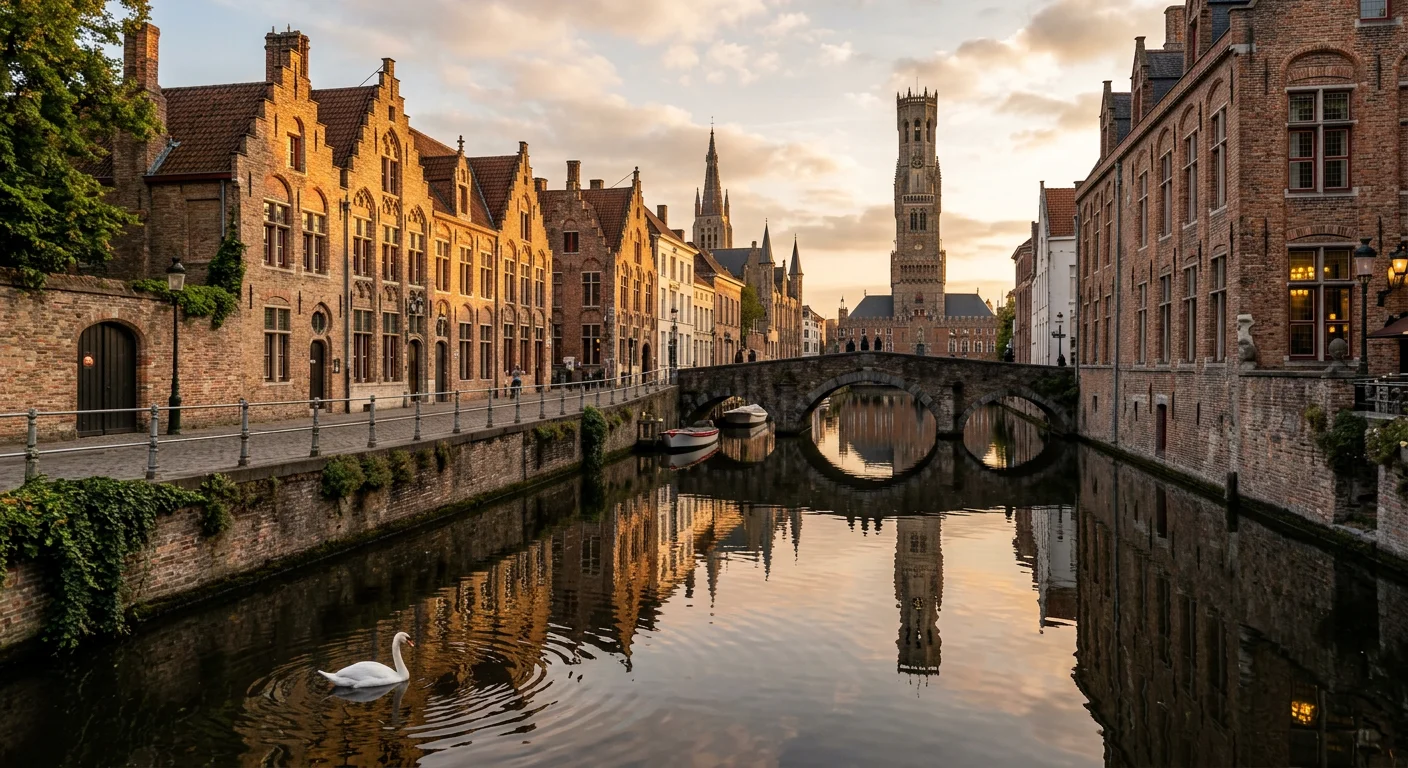
Bruges, on the other hand, is the quintessential 'fairytale city'. Its UNESCO-listed historic center is a perfectly preserved medieval dream, with picturesque canals winding past gabled houses and cobblestone alleys. Key sights include the iconic Belfry of Bruges, offering panoramic views from its 83-meter height, the noisy Markt Square, and the serene Lake of Love (Minnewater). While undeniably beautiful, Bruges can feel like a living museum, especially during peak tourist season, which sometimes detracts from its authenticity for some travelers.
Both cities offer charming canal tours, but Ghent's often feel more integrated into a working city, while Bruges' tours highlight its perfectly preserved medieval beauty. Ghent's nightlife, fueled by its student population, is more robust and diverse than Bruges' quieter, more romantic evening atmosphere.
- Winner: Depends
- Why: Ghent for authentic urban exploration, Bruges for a romantic, picturesque escape.
- Who this matters for: This matters for travelers seeking either a colorful city experience (Ghent) or a serene, photogenic medieval setting (Bruges).
🍽️ Food & Drink Scene
Ghent's culinary scene is incredibly diverse and neon-lit, reflecting its young, student population and progressive outlook. You'll find everything from traditional Flemish eateries serving hearty stews (stoemp) to innovative vegetarian and vegan restaurants (Ghent was the first city in the world to declare a weekly 'Veggie Day'). The city is also a hotspot for craft beer, with numerous pubs and bars offering an extensive selection of local and international brews. Expect a typical dinner to cost around €20-30 per person at a mid-range restaurant.
Bruges, while not as cutting-edge as Ghent, excels in traditional Belgian delicacies. It's the perfect place to indulge in world-famous Belgian chocolates, with countless artisanal chocolatiers lining its streets (think 'The Chocolate Line' or 'Dumon Chocolatier'). Waffles, mussels with fries (moules-frites), and traditional Flemish stews are abundant. Dining tends to be slightly more expensive, with main courses in the historic center often starting around €25-35. The beer scene is robust, focusing on classic Trappist and Abbey ales available in cozy, historic pubs.
Both cities offer fantastic opportunities for indulging in local treats, but Ghent leans more towards culinary innovation and diverse options, while Bruges embraces its traditional gastronomic heritage. Ghent's 'Patershol' district is particularly known for its concentration of excellent restaurants.
- Winner: Ghent
- Why: Ghent offers greater culinary diversity, innovation, and value, especially for diverse dietary needs.
- Who this matters for: Foodies, vegetarians/vegans, and travelers looking for diverse dining experiences and good value will prefer Ghent.
💰 Cost of Travel
When comparing travel costs, Ghent generally comes out as the more budget-friendly option. Accommodation, from hostels to mid-range hotels, tends to be 10-20% cheaper than comparable options in Bruges. For instance, a comfortable double room in Ghent might cost €90-130 per night, whereas in Bruges, expect to pay €120-180 for similar quality. Dining and drinks also offer better value, especially outside the main tourist areas, with many student-friendly eateries.
Bruges' popularity as a top tourist destination means higher prices for virtually everything. Accommodation, particularly within the historic center, can be quite expensive, especially during peak season or weekends. A simple meal can easily cost €20-25, and attractions sometimes have slightly higher entrance fees. However, if you plan to visit multiple museums, consider the Musea Brugge Card, which offers good value at around €38 for 72 hours of access to several museums.
Transportation costs between the cities are minimal – a train ticket between Ghent and Bruges is around €7-8 and takes only 25 minutes. Overall, a budget traveler might find their daily expenses in Ghent to be €70-100, while in Bruges, it could easily climb to €100-150 per day, excluding significant splurges.
- Winner: Ghent
- Why: Ghent offers better value for accommodation, dining, and overall daily expenses.
- Who this matters for: Budget-conscious travelers, backpackers, and anyone looking to stretch their Euro further will find Ghent more appealing.
🚉 Getting There & Around
Both Ghent and Bruges are incredibly well-connected by Belgium's efficient train system, making them easily accessible from Brussels, Antwerp, or even internationally. Trains from Brussels Midi (Zuid) to Ghent Sint-Pieters take about 30-40 minutes (approx. €9-10), while trains to Bruges take approximately 1 hour (approx. €15-16). Direct trains also run from Brussels Airport (BRU) to both cities, making arrivals straightforward.
Once in Ghent, the city center is a pleasant 20-30 minute walk from Sint-Pieters station. Alternatively, you can hop on a tram (lines 1, 3) or a bus directly to the heart of the city (a single ticket costs around €2.50). The historic core itself is very walkable, and Ghent is also very bicycle-friendly, with numerous rental shops. The compact size of the center means most attractions are within easy reach on foot.
Bruges is famously walkable, with its historic center being quite compact and pedestrian-friendly. The main train station is just a 15-minute walk from the Markt Square, or you can take a local bus (De Lijn) which runs frequently. Cycling is also a popular way to explore, with scenic paths along the canals. Horse-drawn carriage rides offer a charming, albeit touristy, way to see the sights.
- Winner: Tie
- Why: Both cities offer excellent accessibility by train and are highly walkable within their historic centers.
- Who this matters for: Travelers prioritizing easy transportation and pedestrian-friendly exploration will find both cities convenient.
🏨 Accommodation Options
Ghent provides a diverse range of accommodation choices to suit various budgets and preferences. You'll find charming boutique hotels tucked away in historic buildings, modern design hotels, and several well-regarded hostels catering to younger travelers. Popular areas to stay include the lively Patershol district for its restaurants and historic charm, or near the Ghent Sint-Pieters train station for convenience. Expect to find comfortable mid-range hotels for €90-140 per night.
In Bruges, the focus is largely on romantic and charming boutique hotels, often housed in beautifully restored medieval buildings. There's a strong emphasis on ambiance and luxury. While there are a few hostels, the city primarily caters to couples and those seeking a more upscale experience. The best areas to stay are within the historic center, particularly near the Markt or along the canals, to fully immerse yourself in the fairytale atmosphere. Prices are generally higher, with mid-range hotels often starting from €120-180 per night.
Booking in advance is highly recommended for both cities, especially during peak season (summer) and weekends, to secure the best rates and availability. Ghent offers more options for budget travelers and a wider variety of styles, while Bruges specializes in quaint, romantic stays.
- Winner: Depends
- Why: Ghent offers more diverse and budget-friendly options, while Bruges specializes in romantic, charming boutique stays.
- Who this matters for: Budget travelers and those seeking variety will prefer Ghent; couples and luxury seekers will favor Bruges.
🗓️ Best Time to Visit
The shoulder seasons (April-May and September-October) are generally the best times to visit both Ghent and Bruges. During these months, the weather is pleasantly mild, ideal for walking and exploring, and the tourist crowds are noticeably thinner than in summer. Spring brings blooming flowers, especially in Bruges' parks and gardens, while autumn offers beautiful foliage and a cozy atmosphere.
Summer (June-August) is peak season, with warmer temperatures and longer daylight hours, but also the largest crowds and highest prices for accommodation. If you visit during summer, try to explore early in the morning or late in the afternoon to avoid the busiest times. Winter (November-March) can be cold and damp, but also magical, especially for the Christmas markets in December. Both cities host charming markets, though Bruges' is particularly famous.
For festivals, Ghent is renowned for the Ghent Festivities (Gentse Feesten), a 10-day street festival in July, transforming the city into one huge party. Bruges hosts several cultural events throughout the year, but none on the scale of Ghent's festivities. Consider these events if you want to experience a unique local atmosphere, but be prepared for larger crowds and higher costs.
- Winner: Tie
- Why: Both cities are best enjoyed during the shoulder seasons for mild weather and manageable crowds, with unique events in summer/winter.
- Who this matters for: Travelers who prefer pleasant weather and fewer crowds should aim for spring or fall; those seeking specific festivals or holiday charm will have peak-season options.
🗺️ Day Trips & Surroundings
Ghent's central location in Flanders makes it an excellent base for exploring other Belgian cities. From Ghent Sint-Pieters station, you can reach Antwerp in just 35-45 minutes, known for its fashion, diamond district, and lively port. Brussels is also easily accessible, taking about 30-40 minutes, offering the capital's Grand Place, Atomium, and extensive museums. The historic city of Mechelen is another great option, reachable in about 40 minutes by train. These easy connections mean you can comfortably use Ghent as a hub for several days of exploration.
Bruges is also well-positioned for interesting day trips, particularly to the Belgian coast or nearby historical sites. The charming medieval town of Damme is just a short bus ride or pleasant bike ride away, offering windmills and picturesque scenery. For a poignant historical experience, the WWI battlefields and memorials around Ypres (Ieper) are about an hour away by train. The Belgian seaside towns like Ostend (Oostende) are also easily reachable for a coastal escape. Naturally, Ghent itself is a very popular day trip from Bruges, taking only 25 minutes by train.
The choice of base depends on your primary interests: Ghent is better for urban exploration and larger cities, while Bruges is ideal for coastal towns, WWI history, and smaller, charming villages. Both offer distinct but equally rewarding opportunities for venturing beyond their city limits.
- Winner: Tie
- Why: Both cities serve as excellent bases for day trips, offering different types of nearby attractions.
- Who this matters for: Travelers interested in varied regional exploration will find both cities equally suitable for different types of excursions.
🎉 Nightlife & Entertainment
Ghent shines in its nightlife, largely thanks to its large student population (Ghent University is one of Belgium's biggest). The city has a lively and diverse bar scene, ranging from traditional Belgian pubs serving hundreds of beers to trendy cocktail bars and buzzing student cafés. Areas like the Vrijdagmarkt, Korenmarkt, and the streets around the university are particularly colorful after dark. You can also find live music venues, cinemas, and theaters, ensuring there's always something happening into the late hours.
Bruges' nightlife is significantly quieter and more geared towards romantic evenings and cozy drinks. You won't find chaotic clubs or a wild party scene here. Instead, Bruges offers a selection of charming, historic pubs where you can enjoy a local beer in a relaxed atmosphere, often by a crackling fireplace in winter. Many restaurants close relatively early, and after 10 PM, the city becomes beautifully serene, ideal for peaceful strolls along the illuminated canals. Expect to be in bed earlier in Bruges than in Ghent.
If you're seeking lively evenings, late-night entertainment, and a youthful buzz, Ghent is undoubtedly the better choice. If your idea of nightlife is a quiet, intimate drink with a view or a romantic walk under the stars, Bruges delivers perfectly.
- Winner: Ghent
- Why: Ghent offers a more lively, diverse, and energetic nightlife, catering to a wider audience, especially students.
- Who this matters for: Young travelers, solo travelers, and anyone looking for lively evenings, bars, and clubs will prefer Ghent.
🛡️ Safety & Solo Travel
Both Ghent and Bruges are generally considered very safe cities for travelers, including solo adventurers. Belgium has a low crime rate, and violent crime is rare. Common sense precautions apply, such as being aware of your surroundings, especially at night, and safeguarding your belongings against pickpockets in crowded tourist areas or on public transport. Walking alone at night in the main tourist and residential areas of both cities is usually safe.
In Ghent, while generally safe, like any larger city, there can be areas near the train station or specific nightlife zones where you might encounter more petty crime or feel less comfortable late at night. However, the historic center and university areas are very secure. The city's student population often means there are people out and about at all hours, contributing to a sense of safety.
Bruges, being smaller and more tourist-focused, feels exceptionally safe. The city is often described as having a very low crime rate, and the main concern for tourists is usually pickpocketing in very crowded spots like the Markt Square or during major festivals. Its tranquil nature makes it a very appealing destination for solo female travelers or those who prefer a very relaxed and secure environment.
- Winner: Tie
- Why: Both cities are very safe for travelers, with similar common-sense precautions applicable.
- Who this matters for: Travelers prioritizing personal safety will find both destinations equally reassuring.
🛡 Dig deeper: Ghent scam guide · Bruges scam guide
🤔 Authenticity vs. Tourist Experience
One of the biggest differentiators between Ghent and Bruges lies in their balance of authenticity versus a curated tourist experience. Ghent is a lively, working city with a substantial local population and university students. While it has magnificent historical sights, they are seamlessly integrated into daily life. You'll find fewer souvenir shops and more local businesses, giving you a genuine glimpse into contemporary Belgian culture. This makes Ghent feel more 'authentic' and less 'touristy' to many visitors.
Bruges, while undeniably beautiful and historically significant, has fully embraced its role as a premier tourist destination. Its entire historic center feels meticulously preserved and presented for visitors, sometimes leading to a 'living museum' effect. The high concentration of souvenir shops, waffle stands catering exclusively to tourists, and horse-drawn carriages can, for some, detract from a sense of local authenticity. However, for those seeking a good-looking, hassle-free immersion in medieval charm, Bruges excels at delivering this curated experience.
Your preference here largely defines which city you might enjoy more. If you want to feel like a local, discover hidden gems, and experience a city that feels genuinely lived-in, Ghent is your choice. If you desire an iconic, romantic, and beautifully preserved medieval backdrop, even with the tourist infrastructure that comes with it, Bruges is perfect.
- Winner: Ghent
- Why: Ghent offers a more authentic, lived-in city experience with fewer overwhelming tourist amenities.
- Who this matters for: Travelers prioritizing local immersion, discovering non-touristy spots, and experiencing a working city will prefer Ghent.
🤝 Why Not Both? & Decision Framework
Given their proximity and excellent train connections, visiting both Ghent and Bruges is not only feasible but highly recommended, especially if you have 3-5 days in Belgium. They offer complementary experiences that together provide a comprehensive view of Flemish charm. Many travelers choose to base themselves in one city (often Ghent for its lower costs and dense nightlife) and take a day trip to the other. A train journey between them takes only 25 minutes, making it incredibly easy to switch between the two distinct atmospheres.
To decide which to prioritize or base yourself in, consider your travel style: Are you a romantic at heart seeking picturesque beauty, or an urban explorer craving local vibes and diverse culture? Is budget a primary concern, or are you willing to splurge for a specific aesthetic? Do you prefer a lively evening scene or quiet, charming nights?
Ultimately, both cities are treasures. If time is short (e.g., a one-day trip from Brussels), Bruges might offer a more immediate 'wow' factor and iconic sights. If you have more time and want to delve deeper into Belgian life, start with Ghent, soak in its energy, and then enjoy a serene day or two in Bruges. Combining them offers the best of both worlds: Ghent's dynamism and Bruges' charming tranquility.
- Winner: Tie
- Why: The cities are complementary, and visiting both offers a richer, more diverse Belgian experience.
- Who this matters for: All travelers can benefit from considering both cities to tailor their trip to their specific interests and time constraints.
🎯 The Decision Framework
Choose Ghent If…
- You want significantly lower costs for food, drinks (local beers often under €5), and accommodation.
- You seek diverse dining, from global street food to traditional Belgian, not just tourist-focused menus.
- You prefer a vibrant nightlife, with student bars and live music options open late.
- You want to experience a city with fewer tourist crowds, even in summer.
- You appreciate an authentic, 'lived-in' urban atmosphere rather than a polished one.
- You enjoy exploring a larger city with more expansive areas beyond the immediate center.
- You want to feel like a local, using public transport and discovering less-known spots.
- You enjoy a blend of medieval architecture with modern art and design elements.
Choose Bruges If…
- You want the iconic, postcard-perfect canal views and medieval squares.
- You're seeking a highly romantic and tranquil escape for a couple.
- You prefer a compact, pedestrian-friendly city where everything is within a 15-minute walk.
- You appreciate a meticulously preserved medieval city, almost like a living museum.
- You enjoy curated tourist experiences, including horse-drawn carriage rides and boat tours.
- You're comfortable with higher prices for meals, drinks, and souvenirs for the ambiance.
- You prioritize quiet evenings, perhaps with a nice dinner and a stroll, over lively bars.
- You want to indulge in high-quality Belgian chocolates and traditional lace.
- You desire a fairytale-like setting, even if it means more fellow tourists.
💰 Daily Cost Breakdown
| Expense | Ghent | Bruges |
|---|---|---|
| Hostel dorm | €30-50 | €35-60 |
| Budget hotel | €80-130 | €100-180 |
| Street food meal | €5-10 | €6-12 |
| Restaurant meal | €20-40 | €25-45 |
| Beer/drink | €4-7 | €5-8 |
| Local transport (day) | €7-10 | €6-9 |
| Daily budget total | €70-120 | €85-150 |
Approximate daily costs for 2026. Actual prices vary by season and travel style.
🌤️ Monthly Weather Comparison
| Month | Ghent Temp | Ghent Rain | Bruges Temp | Bruges Rain |
|---|---|---|---|---|
| Jan | 6°C/43°F | 70mm | 6°C/43°F | 70mm |
| Feb | 7°C/45°F | 60mm | 7°C/45°F | 60mm |
| Mar | 10°C/50°F | 60mm | 10°C/50°F | 60mm |
| Apr | 14°C/57°F | 45mm | 14°C/57°F | 45mm |
| May | 18°C/64°F | 60mm | 18°C/64°F | 60mm |
| Jun | 21°C/70°F | 70mm | 21°C/70°F | 70mm |
| Jul | 23°C/73°F | 75mm | 23°C/73°F | 75mm |
| Aug | 23°C/73°F | 70mm | 23°C/73°F | 70mm |
| Sep | 19°C/66°F | 65mm | 19°C/66°F | 65mm |
| Oct | 14°C/57°F | 75mm | 14°C/57°F | 75mm |
| Nov | 9°C/48°F | 80mm | 9°C/48°F | 80mm |
| Dec | 6°C/43°F | 75mm | 6°C/43°F | 75mm |
Average monthly high temperatures and rainfall based on historical climate data.
Made your choice?
See documented tourist scams for Ghent or Bruges — exact scripts, red flags, and the moves that stop them.
Browse travel-safety books →❓ Frequently Asked Questions
How many days should I spend in Ghent and Bruges?
For Bruges, 1-2 full days are usually sufficient to see the main attractions and soak in the atmosphere. For Ghent, 2-3 full days allow for deeper exploration of its sights, museums, and colorful neighborhoods. If visiting both, allocate 3-5 days for a relaxed pace.
Is one city better for families with children?
Both cities are family-friendly, but Bruges might have a slight edge due to its smaller, more manageable size and whimsical appeal. Children often enjoy the canal cruises, horse-drawn carriages, and the general fairytale vibe of Bruges more immediately. Ghent offers the Gravensteen Castle which is a big hit with kids too.
Can I do a day trip to either city from Brussels?
Absolutely! Both Ghent and Bruges are popular day trips from Brussels due to Belgium's excellent train network. A train to Ghent takes about 30-40 minutes, and to Bruges about 1 hour. You can even combine them into a longer day trip, visiting Ghent in the morning and Bruges in the afternoon, although it would be a fast-paced day.
Which city is cheaper for accommodation and food?
Ghent is generally more affordable than Bruges. Accommodation in Ghent tends to be 10-20% less expensive, and dining options, especially outside the main tourist areas, offer better value due to the large student population. Bruges caters more to luxury tourism, driving up prices.
Which city has better chocolate and waffles?
Both cities offer incredible Belgian chocolate and waffles! Bruges is arguably more famous for its sheer number of artisanal chocolatiers and a more curated experience for tourists. Ghent also has excellent options, but perhaps less of a concentrated 'chocolate district.' You'll find delicious waffles in both; it's hard to go wrong!
Is one city more walkable than the other?
Both cities are incredibly walkable. Bruges' historic center is very compact, making it feel like everything is just a few steps away. Ghent's core is also highly walkable, though slightly larger. Both are pedestrian-friendly, but Bruges might feel marginally easier to navigate entirely on foot for first-timers.
What about Christmas markets?
Both Ghent and Bruges host charming Christmas markets in December. Bruges' Christmas market is particularly renowned for its picturesque setting in the Markt Square, offering a magical, fairytale atmosphere with ice skating and festive stalls. Ghent's market is also extensive, spreading across multiple squares and offering a more 'local' festive feel.
Which city is better for art and culture lovers?
Ghent might appeal more to art and culture lovers with its impressive fine art museum (MSK), the contemporary art museum (S.M.A.K.), and the world-famous Ghent Altarpiece. Its street art scene and various festivals also add to its cultural vibrancy. Bruges has excellent museums too, focusing more on Flemish Primitives and medieval history, but Ghent offers a broader spectrum of artistic expression.
How many days do I need in each city?
Ghent: 1-2 days for the city (Saint Bavo Cathedral with the Mystic Lamb + Gravensteen Castle + Graslei waterfront + Patershol neighborhood + evening at De Dulle Griet). Bruges: 2-3 days for the city (Markt + Belfry + Burg + canal cruise + Beguinage + Lake of Love + chocolate stops + brewery tour). Combined ideal: 4-5 nights total — 2 nights Ghent + 2 nights Bruges. Or use Brussels as a base and day-trip both.
Where should I stay in each city?
Ghent: Patershol (medieval district with cobblestone streets, boutique stays €90–180/night), Korenmarkt area (central, walking to all sites), or near Sint-Pieters station (cheaper, modern, 10min walk to centro). Bruges: within the historic core inside the canal ring (boutique €110–250/night, walking distance to Markt, Belfry, and Beguinage), or near Brugge train station (cheaper, 15min walk to Markt). Avoid Bruges's outer-suburban hotels.
What's the deal with the Ghent Altarpiece?
The Ghent Altarpiece (also called the Adoration of the Mystic Lamb) by Jan and Hubert van Eyck is one of Western art's most important works (1432). It's housed in Saint Bavo's Cathedral, viewing costs €16 with audio guide (skip-the-line tickets recommended). After a 12-year restoration (completed 2021), the panels look closer to their original colors. Its history is dramatic: stolen by Nazis, recovered by the Monuments Men, and a single panel (the Just Judges) is still missing from a 1934 theft. Worth 1-2 hours.
Is Bruges actually a 'tourist trap' or worth the visit?
It's both. Bruges receives 8 million tourists annually for a city of 120,000 — peak season (May-September, weekends, public holidays) the historic core feels crowded and chocolate shops/restaurants are tourist-priced. But: the medieval core is genuinely one of Europe's most beautiful preserved cities, the canals are charming, and arriving early (8-10am) or staying overnight (after day-trippers leave) reveals quieter Bruges. Most visitors agree: still worth it, but visit Tuesday-Thursday or off-season for the best experience.
Are Ghent and Bruges good for couples or honeymooners?
Both work, with different vibes. Bruges is the obvious honeymoon pick — fairytale canals, romantic dinner restaurants (De Karmeliet Michelin-starred, Den Dyver beer-and-cuisine pairing), Lake of Love sunset, horse-drawn carriages. Ghent is for couples wanting a more 'lived-in' romantic experience — Friday night Vrijdagmarkt aperitivo, Patershol candlelit alleyway dinners, evening canal walk along Graslei. Bruges for first honeymoons; Ghent for couples seeking quieter authenticity.
Can I do a day-trip from Brussels?
Yes to either, easily. Brussels-Midi to Bruges-Brugge: 1h direct, €18-30 round-trip. Brussels-Midi to Ghent-Sint-Pieters: 35min direct, €15-25 round-trip. A day-trip works for either: leave Brussels 9am, arrive 9:35-10am, walking-explore until 5pm, return 6pm. Most travelers choose Bruges for a single day-trip (the Markt + Belfry + canal + chocolate is the iconic Belgian day). Ideal: 2 nights in Bruges or Ghent rather than day-trip from Brussels.
What about chocolate, waffles, and frites?
Both cities deliver. Chocolate: Bruges has the iconic shops — Dumon, Chocolate Line (creative flavors like wasabi), Sukerbuyc; Ghent has Yuzu, Praline, Joost Arijs. Waffles: Bruges Liège-style (denser, sugar-pearl) at Chez Albert; Ghent's are similar quality. Frites (Belgian fries): Bruges's Frituur 1900 in Burg square is touristy but legendary; Ghent's Frituur Tartaar is local-favored. Try frites with mayo (the classic) or stoofvlees-saus (beef stew gravy). Both cities are equal-quality for these three Belgian icons.
When is the best time to visit Belgium?
May-September for warm weather (15-22°C) and outdoor canal cruises, café terraces. May-June and September are the sweet spot — pleasant weather, fewer crowds. Avoid weekends and Belgian school holidays (July-August) when Bruges especially gets packed. October-November offers atmospheric foggy mornings and golden trees but cold (8-12°C). December's Christmas markets are charming in both cities. Avoid January-February (cold, gray, many local businesses on reduced hours).
Ready to plan your Flemish adventure?
Know the tourist scams before you go — documented from real traveler reports.