How we built this comparison
This page combines traveler discussion patterns, published price ranges, trail logistics, and real opinions to make the Koyasan vs Kumano Kodo decision easier.
- Reviewed Reddit discussions across r/JapanTravel and r/JapanTravelTips — 50+ threads covering both destinations and the combined pilgrimage circuit.
- Cross-referenced accommodation pricing from shukubo.net, kumano-travel.com, and Booking.com (March 2026 rates).
- Transit times and fares verified against Nankai Railway, JR West, and Tanabe City bus schedules.
- Trail information cross-checked with Tanabe City Kumano Tourism Bureau official resources and the Kumano Kodo Official Guide.
⚡ The TL;DR Verdict
Koyasan wins for time-pressed travelers — it's a self-contained spiritual destination reachable from Osaka in 90 minutes, delivering profound overnight experiences in 1–2 days with zero hiking required. The Kumano Kodo wins for those seeking transformation: a multi-day forest pilgrimage that r/JapanTravel calls "one of the best things I've ever done in Japan." Budget snapshot: Koyasan runs ¥14,000–22,000/day (temple stay included); Kumano Kodo ¥10,000–17,000/day (minshuku with meals).
- Choose Koyasan: First-timers, short trips, those wanting temple stays and shojin ryori, easy access from Osaka/Kyoto, no hiking required.
- Choose Kumano Kodo: Multi-day hikers, those seeking transformative experiences, serious pilgrims, nature immersion seekers, repeat Japan visitors.
- Do both: They share UNESCO World Heritage status as part of the same sacred Kii Mountain landscape — do Koyasan first, then walk south on the Kumano Kodo for the ultimate Wakayama pilgrimage circuit.
Choose Koyasan
First-timers, short trips (1–2 nights), temple lodging seekers, those based in Osaka/Kyoto, travelers wanting spiritual depth without hiking.
Choose Kumano Kodo
Multi-day hikers, repeat Japan visitors, those seeking transformation, nature immersion seekers, pilgrims wanting the full Nakahechi experience.
Quick Comparison
| Category | ⛩️ Koyasan | 🌲 Kumano Kodo | Winner |
|---|---|---|---|
| Time Required | 1–2 nights | 3–7 days (hike) | Koyasan |
| Physical Difficulty | Easy (no hiking) | Moderate–Hard | Koyasan |
| Access from Osaka | ~90 min by train | 2.5–3 hrs to trailhead | Koyasan |
| Daily Cost | ¥15,000–25,000 (temple stay) | ¥8,000–15,000 (minshuku) | Kumano Kodo |
| Spiritual Depth | Living monastery town | Ancient pilgrimage forest | Tie |
| UNESCO Status | ✅ World Heritage | ✅ World Heritage | Tie |
| Uniqueness | Very high | Exceptional | Kumano Kodo |
| Solo-Friendliness | Very easy | Good (Nakahechi) | Koyasan |
| Season Flexibility | Year-round | Apr–May, Oct–Nov best | Koyasan |
| Transformative Potential | High | Very high | Kumano Kodo |
| Photography | Lanterns, fog, cemetery | Ancient forest, waterfalls | Tie |
| Recommended Days | 1–2 nights | 4–7 days | Depends |
⛩️ Spiritual Atmosphere
Both Koyasan and the Kumano Kodo are UNESCO World Heritage Sites and among the most sacred places in Japanese religion — but their spiritual DNA is very different.
Koyasan: the living monastery
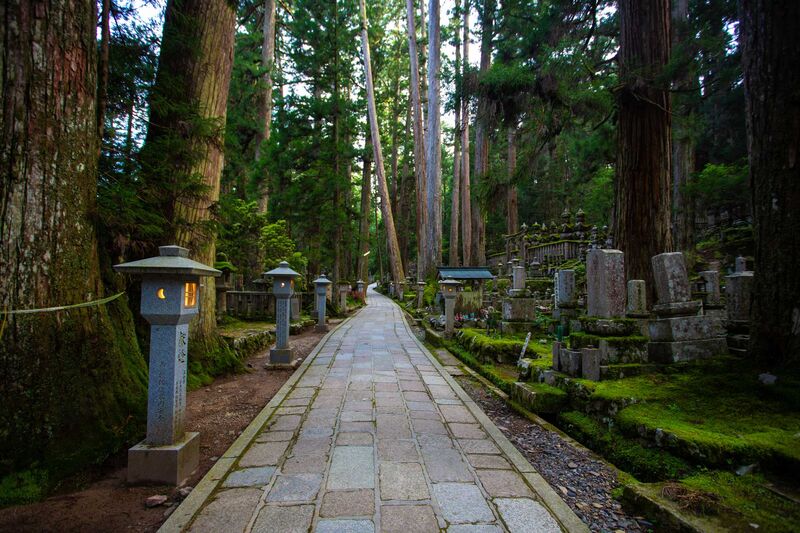
Founded by the monk Kūkai (Kōbō-Daishi) in 816 CE, Koyasan (Mount Kōya) is the headquarters of Shingon Buddhism — one of Japan's two major esoteric Buddhist sects. The entire mountaintop plateau (800m elevation) is a functioning religious community: 117 temples, 3,000+ monks, and a cemetery with over 200,000 graves. The Okunoin cemetery — Japan's largest, with stone lanterns illuminating moss-covered tombs in perpetual mist — is considered the holiest place in Shingon Buddhism. Kūkai himself is said to rest here in eternal meditation. Arriving at Okunoin in early morning mist is one of Japan's great atmospheric experiences. The Kongōbu-ji Temple (¥1,000 entry) is the head temple of the Shingon sect, featuring stunning screens painted by Japanese masters. The Danjogaran complex includes the Konpon Daitō pagoda, painted in striking vermillion — one of Koyasan's most iconic sights.
Kumano Kodo: the ancient forest pilgrimage
The Kumano Kodo is a network of ancient pilgrimage trails through the mountains of the Kii Peninsula, converging on three Grand Shrines: Kumano Hongu Taisha (the largest), Kumano Nachi Taisha (beside Japan's highest waterfall), and Kumano Hayatama Taisha. These shrines predate Buddhism in Japan and follow the Shinto tradition of nature worship — the mountains and rivers are themselves sacred. The trail has been walked by emperors and common people alike for over 1,000 years. The spiritual experience is less about visiting a place and more about the act of walking — enduring rain, fog, and sore legs to arrive at each shrine. The Kumano Kodo uniquely holds a dual UNESCO designation alongside the Santiago de Compostela in Spain — the only two pilgrimage trails in the world to share this honor.
🥾 Physical Difficulty & Logistics
This is the biggest practical difference between the two — and the one most travelers overlook when planning.
Koyasan: essentially zero hiking required
Getting to Koyasan involves the Nankai Koya Line train from Osaka Namba to Gokurakubashi (105 min), then a 5-minute cable car to the summit. No hiking required. On the mountaintop, everything is within walking distance on flat or gently sloping paths. The cemetery walk to Okunoin takes about 45 minutes each way on a paved/stone path. There are local buses if you'd prefer. You can visit Koyasan in comfortable shoes, carrying no backpack, and have a profound experience. The main physical challenge is cold temperatures — Koyasan is 800m above sea level and noticeably colder than Osaka year-round.
Kumano Kodo: real hiking, real logistics
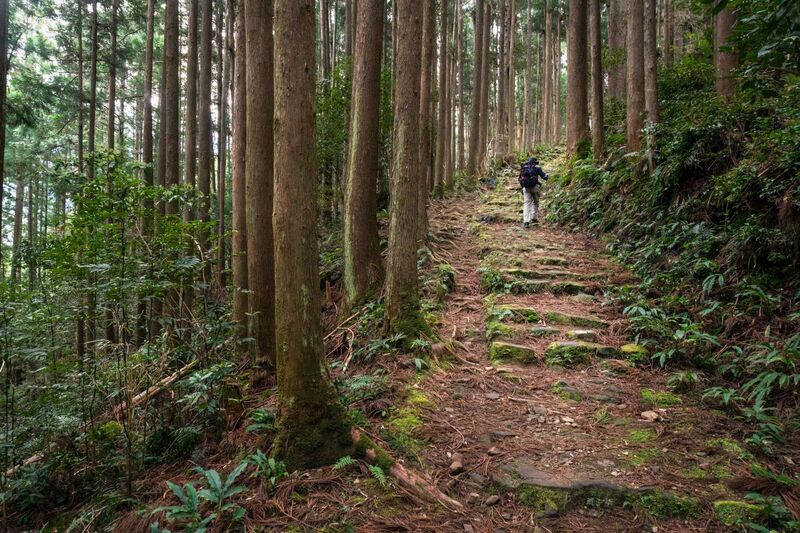
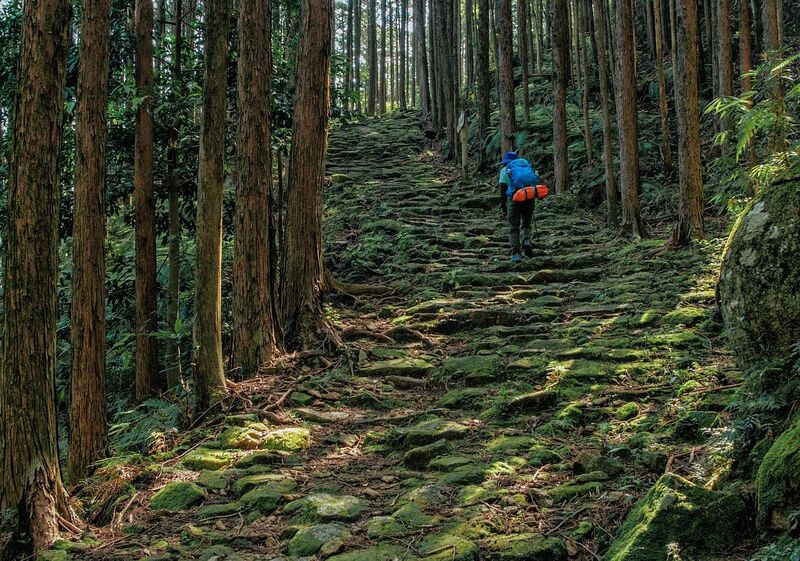
The Nakahechi route (recommended for first-timers) covers about 70km over 4–5 days. Daily distances range from 12–22km, with total elevation gain of 4,000–6,000m across the route. Trails are well-maintained ancient stone paths through cedar forest, with some steep sections on worn stone that can be slippery when wet. You need: proper hiking boots, trekking poles (strongly recommended on the Ogumotori-goe descent), rain gear, and a daypack. Accommodation is pre-booked minshuku along the trail — you must book in advance, especially October–November. Luggage forwarding services exist but add cost.
The Kohechi route (from Koyasan to the Nakahechi junction) is significantly harder — remote, 4 days, limited services, near-freezing at elevation in late season. Only for confident hikers with proper gear.
🏨 Where to Stay
Koyasan: shukubo temple stays
Staying in a shukubo (temple lodging) is the defining Koyasan experience — and one of Japan's most unique accommodation types. Around 50 of Koyasan's temples accept overnight guests, offering tatami rooms, shared or private baths, and meals. The typical package includes:
- Shojin ryori dinner — elaborate Buddhist vegetarian cuisine served in your room or communal dining hall (absolutely worth experiencing)
- Breakfast — lighter Buddhist vegetarian meal
- Access to morning prayer service at the temple (optional but highly recommended)
Price range: ¥12,000–20,000 per person per night (meals included). Some temples offer bare-bones rooms without meals for ¥7,000–10,000. Book through shukubo.net or booking platforms. Popular temples (Ekoin, Kongōbu-ji area lodges) book out months in advance in autumn. Non-temple accommodation is very limited — a handful of guesthouses and one or two Western-style hotels in the ¥8,000–15,000 range.
Kumano Kodo: minshuku guesthouses
Minshuku (family-run guesthouses) dot the Nakahechi route at intervals of 10–20km — essentially the Kumano Kodo's equivalent of Camino albergues. A typical minshuku includes: tatami room, dinner and breakfast (Japanese home cooking, often excellent), shared bath. Price: ¥8,500–14,000 per person per night with two meals. Book through kumano-travel.com — the official English booking platform managed by Tanabe City Tourism Bureau. Book at least 6–8 weeks ahead for October–November peak season. Key stops: Takahara, Chikatsuyu-oji, Nonaka, Yunomine Onsen (onsen village!), Koguchi. Yunomine Onsen is a highlight — a small hot spring village where you can soak in the historic Tsuboyu bathing hut (¥800, listed as UNESCO heritage). Don't miss it.
💰 Cost Comparison
Both are mid-range destinations — neither is budget-backpacker territory nor luxury splurge. The costs are dominated by accommodation (which includes meals at both).
| Expense | ⛩️ Koyasan | 🌲 Kumano Kodo |
|---|---|---|
| Accommodation (per night, 2 meals) | ¥12,000–20,000/person | ¥8,500–14,000/person |
| Budget accommodation (no meals) | ¥7,000–10,000 | Limited availability on trail |
| Train from Osaka Namba (one way) | ¥2,410 (train + cable car) | ¥2,200–3,500 (to Tanabe/Takijiri) |
| Koyasan bus pass (1 day) | ¥900 | — |
| Kongōbu-ji Temple entry | ¥1,000 | — |
| Okunoin night walking tour (guided) | ¥2,000–3,500 | — |
| Yunomine Onsen Tsuboyu (Kumano Kodo) | — | ¥800 |
| Kumano Nachi Taisha compound entry | — | ¥300–500 |
| Luggage forwarding (Kumano Kodo) | — | ¥1,500–2,500/day |
| Daily total estimate (mid-range) | ¥14,000–22,000 ($95–150) | ¥10,000–17,000 ($70–115) |
The Kumano Kodo is actually cheaper per night than Koyasan's shukubo stays. The bigger cost is in total trip length — a 5-day Kumano Kodo trip costs more in total than a 1-night Koyasan visit, simply due to the extra days. But per-day spending on the trail is moderate. Key variable: luggage forwarding services add ¥1,500–2,500 per stage if you want to send your heavy bag ahead — most multi-day hikers use this.
🍱 Food & Dining
Koyasan: shojin ryori
Shojin ryori is traditional Buddhist monastery cuisine — strictly vegetarian, seasonal, beautifully presented, and one of Japan's most distinctive dining experiences. At Koyasan, it's served at your temple lodging as part of the shukubo stay: typically 10–15 small dishes including tofu preparations, pickled vegetables, sesame dishes, mountain vegetables, rice, and miso soup. No meat, no fish, no onions or garlic (considered stimulating to passions in Buddhist teaching). The cooking philosophy emphasizes natural flavors, seasonal ingredients, and mindful preparation. Outside of temple stays, several restaurants in the Koyasan village area serve shojin ryori for ¥2,500–4,500 per set. For non-vegetarian options, a few cafes and guesthouses offer standard Japanese food — limited selection.
Kumano Kodo: minshuku home cooking
Minshuku dining on the Kumano Kodo is Japanese home cooking: grilled fish, pickles, rice, miso soup, seasonal mountain vegetables, and often local river fish. It's hearty and genuinely good — not ceremonial like shojin ryori, but deeply satisfying after a full day of hiking. Some minshuku owners are known for exceptional cooking; the Kiri no Sato in Takahara and the Yunomine Onsen ryokan are repeatedly praised on Reddit for their food. There are almost no restaurants along the trail between accommodation stops — you eat what your minshuku provides. Stock up on snacks and lunch items at the convenience store in Tanabe before starting.
🍂 Best Time to Visit
Both destinations are in the same mountain region of Wakayama Prefecture, so they share similar weather patterns — but with some important differences.
Koyasan seasons
Spring (April–May): Cherry blossoms against ancient temple roofs — one of Japan's most atmospheric spring settings. Summer (June–August): Koyasan's 800m elevation makes it 5–8°C cooler than Osaka — a popular escape from summer heat. However, June–July is rainy season. Autumn (October–November): Peak season. Momiji (maple) foliage turns the cemetery a spectacular red-gold in late October–early November. Book accommodation months in advance. Winter (December–February): Heavy snow possible, dramatically atmospheric — stone lanterns half-buried in snow at Okunoin. Coldest months can drop to -5°C. Some shukubo close or reduce services. March and early April (pre-cherry blossom) are underrated — good availability, cool but not frozen.
Kumano Kodo seasons
April–May: Ideal — trails dry, temperatures moderate (18–24°C), flowers blooming. June–July (rainy season): Avoid for hiking. Trails become muddy and landslide-prone. The Kohechi route can be dangerous. August: Hot (32–35°C at lower elevations) and humid. Possible but uncomfortable. October–November: Peak season. Autumn foliage, cooler temperatures, stunning photography. October generally preferred over November (lower landslide risk after typhoon season). November late: Kohechi section can have near-freezing nights at elevation. December–March: Cold, some trail closures on higher sections. Nakahechi generally accessible year-round but unpredictable.
🚃 Getting There & Around
Getting to Koyasan
The standard route from Osaka: Namba Station → Gokurakubashi on the Nankai Koya Line (express: 80 min, ¥1,110; limited express: 65 min, ¥1,780), then the Koyasan Cable Car (5 min, ¥510) to the top. Total from Osaka Namba: ~90 minutes, ¥1,620–2,290. The Nankai Koyasan World Heritage Ticket (¥3,400 round trip) covers both the train and cable car plus unlimited bus rides within Koyasan — good value for a 1-night trip. From Kyoto: approximately 2 hours via Osaka. No direct Shinkansen access — this is part of what keeps Koyasan feeling remote and sacred despite being only 90 minutes from urban Osaka. Within Koyasan: The local bus network connects all major sights. A 1-day bus pass costs ¥900. Walking is also very manageable — most temples are within 1–2km of each other.
Getting to and along the Kumano Kodo
The main access point for the Nakahechi route is Tanabe City: from Osaka Namba, take the Kuroshio limited express to Shirahama or Kii-Tanabe (~2 hours, ¥4,500–6,000; JR Pass valid). From Tanabe, buses run to the Takijiri-oji trailhead (30 min, ¥600). Alternatively, start from Osaka by bus (Willer Express offers overnight buses). Renting a car from Osaka gives flexibility but parking at trailheads is limited. Along the trail: Navigation is straightforward — the trail is well-marked in both Japanese and English. Some key bus connections exist between villages if you need to skip a section. Cell service is patchy; download offline maps (Maps.me or Gaia GPS) before starting. Kumano-travel.com provides the best English-language logistics support, including luggage forwarding booking.
🗺️ What to See & Do
Koyasan highlights
Okunoin Cemetery — Japan's largest cemetery, 2km of stone lanterns leading to Kūkai's mausoleum. Go at dawn and again at night (different experiences). Free to walk; guided night tours available (¥2,000–3,500). Kongōbu-ji Temple (¥1,000) — headquarters of Shingon Buddhism; features Japan's largest rock garden (Banryutei) and masterful fusuma sliding screen paintings by Hasegawa Tōhaku. Danjogaran complex — the ceremonial heart of Koyasan, with the red Konpon Daitō pagoda (¥500) and Kondo hall. Tokugawa Mausoleum — elaborate clan tombs of the Tokugawa family. Nyonin-do — the only pilgrim's hall where women were once permitted (Koyasan was historically all-male). Morning Prayer Service — most shukubo temples hold early-morning prayer (6–7am); guests can observe and participate. Deeply atmospheric.
Kumano Kodo highlights
Takijiri-oji — the spiritual gateway to the Nakahechi route; the moment you step under the torii and enter the forest, the pilgrimage begins. Takahara — mountaintop village with extraordinary valley views; the foggy mornings are the stuff of travel photography dreams. Yunomine Onsen — ancient hot spring village; the Tsuboyu bathing hut in the river (UNESCO heritage, ¥800, 30-min sessions) is one of Japan's most unique onsen experiences. Kumano Hongu Taisha — the largest of the three Grand Shrines; the giant torii gate (second tallest in Japan at 33.9m) at the original site in the river is staggering. Nachi Falls & Kumano Nachi Taisha — Japan's highest waterfall (133m) and the shrine beside it, reached via the Ogumotori-goe section; the final approach through forest, emerging above the falls, is the trail's emotional climax.
👤 Solo & Group Travel
Koyasan solo
Koyasan is an excellent solo destination. Temple stays are welcoming to solo visitors — you'll typically dine at communal tables with other guests (Japanese and international), which creates natural opportunities for conversation. The Okunoin night walk solo in the mist is a genuinely eerie and memorable experience. Navigation is trivial — everything is in walking distance or accessible by local bus. Language is manageable even with no Japanese; most shukubo temples have English-speaking staff or printed English menus. Solo cost: Single occupancy fees apply at most shukubo (add ¥2,000–3,000 per night vs. per-person sharing rate). Book early — single rooms are allocated first and go fast.
Kumano Kodo solo
The Nakahechi route is well-suited to solo hikers — it's been done solo thousands of times by people of all genders and fitness levels. Minshuku owners are experienced with lone foreign pilgrims. The official Kumano-travel.com site has English booking support. The main solo concerns: cell coverage is patchy (download offline maps), some minshuku require a minimum 2-person booking (confirm when reserving), and emergency assistance takes time to reach remote sections. Multiple women report hiking solo without issues. Groups benefit from shared accommodation costs and built-in navigation support.
🔀 Why Not Both?
Koyasan and the Kumano Kodo share UNESCO World Heritage designation as part of the "Sacred Sites and Pilgrimage Routes in the Kii Mountain Range" — a designation that covers both sites together. They are, quite literally, designed to be done as one journey.
The classic combined itinerary (6–8 days)
From Osaka: Day 1–2 in Koyasan (arrive afternoon, explore, shukubo stay, morning prayer, Okunoin dawn walk, depart). Travel from Koyasan to Tanabe (~4–5 hours by public transport, or via car). Day 3–7 on the Nakahechi: Takijiri → Chikatsuyu-oji → Yunomine Onsen → Koguchi → Nachi Falls/Kumano Nachi Taisha. End at Kii-Katsuura station and return to Osaka or continue to other destinations. This is the full sacred Kii Peninsula pilgrimage circuit — extraordinary. Allow 7–8 days minimum, or 5–6 days if you trim one day from either end.
Alternative via Kohechi: Start at Koyasan and walk the Kohechi trail south to join the Nakahechi route. This is the most "pure" pilgrimage but requires 4 additional hiking days and significantly more difficulty. Experienced hikers only.
See also: Kyoto vs Nara for nearby cultural destinations, Osaka vs Fukuoka for gateway city decisions, Hiroshima vs Nagasaki for another great Western Japan comparison, and Kamakura vs Nikko for Tokyo-area pilgrimage sites.
Winner takeaway
- Winner: Do both — they're built for it
- Why: Koyasan and the Kumano Kodo share a UNESCO Heritage designation specifically because they're part of the same sacred landscape. Koyasan is the perfect warm-up: one night of shojin ryori, temple bells at dawn, and Okunoin fog before transitioning to 4–5 days of forest walking. The combined Kii Peninsula pilgrimage circuit is one of the finest journeys in Japan.
- Who this matters for: Anyone with 7+ days who's physically capable of hiking should seriously consider the combined trip. It's one of those rare travel experiences that genuinely changes your perspective.
🎯 The Decision Framework
Choose Koyasan If…
- You have 1–2 nights and want a profound, contained experience
- You're not up for multi-day hiking or don't have trekking gear
- Experiencing shojin ryori Buddhist cuisine is on your list
- You want to attend a traditional morning prayer service
- Night photography in an ancient lantern-lit cemetery appeals
- You're based in Osaka/Kyoto and want a 1-night spiritual escape
- You're traveling solo with minimal luggage
- You want the autumn foliage + temple aesthetic combination
Choose Kumano Kodo If…
- You have 4–7 days and want a genuine multi-day pilgrimage
- Hiking through ancient forest is the kind of experience you seek
- You've done Koyasan and want the deeper continuation
- Arriving at Nachi Falls via forest trail is on your bucket list
- You want Japan's most unique onsen experience (Yunomine's Tsuboyu)
- You're comfortable with pre-booking accommodation and offline navigation
- The Santiago de Compostela's spiritual counterpart intrigues you
- You want an experience most Tokyo tourists never have
❓ Frequently Asked Questions
Should I visit Koyasan or do the Kumano Kodo if I only have time for one?
For first-timers with limited time (2–3 days), Koyasan is the more practical choice. You can experience the temple town, Okunoin cemetery, and a shukubo (temple lodging) stay in just 1–2 nights with easy access from Osaka (90 minutes by train). The Kumano Kodo requires at least 3–5 days to hike meaningfully and involves significantly more logistics. That said, r/JapanTravel consistently calls the Kumano Kodo one of the most transformative experiences in Japan — if you have the time, it rewards the effort.
Can you combine Koyasan and the Kumano Kodo in one trip?
Yes — they're designed to go together. The Kohechi route of the Kumano Kodo actually starts at Koyasan and connects to the Nakahechi route, creating a continuous pilgrimage. Many travelers do Koyasan first (1–2 nights), then travel to Tanabe or Takijiri to begin the Nakahechi walk. Allow 6–8 days for a combined Koyasan + Kumano Kodo trip. The combined journey is considered one of the finest pilgrimage experiences in the world — both sites share UNESCO World Heritage status.
How difficult is the Kumano Kodo compared to Koyasan?
Koyasan requires almost no hiking — you arrive by cable car and walk between temple areas on flat paths. The Kumano Kodo Nakahechi route involves real hiking: 12–25 km per day on forested mountain trails with significant elevation gain. The Kohechi route (which starts at Koyasan) is rated difficult — it's remote, has limited resupply points, and can involve near-freezing temperatures at elevation in late autumn. Most visitors to Koyasan have no hiking gear; most Kumano Kodo hikers bring trekking poles and waterproof layers.
What is the best route of the Kumano Kodo for first-timers?
The Nakahechi route is universally recommended for first-timers. The classic 4-day walk from Takijiri-oji to Kumano Nachi Taisha passes through Chikatsuyu, Yunomine Onsen, and Koguchi — with minshuku (guesthouses) bookable through kumano-travel.com. The Ogumotori-goe section to Nachi Falls is considered one of the trail's highlights. The Kohechi route from Koyasan is far more demanding and suited to experienced hikers with proper gear.
How much does a Koyasan temple stay (shukubo) cost?
Shukubo (temple lodging) at Koyasan typically costs ¥12,000–20,000 per person per night, including two meals (shojin ryori vegetarian dinner and breakfast). Some temples charge ¥8,000–12,000 for basic accommodation without full meals. You can book through the Koyasan Shukubo Temple Lodging Cooperative (shukubo.net) or major booking platforms. Budget accommodation in Koyasan is limited — most options are temple stays. Book at least 2–4 weeks in advance in peak season.
What is the best time of year to visit Koyasan and the Kumano Kodo?
Spring (April–May) and autumn (October–November) are peak season for both. Koyasan in autumn is spectacular — maple trees turn red against ancient temple roofs. The Kumano Kodo is best April–May and October–November, avoiding Japan's rainy season (June–July) when trails become muddy and landslide-prone. Summer (August) is hot and humid. Winter brings snow to Koyasan (atmospheric but cold) and near-freezing conditions on the Kohechi route. November is the sweet spot for combining both.
How do you get from Osaka to Koyasan?
The standard route is Osaka Namba → Hashimoto by Nankai Koya Line (express, ~75 min, ¥1,110), then the Nankai Koya Line to Gokurakubashi (30 min, ¥790), then the cable car (Koyasan Cable Car, ~5 min, ¥510) to Koyasan. Total from Osaka Namba: ~2 hours and ¥2,410 one-way. The Nankai Pass (¥2,860) covers both the train and cable car. The Koya-san World Heritage Ticket (¥3,400) adds bus access within Koyasan. Trains run frequently — no advance reservation needed except for limited express services.
Is the Kumano Kodo suitable for solo travelers?
Yes — the Nakahechi route is very solo-friendly. Minshuku owners are accustomed to lone hikers, kumano-travel.com provides English resources and accommodation booking, and the trail is well-marked in both Japanese and English. That said, cell coverage is patchy in the mountains, so download offline maps and inform someone of your route. The Kohechi route is less solo-friendly due to remoteness — multiple Reddit users recommend extra preparation and emergency planning for this section. Many women have hiked solo without issues.
Ready to plan your Kii Peninsula pilgrimage?
Get a free custom itinerary for Koyasan, the Kumano Kodo, or the full combined circuit — built from real traveler insights, not generic templates.
🎟️ Book Tours & Experiences
Hand-picked tours and activities for both destinations — book with free cancellation
Experiences via Viator — free cancellation on most tours