
How we built this comparison
This page combines traveler discussion patterns, published price ranges, transit details, and seasonal data to make the London vs Amsterdam decision easier to resolve.
- Reviewed Reddit traveler discussions across r/travel, r/solotravel, r/london, r/Amsterdam, and r/Europetravel — covering recurring decision patterns for London and Amsterdam.
- Cross-checked numeric claims (accommodation ranges, transit costs, attraction prices, seasonal patterns) against Numbeo, TfL, GVB Amsterdam, and published tourism data.
- Each major section ends with a clear winner, reason, and traveler-use note — no wishy-washy "both are great" conclusions.
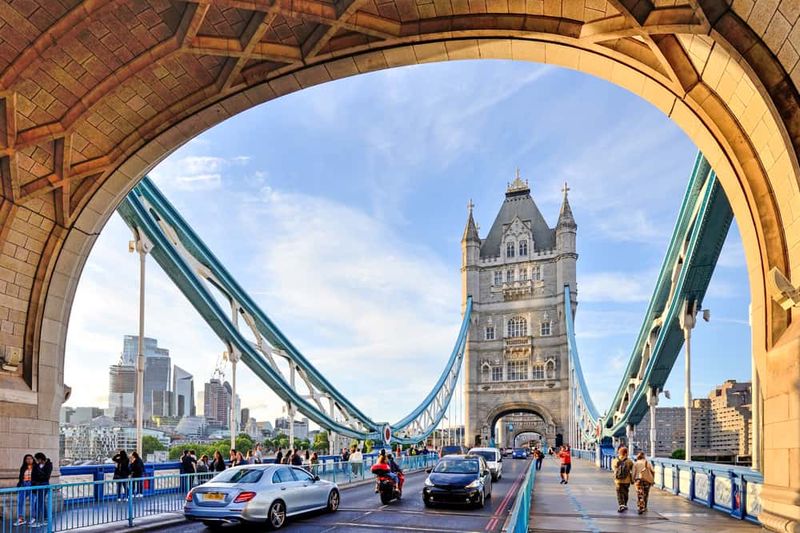
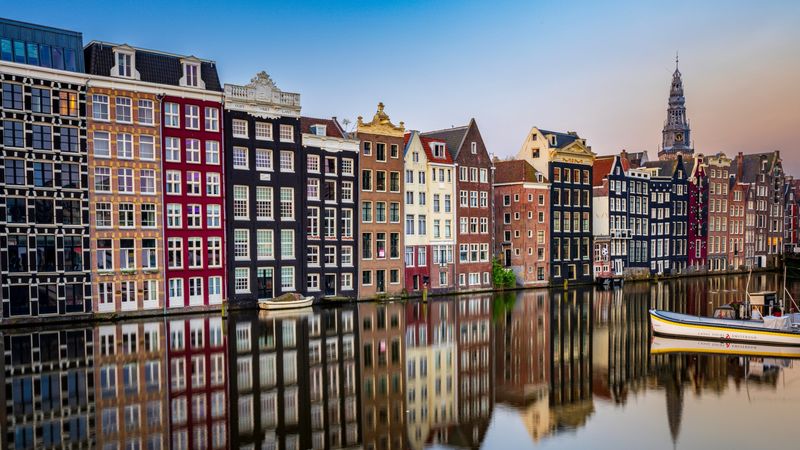
Quick answers
Visual scorecard
⚡ The TL;DR Verdict
Amsterdam wins on charm, walkability, cost, and the bike-canal experience that exists nowhere else. London wins on scale, free museums, food diversity, and sheer volume of things to do. Budget snapshot: Amsterdam €90–140/day vs London £100–160/day (~$125–200).
- Choose Amsterdam: You want a charming, walkable city with canals, bikes, internationally recognized art, and cozy brown cafés — and you'd like to not blow your budget.
- Choose London: You want free internationally recognized museums, incredible food diversity, theatre, and a city you could explore for a month without running out of things to do.
- Budget snapshot: Amsterdam: €90–140/day; London: £100–160/day (~$125–200).
Choose London
Free museum lovers, food diversity seekers, theatre fans, first solo trip, 5+ days to fill.
Choose Amsterdam
Canal romantics, art lovers on a budget, cyclists, 3-day weekend trippers, Anne Frank history seekers.
Quick Comparison
| Category | 🎡 London | 🚲 Amsterdam | Winner |
|---|---|---|---|
| Daily Budget (mid-range) | £100–160/day (~$125–200) | €90–140/day (~$98–152) | Amsterdam |
| Walkability / Cyclability | Spread out; Tube essential for most sights | Extremely compact; entire center walkable or bikeable | Amsterdam |
| Iconic Sights | Tower of London, Big Ben, Buckingham Palace, British Museum | Anne Frank House, Rijksmuseum, Van Gogh Museum, canals | Tie |
| Museums (value) | British Museum, V&A, National Gallery, Tate Modern — all free | Rijksmuseum €22.50, Van Gogh Museum €22 — all paid | London |
| Food Scene | Incredible global diversity; top-tier Indian, Japanese, modern British | Strong Dutch and Indonesian; excellent brunch; smaller scene overall | London |
| Language | English; zero barrier | Dutch — but 95% of Dutch speak excellent English | Tie |
| Nightlife | Pubs, West End clubs, Soho; 24h Tube on weekends | Brown cafés, Leidseplein clubs, Paradiso; legendary club scene | Tie |
| Best Time to Visit | May–June, September; any time for free museums | April–May (tulips); April 27 King's Day is unmissable | Amsterdam |
| Day Trips | Bath, Oxford, Cambridge, Windsor, Cotswolds | Keukenhof, Zaanse Schans, Delft, Haarlem, Bruges (2h) | Tie |
| City Size | Massive — 9.5M metro, one of Europe's largest cities | Compact — 900,000 residents, very easy to navigate | Amsterdam |
| Safety | Very safe; bystander culture | Very safe; watch for fast-moving bikes on cycle lanes | Tie |
| Best For | Scale seekers, museum lovers, food fans, theatre, 5+ day trips | Weekend trippers, canal romantics, art lovers, cyclists, 3-day visits | — |
🍺 Food & Dining
London has one of the world's great food cities — and it's not even close in terms of scale. The diversity is extraordinary: Dishoom (Bombay café, queue mandatory), Hawksmoor…
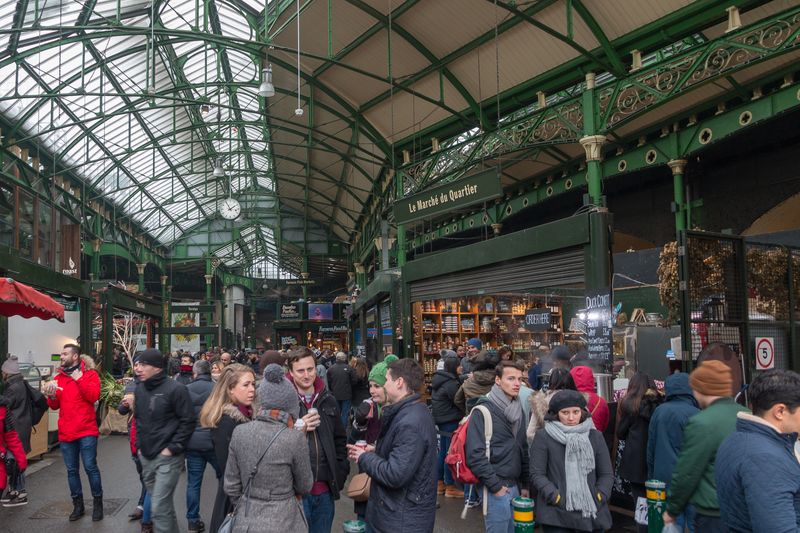
London has one of the world's great food cities — and it's not even close in terms of scale. The diversity is extraordinary: Dishoom (Bombay café, queue mandatory), Hawksmoor (best steakhouse in the UK), Borough Market (cheese, charcuterie, fresh pasta, world street food), and neighborhoods that let you eat your way around the globe. Japanese omakase in Marylebone, shawarma in Edgware Road, Ethiopian injera in Brixton, Korean BBQ in New Malden, Taiwanese bao in Soho — London's food scene reflects its status as one of the world's most internationally diverse cities. Pub lunches (pie and chips, £12–18) are a genuine cultural experience that Amsterdam simply doesn't replicate.
Amsterdam's food scene is smaller but has improved dramatically. Indonesian rijsttafel (rice table) is the standout unique experience — the Dutch colonial connection means you can get genuinely excellent Indonesian food at restaurants like Tempo Doeloe or Sama Sebo for €30–40/person. Dutch staples (bitterballen, stroopwafels, raw herring from street stalls — €3–4, try it!) are worth experiencing. The brunch culture is strong: Scandinavian-influenced spots in De Pijp and Jordaan serve excellent eggs and coffee for €10–15. The Albert Cuypmarkt is one of Europe's best street food markets. But for sheer variety? London wins by a country mile.
Budget eating comparison
Amsterdam is cheaper: a Dutch brunch (eggs, coffee, juice) runs €12–16 at a café in Jordaan vs £14–20 at a London brunch spot. Raw herring from a street stall is €3 — try it even if you're skeptical. Bitterballen (fried snacks) at a brown café with a beer costs €8–12. London's budget eating options include Pret (£6–9), supermarket meal deals (£3.50–5), and countless cheap ethnic restaurants. Amsterdam has fewer budget options and fewer chains — good for authenticity, slightly painful for budget travelers. Both cities have excellent street food markets (Borough Market London, Albert Cuypmarkt Amsterdam) where you can eat lunch for €10/£10.
🎨 Museums & Culture
Amsterdam punches far above its weight for a city of 900,000. The Rijksmuseum (€22.50, book online — 1+ hour wait without tickets) houses Rembrandt's Night Watch and Vermeer's The…
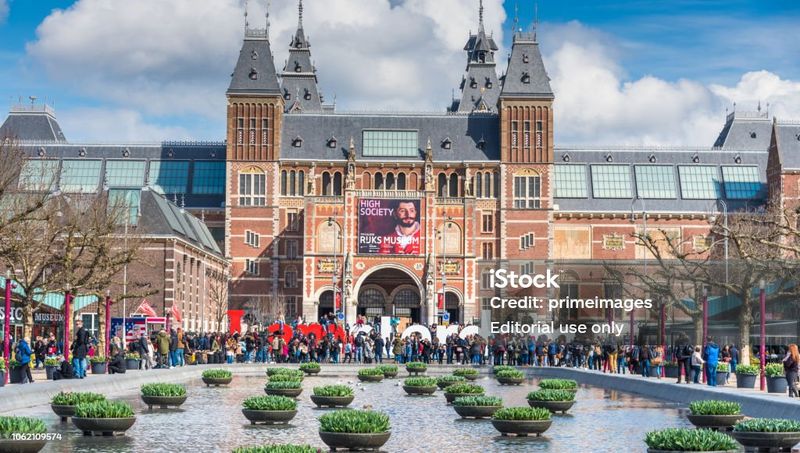
Amsterdam punches far above its weight for a city of 900,000. The Rijksmuseum (€22.50, book online — 1+ hour wait without tickets) houses Rembrandt's Night Watch and Vermeer's The Milkmaid — genuinely two of the most magnificent paintings in existence. The Van Gogh Museum (€22, book weeks ahead) has the world's largest collection of his work and tells the story of his life with extraordinary depth. The Anne Frank House (€16 — book at least 2 months in advance, this cannot be overstated) is one of Europe's most profoundly moving historical sites. Smaller gems: the Stedelijk Museum (modern art, €22.50), FOAM photography museum (€14), and the free Vondelpark weekend performances. For a city this size, that museum lineup is remarkable.
London's museum advantage is structural and enormous: they're free. British Museum (Rosetta Stone, Elgin Marbles, Egyptian mummies — free), Victoria & Albert Museum (fashion, decorative arts, design — free), National Gallery (Vermeer, Van Gogh, Monet, Turner — free), Tate Modern (contemporary art in a converted power station — free), Natural History Museum (free), Science Museum (free). You can spend five full days in among the best museums without paying entry. No major city on Earth matches this. London also wins on sheer cultural scale: the West End theatre scene (200+ productions running simultaneously) rivals Broadway, with tickets from £25 for same-day standby.
💰 Cost Comparison
Amsterdam is meaningfully cheaper than London — typically 15–25% less across accommodation, food, and nightlife. For travelers watching their budget, this is a real difference…
Amsterdam is meaningfully cheaper than London — typically 15–25% less across accommodation, food, and nightlife. For travelers watching their budget, this is a real difference over a 4–5 day trip. Here's a realistic 2026 daily budget:
| Expense | 🎡 London | 🚲 Amsterdam |
|---|---|---|
| Hostel dorm | £35–60/night | €28–50/night |
| Mid-range hotel | £150–260/night | €120–200/night |
| Budget meal (café/market) | £6–10 | €5–9 |
| Sit-down lunch | £12–22 | €12–20 |
| Dinner (mid-range restaurant) | £25–50 per person | €22–45 per person |
| Beer (pub/bar) | £6–8 | €5–7 |
| Transit (single ride) | £2.80 (Oyster Zone 1–2) | €3.40 (GVB single tram/metro) |
| Day transit cap | ~£8.10 (Oyster daily cap Zone 1–2) | €8.50 (24h GVB pass) |
| Bike rental | N/A (not a cycling city) | €12–20/day (recommended way to explore) |
| Museum entry | Free (British Museum, V&A, National Gallery, etc.) | €14–22.50 per museum |
| Anne Frank House / Tower of London | £34.80 (Tower of London adult) | €16 (Anne Frank House) |
| Daily total (budget) | £60–90 | €55–85 |
| Daily total (mid-range) | £100–160 | €90–140 |
The hidden cost in Amsterdam: Unlike London's free museum culture, Amsterdam charges for everything. A tourist doing Rijksmuseum + Van Gogh Museum + Anne Frank House alone spends €60.50 in entry fees — nearly a full day's budget addition. Factor this into planning. London travelers doing the British Museum, National Gallery, V&A, and Tate Modern pay €0 in entry. That's the difference.
The hidden saving in Amsterdam: Accommodation runs roughly 15–20% cheaper than equivalent London properties. Over a 5-night trip, that's €100–150 in savings on accommodation alone. And Amsterdam's compact size means you spend far less on transit — cycling or walking eliminates most transit costs entirely.
🚲 Getting Around
Amsterdam wins this category easily — and the gap is wide. Amsterdam is one of the most walkable and cyclable cities on Earth. The historic center measures roughly 2 km from Dam…

Amsterdam wins this category easily — and the gap is wide. Amsterdam is one of the most walkable and cyclable cities on Earth. The historic center measures roughly 2 km from Dam Square to the Rijksmuseum. Every major attraction — the Anne Frank House, Vondelpark, Leidseplein, the Jordaan — is within 30 minutes on foot or 10 minutes by bike. The city has 800 km of dedicated bike lanes for a population of 900,000 (more bikes than people). Renting a bike for €12–20/day is genuinely the optimal way to experience Amsterdam — you'll cover more ground, see more canals, and feel like a local in ways transit simply doesn't allow.
Public transit in Amsterdam uses the GVB system — trams, metro, and buses. A 24-hour pass costs €8.50 (available from GVB machines with a travel card). But honestly, most tourists with a 3-day itinerary barely need it — the walkable center covers nearly everything. The biggest transit concern: Amsterdam's bike lanes are fast-moving arterials. Pedestrians walking on them get buzzed without warning. Stay on the pavement, not the brick-paved bike path.
London's Tube is excellent but the city is genuinely massive. The Underground has 11 lines, 272 stations across 9 zones. An Oyster card Zone 1–2 single is £2.80 (daily cap ~£8.10). The Elizabeth Line (Crossrail) — opened 2022 — connects Heathrow to central London in 37 minutes for £10.80 Oyster, replacing the expensive Heathrow Express. London is simply too spread out for walking between most attractions: Tower of London to Tate Modern is 40 minutes on foot; British Museum to South Kensington (V&A, Natural History Museum) is 50 minutes. Budget 20–30 minutes of Tube time between most major sights.
☀️ Best Time to Visit
Both cities share a temperate Atlantic climate — mild summers, wet winters, genuinely lovely springs and autumns. Amsterdam has one unique seasonal trump card: tulip season.
Both cities share a temperate Atlantic climate — mild summers, wet winters, genuinely lovely springs and autumns. Amsterdam has one unique seasonal trump card: tulip season.
Data: Open-Meteo climate averages. Temperatures are daily highs/lows in Celsius. Rainfall in monthly mm totals.
When to go
April (especially April 27 — King's Day): Amsterdam's biggest festival. The entire city turns orange, canals fill with boats, markets spring up everywhere, and Amsterdammers celebrate the King's birthday with infectious joy. It is genuinely one of Europe's great street parties. Combine this with Keukenhof Gardens (March–May, 7 million tulips in bloom, 30 min from Amsterdam, €22) and April is Amsterdam's undisputed best month.
May–June is the sweet spot for both cities — warm, long evenings, still manageable crowds. London in May is surprisingly sunny. Amsterdam's canals sparkle in early summer.
Summer (July–August): Peak prices, peak crowds. Amsterdam gets particularly packed in summer — its small center struggles with tourist volume. London handles scale better due to its size. Both are dramatically more expensive for accommodation in peak summer.
Autumn (September–October): Both cities shine. Golden light on Amsterdam's canal trees is spectacular for photography. London's parks (Hyde Park, Regent's Park) in fall foliage are among Europe's prettiest urban landscapes.
Winter (November–February): Amsterdam's Christmas market at Museumplein and ice skating at Leidseplein are charming but cold and rainy. London's pub culture, free museums, and West End shows make it the better winter city by some distance.
🏨 Where to Stay
South Bank / Borough — Tate Modern, Borough Market, Shakespeare's Globe, the Shard all walkable. Excellent value compared to West End. Jubilee line connects you everywhere. Strong…
London neighborhoods
South Bank / Borough — Tate Modern, Borough Market, Shakespeare's Globe, the Shard all walkable. Excellent value compared to West End. Jubilee line connects you everywhere. Strong choice for first-timers who want to walk more and spend less on accommodation than Covent Garden. See our London vs Paris comparison for more London neighborhood detail.
Shoreditch / Bethnal Green — East London's creative hub: street art, vintage markets, incredible independent food scene. Noticeably more affordable, Overground and Elizabeth line connections. Good for travelers who want an authentic London feel beyond the tourist core.
Covent Garden / Soho — Most central; theatre district, top-tier restaurants, minutes from British Museum. Premium pricing (£200+/night for mid-range) but the location is unbeatable for a first-timer with limited time.
Amsterdam neighborhoods
Jordaan — The top pick for most first-time visitors. Narrow streets, houseboats on quiet canals, independent boutiques and galleries, excellent brown cafés. Beautiful and central. Walking distance to Anne Frank House and the Westerkerk. Boutique hotels from €130–180/night.
De Pijp — Lively, multicultural, home to the Albert Cuypmarkt (Europe's best street market). Strong brunch and café culture. Slightly further from major sights but excellent value and great neighborhood feel. Tram to Museumplein in 10 minutes.
Canal Ring (Grachtengordel) — Staying on the Prinsengracht, Keizersgracht, or Herengracht canals gives you the classic Amsterdam experience. Pricier boutique hotels (€160–240/night) but you literally wake up to canal views. Worth it for at least one or two nights.
🎒 Day Trips
Both cities offer excellent day trip options — Amsterdam's are more compact and uniquely Dutch; London's open up England's greatest towns and landscapes.
Both cities offer excellent day trip options — Amsterdam's are more compact and uniquely Dutch; London's open up England's greatest towns and landscapes.
From Amsterdam
Keukenhof Gardens (30 min by bus from Amsterdam, open March–May only) — 7 million tulips, daffodils, and hyacinths in bloom across 79 hectares. One of the most spectacular seasonal gardens on Earth. Entry €22. Book tickets online — it's hugely popular. The quintessential Dutch spring experience.
Zaanse Schans Windmills (20 min by train) — Open-air museum with working Dutch windmills, clog factories, and cheese farms. Touristy but genuinely charming. Free entry to the village, paid entry to individual attractions. Perfect half-day from Amsterdam.
Delft (55 min by train, €14 return) — Vermeer's hometown. Beautiful small city with blue Delft pottery workshops, the Nieuwe Kerk (where Dutch royalty is buried), and some of the prettiest canals in the Netherlands. More authentically Dutch than tourist-heavy Amsterdam.
Haarlem (15 min by train, €8 return) — Amsterdam's charming neighbor with a magnificent medieval Great Church (Grote Kerk), excellent museums, and far fewer tourists. Reddit's top underrated Amsterdam day trip.
Bruges, Belgium (2h by train via Brussels) — Medieval canal city, arguably even more picturesque than Amsterdam. Belgian waffles, chocolate, and Bruges beer at source. Longer day trip but absolutely worth it for first-time Europe visitors.
From London
Bath + Stonehenge (2.5h to Bath by train) — Combine prehistoric mystery with Georgian elegance. Bath's Roman baths and Royal Crescent are unmissable. Many organized tours combine both in one day. See our London vs Paris guide for more day trip detail.
Oxford (1h by coach) — Tour the colleges (Christ Church, Bodleian Library), punt on the Cherwell, and drink at The Eagle and Child (Tolkien and C.S. Lewis's local).
Cambridge (55 min by train) — Punt down the Cam through the college Backs. King's College Chapel is one of England's great Gothic masterpieces. Quieter than Oxford.
Windsor + Eton (40 min by train) — Windsor Castle (world's oldest inhabited castle) + the famous Eton College walk across the bridge. Easy half-day.
🎉 Nightlife
Both cities have legendary nightlife — but of completely different characters. Amsterdam's nightlife scene is smaller but more concentrated and arguably more famous globally.…
Both cities have legendary nightlife — but of completely different characters. Amsterdam's nightlife scene is smaller but more concentrated and arguably more famous globally. Paradiso (historic church turned legendary music venue), Melkweg (massive multi-room club), and the boutique club scene around Leidseplein and Rembrandtplein are genuinely internationally recognized. The brown café (bruine kroeg) culture — dark wood paneling, amber light, Dutch beer on tap, absolutely no rush — is one of Europe's great pub traditions and incomparably cozy. Cannabis tourism is real: coffee shops are legal, the lines are tourist-heavy, and most actual Amsterdammers don't frequent them. The city is attempting to limit tourist access to reduce overtourism.
London's nightlife is enormous. Soho (gay bars, comedy clubs, late-night restaurants), Shoreditch (warehouse clubs, live music venues, rooftop bars), Brixton (Ritzy cinema, Brixton Village, Effra Social), and Dalston (LGBTQ+ venues, basement clubs) each offer distinct scenes for different tastes. The 24-hour Tube on Friday and Saturday nights makes logistics dramatically easier than Amsterdam, where night buses replace the last trams. West End shows (200+ running simultaneously, tickets from £25 standby) add a cultural nightlife dimension Amsterdam simply doesn't have at scale.
🔀 Why Not Both?
The London-Amsterdam debate is a false choice for most European trip planners. The Eurostar connects them in 3 hours 55 minutes, with direct trains running multiple times daily…
The London-Amsterdam debate is a false choice for most European trip planners. The Eurostar connects them in 3 hours 55 minutes, with direct trains running multiple times daily from London St Pancras to Amsterdam Centraal. Tickets start from £35 booked in advance — a genuinely good value journey that drops you at the heart of each city. Budget airlines (easyJet, Ryanair) fly the route in ~75 minutes, but airport-to-center time makes the total journey longer than it appears.
Suggested combined routes
5 days: 2 days Amsterdam (Rijksmuseum + Van Gogh + canals + Jordaan) → Eurostar → 3 days London (British Museum + Borough Market + South Bank + Shoreditch). The Amsterdam booking note: book Anne Frank House 2+ months ahead or it won't happen.
7 days: 3 days Amsterdam (add Keukenhof in season or Delft day trip) → Eurostar → 4 days London (add Oxford or Bath day trip). Near-perfect Europe introduction.
10 days: 3 days Amsterdam → 4 days London → 3 days Paris (all three by Eurostar). The classic Northwestern Europe triangle — canals, scale, romance. Book the Eurostar segments well in advance.
Smart routing: Fly into Amsterdam (Schiphol is a major international hub), do Amsterdam first (smaller, easier to acclimate), Eurostar to London, fly home from Heathrow or Gatwick. Or reverse: fly into London, end in Amsterdam for a canal farewell.
🎯 The Decision Framework
Choose London If…
- You want to visit iconic free museums like the British Museum and National Gallery.
- You crave diverse global cuisine, from Michelin stars to street food stalls.
- You prefer a city with a massive scale and endless districts to explore.
- You want to experience West End theatre and major sporting events.
- You need direct flight options from many international hubs.
- You enjoy historical landmarks such as the Tower of London and Buckingham Palace.
- You prefer efficient public transport (Tube) for covering long distances.
- You want easy access to day trips like Windsor Castle or Stonehenge.
- You appreciate grand architecture and expansive royal parks.
Choose Amsterdam If…
- You prioritize a more budget-friendly trip, closer to €90-140 daily.
- You want to explore a city almost entirely on foot or by bike.
- You dream of cycling along picturesque canals.
- You prefer a smaller, more intimate European city feel.
- You're interested in specific experiences like Anne Frank House or the Rijksmuseum.
- You appreciate a relaxed pace and café culture.
- You want easy access to nearby towns such as Haarlem or Zaanse Schans.
- You prefer a city where navigation is simple and straightforward.
- You seek a city with distinctive gabled houses and canal views.
Made your choice?
See documented tourist scams for London or Amsterdam — exact scripts, red flags, and the moves that stop them.
Browse travel-safety books →❓ Frequently Asked Questions
Is London or Amsterdam better for a first visit to Europe?
Both are excellent first-time European cities. London is the easier choice for English speakers — no language barrier, among the best free museums, and an enormous amount to do across 4–5 days. Amsterdam is smaller and more immediately walkable, with iconic canals and a relaxed atmosphere that makes it feel digestible in 3 days. Reddit consensus: London for variety and scale; Amsterdam for something more manageable and charming. If you have 7+ days, the Eurostar makes it easy to combine both.
How far apart are London and Amsterdam?
About 500 km (310 miles). The Eurostar from London St Pancras to Amsterdam Centraal takes 3 hours 55 minutes, with tickets from £35 booked in advance (up to £200+ last-minute). Budget airlines (easyJet, Ryanair) fly the route in about 1h15m but airports are far from city centers. For the best city-center to city-center experience, the Eurostar wins despite the longer travel time — you arrive at Centraal Station, right in the heart of Amsterdam.
Is Amsterdam cheaper than London?
Amsterdam is meaningfully cheaper than London — typically 15–25% less across accommodation, food, and nightlife. A mid-range hotel in Amsterdam runs €120–200/night vs £150–260 in London. Budget meals cost €8–14 in Amsterdam vs £9–16 in London. London's free museums partially close the gap on attractions (Amsterdam's Rijksmuseum costs €22.50), but Amsterdam's overall daily budget runs €90–140/day vs London's £100–160/day. For budget travelers, Amsterdam is a noticeably more affordable European capital.
Is Amsterdam walkable compared to London?
Yes — Amsterdam is one of Europe's most walkable cities. The historic center fits within a 2 km radius, and most major attractions (Rijksmuseum, Anne Frank House, Vondelpark, Van Gogh Museum, the Jordaan) are within 20–30 minutes of each other on foot. Better yet, Amsterdam has 800,000 bicycles for a population of 900,000 — renting a bike (€12–20/day) is genuinely the best way to see the city. London is much larger and more spread out, requiring the Tube for most inter-attraction journeys.
How many days do I need in Amsterdam vs London?
Amsterdam: 3 full days covers the highlights comfortably — Day 1 Rijksmuseum + Van Gogh Museum + Vondelpark, Day 2 Anne Frank House (book 2+ months ahead!) + Jordaan canal walk + Heineken Experience, Day 3 day trip to Keukenhof (spring) or Zaanse Schans windmills, or explore Jordaan markets and De Pijp. London: minimum 4 full days for first-timers. It's simply a much larger city with more to do. History buffs could spend a week and not run out of content.
Is the Anne Frank House worth visiting?
Unequivocally yes — and you must book tickets online at least 2 months in advance (often much earlier for peak season). The Anne Frank House is one of the most profoundly moving historical sites in Europe. Tickets sell out weeks in advance and cannot be purchased at the door. Entry costs €16 (adult). Budget 1.5–2 hours. This is the #1 planning mistake travelers make in Amsterdam — don't show up without a booking.
What's the best time to visit Amsterdam?
April and May are Amsterdam's golden months — tulip season, Keukenhof Gardens in full bloom (March–May), warming temperatures (14–18°C), and the famous King's Day street party (April 27). Summer (June–August) is peak season with higher prices. September and October offer great weather with thinning crowds. Winter has charm (Christmas markets, ice skating) but Amsterdam's grey rainy winters are more challenging than London's with its free museums and pub culture to retreat into.
Is Amsterdam safe to visit?
Amsterdam is very safe for tourists — consistently among Europe's safest capital cities. Main risks: standard pickpocket awareness in the Red Light District and Dam Square, and the genuinely dangerous bike lanes (cyclists have right of way and move fast — stay on the pavement, not the brick-paved cycle paths). The Red Light District is overcrowded with tourists and feels increasingly commercialized, but it's not dangerous. The city center is safe to walk at night across all neighborhoods.
Is London or Amsterdam better for nightlife?
London wins on scale and variety — Soho, Shoreditch, Camden, and Dalston offer everything from speakeasies to mega-clubs (Fabric, Ministry of Sound, XOYO) running until 4am or later. Amsterdam has a smaller but distinctive scene: brown cafes, coffeeshops, the Red Light District, and Dutch electronic/techno (especially during ADE festival in October). For sheer variety, London. For chill canal-side bars and a more relaxed vibe, Amsterdam.
Which city has better food?
London by a wide margin for ethnic diversity. Indian (Brick Lane, Tooting), Caribbean (Brixton), Vietnamese (Kingsland Road), and modern British (Hawksmoor, St. John, Dishoom) define London’s food scene. Amsterdam has world-class Indonesian rijsttafel (legacy of Dutch colonialism), Surinamese roti, and Dutch staples (herring, stroopwafels, bitterballen) — but the diversity is narrower. Both have excellent cafe culture: London for British brunch, Amsterdam for cozy gezellig brown cafes.
Are London’s museums really free?
Yes — and this is one of London’s biggest travel advantages. The British Museum, National Gallery, Tate Modern, Tate Britain, V&A, Natural History Museum, Science Museum, and National Maritime Museum are all genuinely free (donations encouraged but not required). This applies year-round to permanent collections; special exhibitions usually charge £15–25. Amsterdam’s major museums charge €16–25 per visit (Rijksmuseum €22.50, Van Gogh €20, Anne Frank House €16) — budget €60–90 total for the museum highlights.
Can I do day trips from Amsterdam?
Yes — Amsterdam is excellent for day trips. Top options: Keukenhof Gardens (1 hour, March–May, the world’s largest tulip display), Zaanse Schans windmills (20 minutes, free entry), Haarlem (15 minutes, charming smaller town), Utrecht (30 minutes, a smaller more authentic version of Amsterdam), and Delft (1 hour, Vermeer’s birthplace). For a day-international trip, Brussels is 2 hours by Thalys train; Bruges is 3 hours.
What about the bike culture in Amsterdam?
Amsterdam has 800,000 bicycles for 900,000 residents — biking is the city’s defining transport mode. Rentals run €12–20/day (try MacBike or Yellow Bike). Crucial safety tips: bikes have right of way over pedestrians, stay off the brick-paved cycle paths when walking, and lock with TWO locks (frame + wheel). For first-timers nervous about Amsterdam’s intense cycling culture, start in Vondelpark (calm) before tackling the canal-side roads. The investment pays off — biking is faster than walking and lets you cover the entire city in a day.
Is the Eurostar between London and Amsterdam worth it?
Yes for most travelers, especially booking 2+ months ahead. The Eurostar from London St Pancras to Amsterdam Centraal takes 3 hours 55 minutes city-center to city-center, with no airport hassle, no liquid restrictions, and seats with desks and WiFi. Tickets from £35 advance, typically £80–150 mid-range, £200+ last-minute. Compare to budget airlines: 1h15m flight time but airports add 2 hours (Stansted/Heathrow, Schiphol), security adds another hour, and luggage fees add £40+. Eurostar wins on total time and comfort.
Which city is better for solo travelers?
Both excellent for solo travelers. London has the best solo infrastructure in Europe — Generator and Wombats hostels, free museums for solo wandering, easy West End theatre matinees, and Soho/Shoreditch pub culture welcoming to solo drinkers. Amsterdam excels for solo female travelers (consistently ranked among Europe’s safest cities), with hostel social scenes (ClinkNoord, Generator), bike tours, and brown cafes that welcome single visitors. Both are walkable, English-friendly, and have efficient transit.
Should I visit both London and Amsterdam on one trip?
If you have 7+ days, absolutely yes. The Eurostar makes it logistically easy and the cities complement each other beautifully — London’s scale and museum density plus Amsterdam’s charm and walkability. Recommended split: 4 days London (focus on free museums, Tower of London, theatre, food crawls) then 3 days Amsterdam (Anne Frank House, Rijksmuseum, Vondelpark, canal cruise, day trip to Keukenhof or Zaanse Schans). Most travelers prefer London first (easier landing) then Amsterdam as a relaxing wind-down.
Ready to plan your Europe trip?
Know the tourist scams before you go — documented from real traveler reports, not generic templates.