How we built this comparison
This page combines traveler discussion patterns, published price ranges, transit details, and real opinions to make the Hiroshima vs Nagasaki decision easier.
- Reviewed Reddit discussions across r/JapanTravel and r/JapanTravelTips — hundreds of threads about choosing between Hiroshima and Nagasaki.
- Cross-referenced accommodation pricing from Booking.com and Jalan.net (March 2026 rates).
- Transit times and fares verified against JR West, Shinkansen schedules, and Nagasaki municipal transit timetables.
- Museum and attraction details from official Hiroshima Peace Memorial Museum and Nagasaki Atomic Bomb Museum publications.
⚡ The TL;DR Verdict
Hiroshima wins for first-timers on a standard Japan itinerary — it's easier to reach, the Peace Memorial Museum is Japan's most important historical site, and Miyajima Island is a world-class day trip. Nagasaki wins on uniqueness: its Portuguese, Dutch, and Chinese heritage makes it unlike any other Japanese city, and travelers who've visited both often say Nagasaki surprised them more. Budget snapshot: both cities run ¥8,000–15,000/day mid-range excluding accommodation.
- Choose Hiroshima: First-time Japan visitors, history travelers, those combining with Osaka/Kyoto, anyone who wants the Miyajima floating torii gate experience.
- Choose Nagasaki: Repeat Japan visitors, travelers on a Kyushu loop, those drawn to international history and Dutch/Chinese heritage, Gunkanjima island enthusiasts.
- Do both: They're 2–2.5 hours apart — most travelers who do one should try to do both, especially on longer Japan trips.
Choose Hiroshima
First-timers, history travelers, Miyajima day trip seekers, those coming from Osaka or Kyoto on the Shinkansen.
Choose Nagasaki
Repeat Japan visitors, Kyushu loop travelers, international heritage seekers, Gunkanjima fans, anyone craving something different.
Quick Comparison
| Category | 🏛️ Hiroshima | ⛪ Nagasaki | Winner |
|---|---|---|---|
| Peace Museum Quality | Larger, more artifacts, A-Bomb Dome ruin outside | Smaller, more intimate, strong human impact focus | Hiroshima |
| City Uniqueness | Rebuilt post-war, modern feel outside museum | Dutch/Portuguese/Chinese heritage, unlike any other Japan city | Nagasaki |
| Best Day Trip | Miyajima Island & floating torii gate (world-class) | Gunkanjima abandoned island (UNESCO, weather-dependent) | Hiroshima |
| Food Scene | Okonomiyaki, oysters, momiji manju — excellent | Champon, sara-udon, castella, Nagasaki beef — unique | Tie |
| Accessibility from Tokyo | Shinkansen 4 hrs direct (¥19,000+) | Flight 2 hrs + bus, or Shinkansen 5–6 hrs via Hakata | Hiroshima |
| Accessibility from Osaka | Shinkansen 90–110 min (¥11,000–13,000) | Shinkansen + Limited Express ~4 hrs (¥18,000+) | Hiroshima |
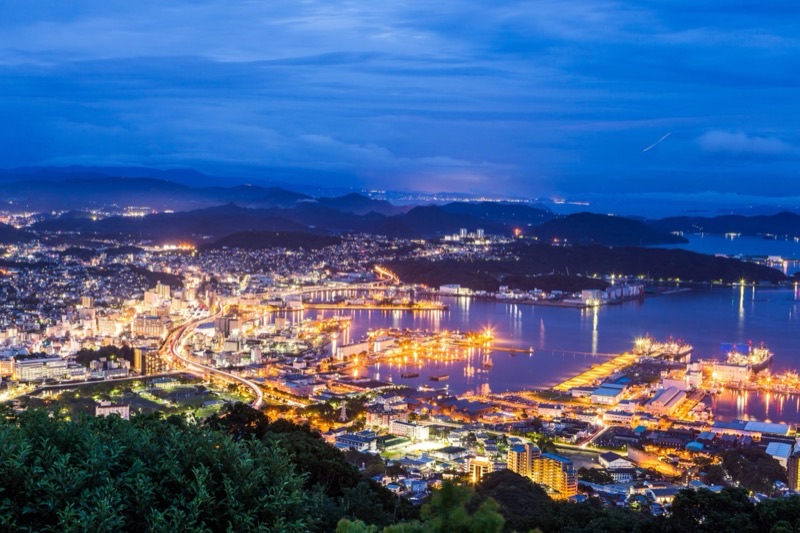
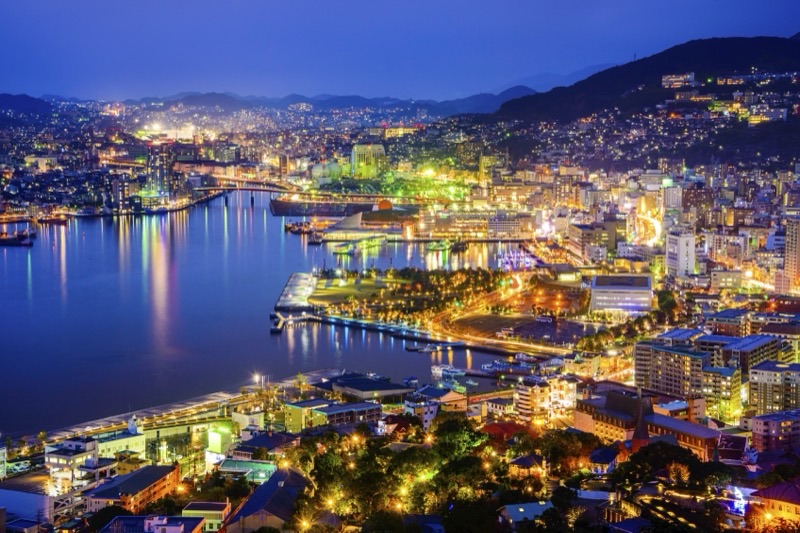
| Night Views | Hiroshima City from Hiroshima Castle area | Mt Inasa — one of Japan's top 3 night views (stunning) | Nagasaki |
| Historical Layers | WWII peace history, samurai castle, Miyajima shrine | WWII + Edo trade era + Dutch + Portuguese + Chinese + Christianity | Nagasaki |
| Crowds / Tourism | Very busy at Peace Park; manages well | Less crowded, more relaxed atmosphere | Nagasaki |
| Transit Within City | Tram + ferry (Miyajima); very convenient | Streetcar network; hilly terrain makes walking tiring | Hiroshima |
| Best For | First-time Japan visitors, standard itinerary | Repeat visitors, Kyushu loop, history depth-seekers | Depends |
🏛️ Peace Memorials & War History
This is the heart of both cities' appeal — and where the comparison gets nuanced. Both were devastated by atomic bombs in August 1945 (Hiroshima on August 6, Nagasaki on August 9), and both have built profound memorial sites to honor the victims and advocate for peace.
Hiroshima Peace Memorial Museum
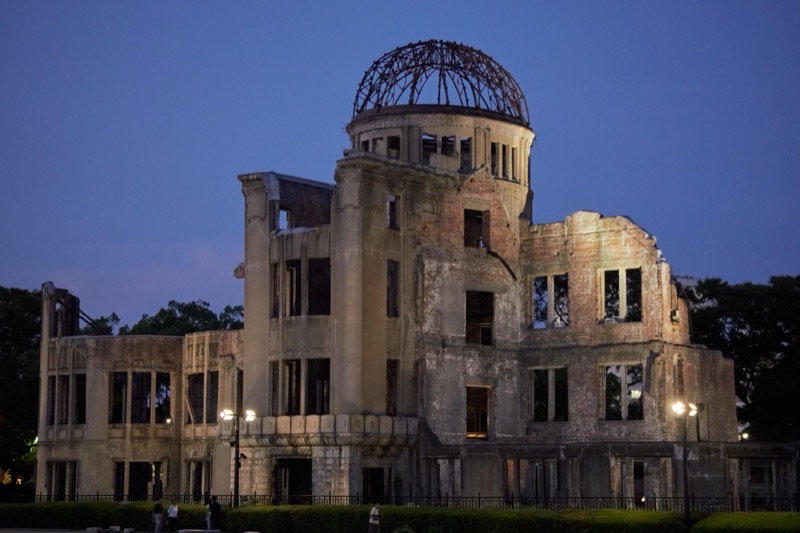
Japan's most-visited history museum and one of the most emotionally powerful museum experiences in the world. The museum holds extensive collections of artifacts — melted watches stopped at 8:15am, shadow burns of human bodies on stone steps, children's clothing, first-person video testimonies from hibakusha (atomic bomb survivors). The A-Bomb Dome (Genbaku Dome) stands just outside: the skeletal ruin of the former Industrial Promotion Hall, preserved exactly as it stood after the blast. Entry is ¥200 for adults. Allow 3–4 hours. The Peace Park itself is free and spans the riverbank — cenotaph, Flame of Peace, Children's Peace Monument, and 1,000 origami cranes from international visitors.
Nagasaki Atomic Bomb Museum
Smaller and more intimate than Hiroshima's, Nagasaki's museum focuses deeply on the human story — what the blast did to individuals, families, and neighborhoods. The 3D terrain model showing the bomb's impact across Nagasaki's hilly valleys is particularly effective. The museum also covers the political context of the second bomb (dropped just three days after Hiroshima) and Japan's subsequent pacifist stance. Entry is ¥200. The Peace Park nearby features the iconic Nagasaki Peace Statue and the hypocenter park, marking the exact point of detonation.
Winner takeaway
- Winner: Hiroshima (museum); Nagasaki (setting and emotional intimacy)
- Why: Hiroshima's Peace Memorial Museum is larger, better funded, and the A-Bomb Dome ruin adds an outdoor anchor that Nagasaki can't match. But many travelers find Nagasaki's museum more emotionally direct, and the hilly city backdrop makes the peace park more scenic. The debates on Reddit are genuinely split — both are worth your time.
- Who this matters for: If the primary goal is the definitive atomic bomb museum experience, Hiroshima. If you want a less crowded, more reflective visit, Nagasaki.
🏙️ Beyond the Museums
Both cities have more to offer beyond their WWII memorial sites — and this is where Nagasaki's depth really shines.
Hiroshima beyond the Peace Park
Hiroshima Castle is a faithful 1958 reconstruction of the 16th-century original (entry ¥370, includes small museum). The surrounding moat and grounds are lovely, especially in cherry blossom season. Shukkeien Garden (¥260) is an exquisite traditional garden with a central pond, teahouses, and seasonal blooms — one of Reddit's most recommended hidden gems in the city. The Hiroshima Museum of Art houses European impressionist works. The city's Hondori shopping arcade is Japan's longest covered shopping street. Beyond the memorial zone, Hiroshima feels like a modern, rebuilt Japanese city — pleasant but not distinctively different from others.
Nagasaki beyond the Peace Park
This is where Nagasaki earns its reputation as one of Japan's most unique cities. Glover Garden is an open-air museum of 19th-century Western-style homes built by foreign merchants during the Meiji period — the views over the harbor from here are spectacular. Dejima is a reconstructed Dutch trading post from the Edo period (1641–1854), the only point of contact between Japan and the outside world for two centuries — a remarkable glimpse into Tokugawa-era isolationism. Oura Cathedral (1864) is Japan's oldest Gothic-style church and a National Treasure. Nagasaki Chinatown (Shinchi) is one of Japan's three major Chinatowns. The 26 Martyrs of Japan memorial marks the site of the 1597 crucifixions that established Nagasaki's Catholic martyr history. The city's streetcar system connects all these in a loose loop — Nagasaki rewards slow exploration.
🍜 Food & Dining
Both cities have distinctive local food cultures shaped by their histories — Hiroshima's okonomiyaki and Nagasaki's champon are two of Japan's most recognizable regional dishes.
Hiroshima food
Hiroshima-style okonomiyaki is fundamentally different from Osaka's version: instead of mixing ingredients into the batter, Hiroshima layers them — crepe-thin batter, cabbage, pork, soba noodles or udon, and egg, cooked on an iron griddle. The result is richer and more substantial. Dedicated okonomiyaki buildings (like Okonomimura) house dozens of vendors across multiple floors. Price: ¥1,000–1,500 per plate. Hiroshima oysters from the Seto Inland Sea are Japan's finest — best October through March when plump and in season. Momiji manju (maple leaf-shaped cakes filled with red bean paste, cream, or chocolate) are the city's iconic souvenir snack. The Hondori shopping area and Nagarekawa district have good izakayas and bars for evening dining.
Nagasaki food
Champon is Nagasaki's signature dish: a thick, milky soup loaded with seafood, pork, and vegetables over chewy noodles — invented by a Chinese restaurant owner in the 1890s to feed Chinese students cheaply. The original Shikairou restaurant in Chinatown still serves the definitive version (¥1,500–2,000). Sara-udon uses the same ingredients as champon but with crispy fried noodles — a crunchy, satisfying contrast. Castella (kasutera) is a Portuguese-derived sponge cake unique to Nagasaki — Fukusaya Castella (founded 1624) is the legendary bakery. Nagasaki beef from Kyushu's cattle is quietly excellent. Toruko rice (Turkish rice, despite having nothing to do with Turkey) is a local staple combining pilaf, spaghetti, and tonkatsu on one plate — a uniquely Nagasaki dish born of postwar fusion cooking.
🚢 Day Trips
Hiroshima's star: Miyajima Island
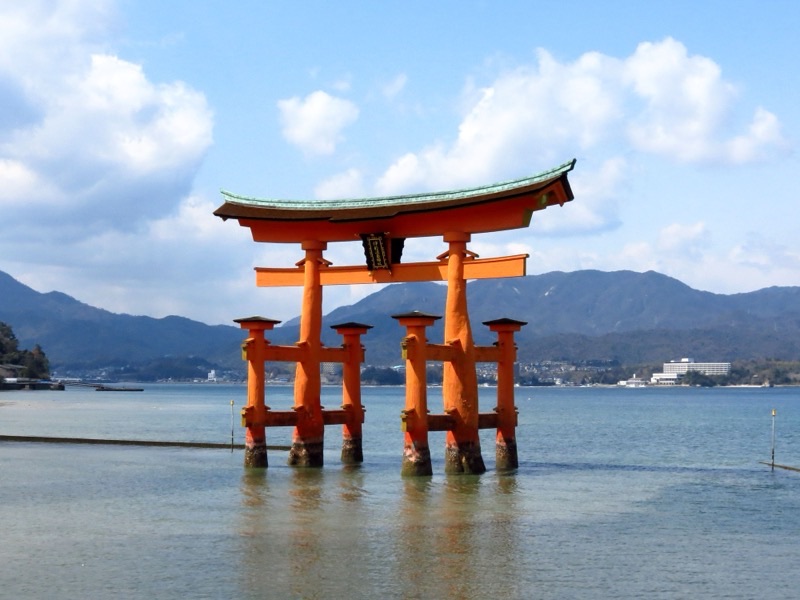
Miyajima (officially Itsukushima) is one of Japan's Three Views and a UNESCO World Heritage Site. The island is famous for the floating torii gate of Itsukushima Shrine, which appears to float at high tide — the iconic image appears in every Japan travel guide for good reason. Beyond the shrine, the island has wild deer roaming freely (habituated to tourists, occasionally stealing food), the forested Mount Misen accessible by ropeway or hiking trail (90 minutes, views over the Seto Inland Sea), and excellent seafood restaurants along the approach street. Day trip from Hiroshima: 25 minutes by JR train to Miyajimaguchi, then 10 minutes by ferry. Total cost: ¥340 one-way by ferry + JR (¥680 return). Visit at different tide heights if you stay overnight — the torii looks completely different at low tide (walk right up to it) versus high tide (floating).
Nagasaki's star: Gunkanjima (Hashima Island)
Gunkanjima (Battleship Island) is a UNESCO World Heritage-listed abandoned coal mining island about 18km offshore. Its crumbling concrete towers and dense Meiji-era apartment blocks rising from the sea create an eerie, unmistakably dramatic skyline. Inhabited until 1974, it once had the world's highest population density. Guided boat tours leave from Nagasaki Port (Odori Pier) and cost approximately ¥4,500–6,000. Crucially: landing is weather-dependent and not guaranteed — sea conditions frequently prevent going ashore. Even a circumnavigation without landing is compelling. Book well in advance in peak season.
Other Hiroshima day trips: Onomichi (art temple town, 45 min by train), Itsukushima Shrine on Miyajima (covered above), Kure (naval museum, Yamato replica, 35 min by train).
Other Nagasaki day trips: Unzen Onsen (active volcano and hot springs, 90 min by bus), Huis Ten Bosch (Dutch-theme park, 80 min by train), Sasebo (US naval base city, nearby beaches).
Winner takeaway
- Winner: Hiroshima (day trips)
- Why: Miyajima Island is a near-perfect day trip — easy, reliable, and delivers one of Japan's most iconic images. Gunkanjima is fascinating but weather-dependent and not guaranteed. That said, if Gunkanjima is on your list specifically, make Nagasaki your base and book the tour in advance.
- Who this matters for: Anyone wanting a guaranteed day trip highlight chooses Hiroshima/Miyajima. Anyone willing to gamble on sea conditions for a truly unique experience chooses Nagasaki/Gunkanjima.
💰 Cost Comparison
Both cities are similar in daily cost — both are mid-sized Japanese cities cheaper than Tokyo or Kyoto. The bigger cost variable is getting there, not staying there.
| Expense | 🏛️ Hiroshima | ⛪ Nagasaki |
|---|---|---|
| Budget guesthouse / capsule hotel | ¥3,500–6,000/night | ¥3,000–5,500/night |
| Mid-range business hotel | ¥8,000–15,000/night | ¥7,000–13,000/night |
| Lunch (okonomiyaki / champon) | ¥900–1,500 | ¥800–1,500 |
| Dinner (izakaya) | ¥1,500–3,000 | ¥1,200–2,500 |
| Peace Museum entry | ¥200 | ¥200 |
| Miyajima ferry + JR (return) | ¥680 | — |
| Gunkanjima tour | — | ¥4,500–6,000 |
| Hiroshima Castle entry | ¥370 | — |
| Glover Garden entry (Nagasaki) | — | ¥620 |
| Shinkansen from Osaka (1-way) | ¥11,000–13,000 | ¥18,000+ (via Hakata) |
| Daily budget (mid-range) | ¥8,000–14,000 ($55–95) | ¥7,000–13,000 ($50–90) |
The main cost difference is getting there, not staying there. Hiroshima is directly on the Tokaido-Sanyo Shinkansen line, one of Japan's busiest routes — a competitive market that keeps prices in check. Nagasaki requires either a flight from Haneda/Itami or a Shinkansen + limited express combination that adds time and cost. JR Pass holders can cover both cities, but the Nagasaki routing still takes considerably longer.
🚅 Getting There
Reaching Hiroshima
Hiroshima sits on the Sanyo Shinkansen line — one of Japan's busiest and most connected. From Shin-Osaka: Nozomi or Hikari ~90–110 minutes, approximately ¥11,000–13,000 one-way (JR Pass holders use Hikari or Kodama, not Nozomi). From Tokyo: ~4 hours by Nozomi, ~¥19,000+. From Kyoto: ~1 hour 45 minutes. The city is also accessible by overnight highway bus from Osaka for ¥2,000–4,000 if budget is priority. Within Hiroshima, trams (streetcars) cover the city efficiently for ¥200 flat fare.
Reaching Nagasaki
Nagasaki requires more planning. By Shinkansen: Tokyo/Osaka → Hakata (Fukuoka) by Shinkansen, then the Nagasaki Shinkansen (Nishikyushu Shinkansen, opened 2022) from Takeo-Onsen to Nagasaki in 23 minutes. But there's a gap — you still need a limited express from Hakata to Takeo-Onsen (~65 min, ¥2,280). Total from Osaka: ~4 hours and ¥18,000+. By flight: From Haneda to Nagasaki Airport, 2 hours, then ~1 hour by bus to city center — often the fastest option from Tokyo (¥10,000–20,000 on LCCs). Note: the Nagasaki Shinkansen section is NOT covered by standard JR Pass — check the specific pass terms. Within Nagasaki, streetcars cover most attractions for ¥140 per ride.
Winner takeaway
- Winner: Hiroshima (accessibility)
- Why: Hiroshima is dramatically easier to reach from Tokyo, Osaka, and Kyoto. It's one stop on a major Shinkansen line. Nagasaki requires additional connections and is better suited to travelers doing a broader Kyushu trip rather than a quick detour from the Tokaido corridor.
- Who this matters for: Short Japan trips (7–10 days) should usually choose Hiroshima. Longer trips (14+ days) can comfortably include Nagasaki via a Kyushu loop.
🌸 Best Time to Visit
Both cities have similar climates — mild and wet. Nagasaki is slightly warmer year-round, being on Kyushu, which is Japan's southernmost main island.
Cherry Blossom (late March–early April): Both cities bloom at roughly the same time. Hiroshima's Peace Park and castle moat are classic cherry blossom spots — pink petals falling around the A-Bomb Dome create a quietly moving scene. Nagasaki's Glover Garden and Suwa Shrine approach are beautiful. Nagasaki's hilly terrain means you'll catch blooms at different elevations across multiple days.
Summer (July–August): Hot and humid in both cities. August 6 in Hiroshima is the anniversary of the atomic bomb — a deeply moving time to visit, with candlelight ceremonies on the river. However, this is also peak tourist season and prices spike. August 9 in Nagasaki has equivalent memorial ceremonies.
Autumn (October–November): Both cities are excellent — comfortable temperatures, foliage at higher elevations. Miyajima's maple trees turn red in late November. Nagasaki's hillside parks are particularly atmospheric in autumn.
Winter (December–February): Mild by Japanese standards (no snow typically). The Nagasaki Lantern Festival (Lantern Festival, during Chinese New Year, late January–February) is one of Nagasaki's most spectacular events — 15,000+ lanterns illuminate the city with Chinese, Dutch, and Japanese decorations. Worth timing a visit around this if possible.
🏨 Where to Stay
Hiroshima accommodation
The best area to stay is near Hiroshima Station or the Peace Park area (a 15-minute tram ride apart). Peace Park-adjacent hotels put you steps from the A-Bomb Dome for evening and early morning walks when crowds thin. Business hotels (Dormy Inn Hiroshima, APA Hotel, Toyoko Inn) run ¥7,000–12,000/night. The Sheraton Grand Hiroshima is the upscale option (¥25,000+). The Hana Hostel Hiroshima and similar budget hostels are popular with backpackers (¥3,500–5,000 for a dorm). Miyajima Island has limited accommodation — staying overnight (one of the few traditional inns) is expensive (¥20,000–40,000+/person) but rewarding: you'll experience the island after day tourists leave and before they arrive.
Nagasaki accommodation
Stay near Nagasaki Station or in the Hamanomachi/Shianbashi area (the central nightlife and shopping district, about 2 tram stops from the station). Business hotels in both areas run ¥6,000–11,000/night. The hillside location of many Nagasaki sights means good views from upper-floor rooms — worth paying slightly more for. Glover Garden area hotels are atmospheric but you'll be climbing steep streets. For a unique stay, Nagasaki has traditional ryokan options in the Inasayama area with city views. The ANA Crowne Plaza Nagasaki is the upmarket option near the harbor.
🔀 Why Not Both?
Hiroshima and Nagasaki are roughly 2 to 2.5 hours apart by Shinkansen (Hiroshima → Hakata → Nagasaki direction), making a combined visit very doable on trips of 10 days or more. The challenge is that Nagasaki sits off the standard Tokaido-Sanyo corridor — it requires a detour onto Kyushu, which most short Japan itineraries don't make.
Best combined routing (10–14 day Japan trip): Tokyo → Kyoto → Osaka → Hiroshima (2 nights: Peace Park + Miyajima) → Hakata/Fukuoka (1 night) → Nagasaki (1–2 nights) → fly back to Tokyo from Fukuoka. This is a classic Kansai-Kyushu loop covered by the JR Pass (check Nagasaki Shinkansen exceptions).
If you're pressed for time: Choose Hiroshima. It's on the main line, 2 hours from Osaka, and the Peace Memorial Museum + Miyajima combination delivers one of Japan's best 2-day experiences. Save Nagasaki for a return trip dedicated to Kyushu — Nagasaki + Fukuoka + Kagoshima + Yakushima is a remarkable 10-day Kyushu circuit.
Also consider: Osaka vs Fukuoka for the gateway decision, Hokkaido vs Kyushu for the bigger Japan regional choice, and Kamakura vs Nikko for Tokyo day trip comparisons.
Winner takeaway
- Winner: Do both if you can!
- Why: They're very different cities that complement each other. Hiroshima delivers the definitive WWII peace experience. Nagasaki delivers depth, uniqueness, and the sense of discovering a Japan most tourists miss. Many travelers say Nagasaki surprised them more. Don't make it a competition.
- Who this matters for: Anyone with 12+ days in Japan and including Kyushu should visit both. First-time visitors with 10 days or fewer: prioritize Hiroshima, plan Nagasaki for next time.
🎯 The Decision Framework
Choose Hiroshima If…
- It's your first Japan trip and you're following the classic Osaka–Kyoto–Hiroshima route
- Miyajima Island's floating torii gate is on your bucket list
- You want the most comprehensive atomic bomb museum in Japan
- You're traveling from Osaka or Kyoto (2 hrs by Shinkansen)
- You want Hiroshima-style okonomiyaki straight from the source
- You're on a tight itinerary and need the most accessible option
- Cherry blossom season with the iconic Peace Park sakura scene
- JR Pass travel along the standard Tokaido-Sanyo corridor
Choose Nagasaki If…
- You've already done Hiroshima and want something different
- You're doing a Kyushu loop (Fukuoka, Kumamoto, Kagoshima)
- International history — Dutch, Portuguese, Chinese influence — fascinates you
- Gunkanjima abandoned island is specifically on your list
- The Nagasaki Lantern Festival (Chinese New Year) timing works for you
- You want the less-touristy, more authentic Japanese city experience
- You prefer smaller, more walkable cities over larger tourist hubs
- Mount Inasa's night view — one of Japan's top three — appeals to you
❓ Frequently Asked Questions
Should I visit Hiroshima or Nagasaki if I only have time for one?
For first-time visitors on a typical Japan itinerary, Hiroshima is the more practical choice. It's on the main Shinkansen line, easier to reach from Osaka and Kyoto (90–110 min), has a more celebrated peace museum, and Miyajima Island makes for one of Japan's best day trips. That said, Nagasaki is one of Japan's most unique cities — its blend of Portuguese, Dutch, and Chinese history makes it feel unlike anywhere else. If you've already done Hiroshima, Nagasaki is absolutely worth the detour.
Which has a better atomic bomb museum — Hiroshima or Nagasaki?
Most travelers who've visited both rate Hiroshima's Peace Memorial Museum as the more comprehensive and emotionally powerful experience. It's larger, better funded, and the A-Bomb Dome ruin stands outside. Nagasaki's Atomic Bomb Museum is excellent and more intimate — some find its focus on human impact more direct. Both charge ¥200 entry. Both are worth visiting; Hiroshima's museum is generally considered superior, but Nagasaki's is no disappointment.
Is Nagasaki safe to visit in terms of radiation?
Yes, completely. Both Hiroshima and Nagasaki are entirely safe to visit. Radiation from the 1945 atomic bombings has long since dissipated to background levels. Both cities are modern, densely populated Japanese cities with no elevated radiation risk whatsoever. This is a common tourist concern, but there is zero health risk from visiting either city today.
How long do I need in Hiroshima?
Plan for 2 days minimum: Day 1 for the Peace Memorial Park, A-Bomb Dome, and museum (3–4 hours), plus Hiroshima Castle and Shukkeien Garden. Day 2 for Miyajima Island (floating torii, shrine, optional Mount Misen hike). You can cover the essentials in 1.5 days if pressed, but 2 full days is more comfortable and lets you experience the city's atmosphere beyond the memorials.
How long do I need in Nagasaki?
1.5 to 2 days comfortably covers Nagasaki's main highlights: Atomic Bomb Museum and Peace Park (half day), Glover Garden, Dejima, Oura Cathedral, Chinatown, and Mount Inasa night view. Add a full day for the Gunkanjima boat tour if that's on your list. Nagasaki is compact and walkable by streetcar.
Can I visit both Hiroshima and Nagasaki on the same trip?
Yes, and it's highly recommended if you have the time. From Hiroshima to Nagasaki takes about 2–2.5 hours by Shinkansen to Hakata (Fukuoka) and then a limited express. A classic routing: Osaka → Hiroshima (2 nights) → Fukuoka (1 night) → Nagasaki (2 nights) → fly back to Tokyo from Fukuoka. JR Pass covers most of this; check the Nagasaki Shinkansen section separately.
Which city has better food — Hiroshima or Nagasaki?
Both have distinctive local cuisines. Hiroshima is famous for Hiroshima-style okonomiyaki (layered with soba noodles, genuinely different from Osaka's version), Seto Inland Sea oysters (October–March), and momiji manju cakes. Nagasaki has champon noodle soup (Chinese-influenced, rich and hearty), sara-udon, Portuguese-derived castella sponge cake, and Nagasaki beef. Foodies will enjoy both cities — this is genuinely a tie.
What is Gunkanjima and is it worth visiting from Nagasaki?
Gunkanjima (Hashima Island) is a UNESCO World Heritage-listed abandoned coal mining island 18km from Nagasaki. Its crumbling concrete towers rising from the sea are genuinely eerie and spectacular. Guided boat tours cost approximately ¥4,500–6,000 and take 2.5–3 hours. Landing is weather-dependent and not guaranteed — sea conditions frequently prevent going ashore. Book well in advance in peak season, and check weather forecasts.
Ready to plan your Western Japan adventure?
Get a free custom itinerary for Hiroshima, Nagasaki, or a combined Kyushu loop — built from real traveler insights, not generic templates.
🎟️ Book Tours & Experiences
Hand-picked tours and activities for both destinations — book with free cancellation
Experiences via Viator — free cancellation on most tours