Tabiji.ai Travel Safety Series · Book 10

Don’t lose a dollar to a “Got a ride waiting, $60 fixed!” stranger at Toronto Pearson.

75 documented tourist scams across 12 Canadian cities — drawn from Canadian press (Globe and Mail, Toronto Star, CBC News, CTV News, Montreal Gazette, Vancouver Sun) and Canadian Anti-Fraud Centre (1-888-495-8501) records. You’ll learn the exact scripts scammers use in Toronto, Montreal, and Vancouver, the red flags that give them away, and the calm English (and French) scripts that shut them down.

📖 ~302 pages paperback / ~240 Kindle 📱 Kindle eBook + paperback 🌍 12 Canadian cities ⚠️ 75 scams
Buy on Amazon → $4.99 on Kindle
T A B I J I . A I Travel Safety Series VOLUME TEN CANADA Tourist Scams 75 DOCUMENTED SCAMS Don’t Lose $1,000 in Canada Drawn from Canadian press and Anti-Fraud Centre records. 12 CITIES · 2026 EDITION · BY TABIJI

Inside this book

A preview of what’s documented — scripts, red flags, and the moves that shut each scam down.

75 scams 12 Canadian cities Canadian press & CAFC records Updated annually
Excerpt · Toronto

The Pearson Airport Uber Cancel-and-Cash

You step out into Toronto Pearson’s Terminal 1 arrivals curb after a long flight, and a “driver” who accepted your Uber booking tells you the app glitched — “just cancel it yourself, we’ll settle cash, $100 to downtown.” The real Uber fare is 45–65 CAD. The Toronto Star and Uber’s own 2024 driver-fraud coverage have flagged the pattern at YYZ, YOW, YQB, YHZ, YYC, and YVR. The defense is universal: never cancel the app yourself, and decline any cash-negotiation. Let the app process the ride to completion. If the driver insists, exit at the next well-lit entrance and re-book…

Red flag: Any driver who asks you to cancel the Uber app. Real drivers never do this.
Full scam, the plate-check script & the six-airport cross-reference in the book.
Excerpt · Montreal

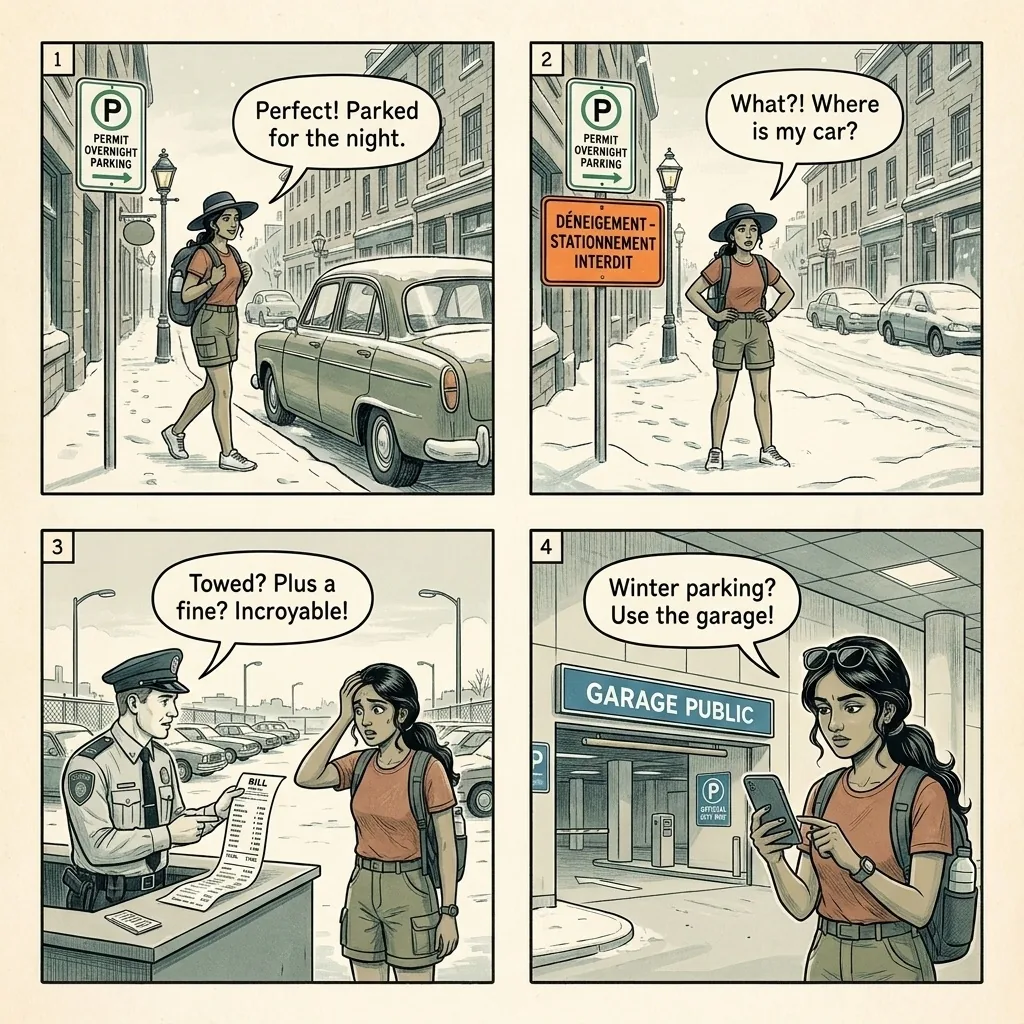
The Winter Parking Ticket and Tow Trap

Between November and April, the City of Montreal declares snow-removal routes on designated streets with temporary signage — sometimes obscured by snow itself. Vehicles parked on these stretches are ticketed ($60–$200) and towed, with tow-lot recovery fees running 400–700 CAD per incident. CBC Montreal has covered the genuinely-coordinated enforcement cycle across multiple winters; it hits Old Montreal and the Plateau hardest. The defense is to use only parking lots and garages during November–April, to never park on an Old Montreal or Plateau street overnight in winter without reading every sign within 30 meters of your spot, and to download the Info-Stationnement app for real-time snow-route alerts…

Red flag: Any overnight street parking on the Plateau, Mile End, or Vieux-Montréal between November and April.
Full pattern, the Info-Stationnement workflow & the tow-lot recovery script — inside.
Excerpt · Whistler

The Fraudulent QR-Code Parking Sticker

CBC Vancouver’s 2024–2025 investigation documented 24+ fraudulent “PAY HERE” stickers placed over legitimate paid-parking signs across Whistler Village lots — the QR codes on the fake stickers redirect to a lookalike payment site that captures credit-card data. The defense is to scan parking QR codes only when the sticker is clearly an original (unpeeled, flush with the sign, no layer beneath) and to pay only through the official PayByPhone app or the Resort Municipality of Whistler’s posted parking website. If in doubt, use a village-centre paid-parking garage (Day Lot 1–5) where fraudulent stickers are less common…

Red flag: Any QR-code sticker that’s been added over the top of existing signage, or any payment site asking for full card details after a quick scan.
Full pattern, the PayByPhone verification protocol & the card-cloning recovery steps — inside.

A look inside

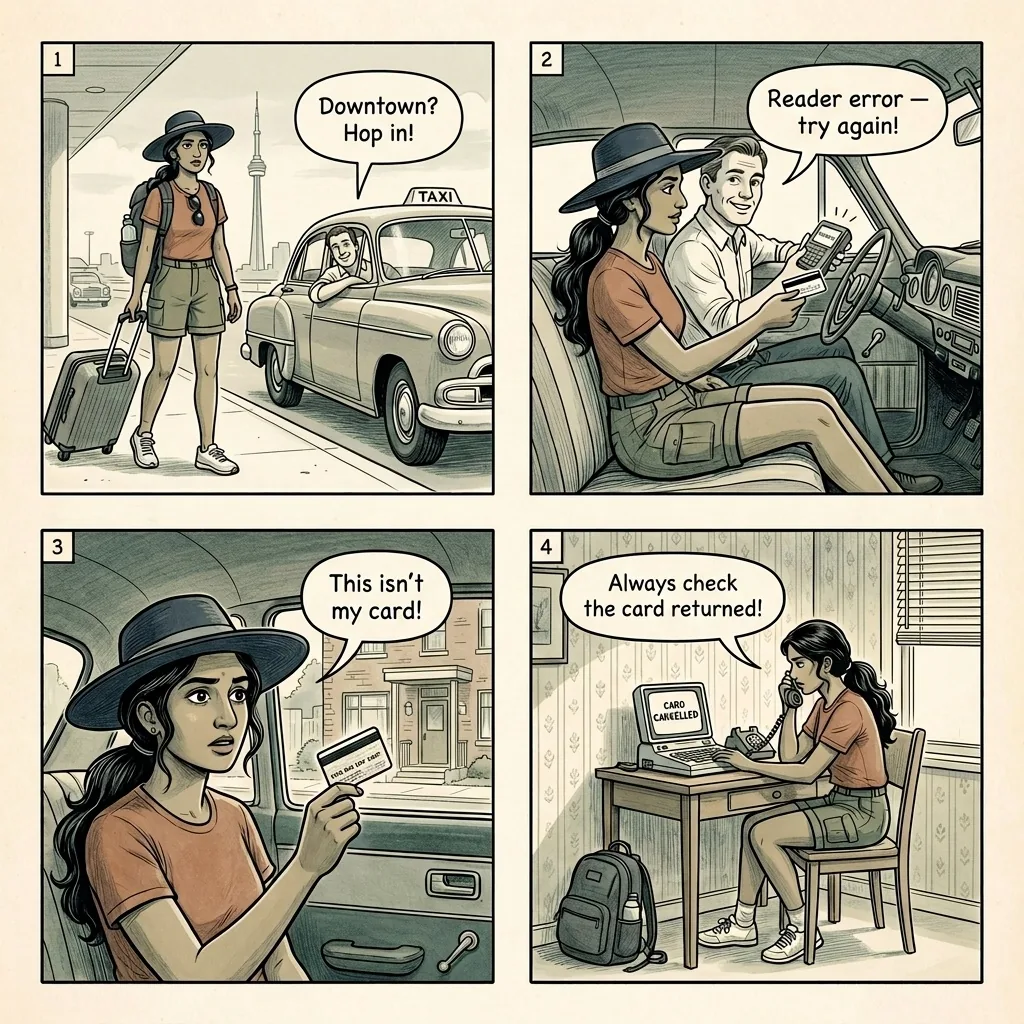
Every scam in the book gets a four-panel comic. A sneak peek of two of the 75:

Taxi Card-Swap Fraud — comic illustration
Toronto · Taxi Card-Swap Fraud
Winter Parking Tow Trap — comic illustration
Montreal · Winter Parking Tow Trap

12 Canadian cities covered

From Toronto’s Pearson fake-Uber and taxi-card-swap corridor to Montreal’s winter parking-tow trap, Whistler’s CBC-documented QR-sticker fraud, Calgary Stampede’s ticket-scalper fakes, Banff’s Pursuit Collection American-pricing overcharge, and Vancouver’s Gastown fake-monk bracelet scam — full coverage of where travelers actually get caught out.

🏙️ Toronto
💦 Niagara Falls
🏛️ Ottawa
Montreal
🏰 Quebec City
Halifax
🤠 Calgary
🏞️ Banff
🛶 Jasper
🎿 Whistler
🌉 Vancouver
🚢 Victoria BC

Why tabiji.ai writes these books

Volumes 1–9 (Japan, Italy, France, Thailand, Greece, Vietnam, Spain, Indonesia, China) set the series structure. Canada sits at a dense crossroads of North-American scam archetypes — the airport Uber cancel-and-cash script, the taxi card-swap fraud, the off-platform vacation-rental booking fraud, and the captive-market mountain-town pricing inflation. Learn the Canada pattern and you’ll spot the same move in New York, Chicago, Seattle, and Sydney.

📰

Canadian-press sourced, not Reddit-only

Every scam is documented against Canadian news coverage — Globe and Mail, Toronto Star, CBC News, CTV News, Montreal Gazette, Vancouver Sun, Calgary Herald, National Post — plus RCMP and provincial-police advisories, Canadian Anti-Fraud Centre (1-888-495-8501) reports, Competition Bureau consumer warnings, and firsthand traveler accounts on r/canada, r/askTO, r/vancouver, and r/montreal. Named operators and dated incidents where we have them.

🗣️

English + French scripts, not vague warnings

A full appendix of exit phrases in both official Canadian languages — “No thank you / Non merci”, “Please don’t touch me / S’il vous plaît, ne me touchez pas”, “I’d like to call 911 to verify” — with context on when to use them and which Canadian police service to ask for. Plus the 6 universal scam patterns that let you spot variations we haven’t documented yet.

🔄

Updated annually

Scams evolve. Toronto taxi card-swap variants rotate every season. Whistler parking-QR stickers appear in new lots each winter. Calgary Stampede ticket-scalper networks shift with each year’s lineup. Banff’s Pursuit Collection pricing updates annually — we re-research and update each book every year. Buy once, re-download future editions from your Amazon library.

TABIJI · TRAVEL SAFETY What the guidebooks won’t tell you. Toronto runs the most-documented taxi card-swap script in Canada. Montreal and Whistler work parking-tow and QR-sticker scams. Banff and Jasper pad fees at every Rockies combo-pass viewpoint. This book documents 75 specific scams across 12 Canadian cities — drawn from the Globe and Mail, CBC, CTV News, Toronto Star, Montreal Gazette, Vancouver Sun, and Canadian Anti-Fraud Centre (1-888-495-8501) records. You’ll learn the exact scripts, the red flags, and the moves that shut them down. INSIDE 75 scams with exact scripts and Canadian-dollar amounts Six universal red-flag patterns covering every scam in Canada A four-panel Drawn & Quarterly indie comic for every scam entry Coverage of Toronto, Montreal, Vancouver, Banff, Whistler & 7 more English + French phrases you will encounter at the scene, with pronunciation PLUS A English + French exit-phrase card you can screenshot to your phone A post-scam recovery playbook (first 15 min, first hour, first day) Emergency contacts: 911 + CAFC hotline + every major Canadian hospital KINDLE EDITION · 2026

“What the guidebooks won’t tell you.”

Part of the Travel Safety Series

Canada is Volume 10 of 15 flagship titles. Prior volumes cover Japan, Italy, France, Thailand, Greece, Vietnam, Spain, Indonesia, and China — all live on Amazon Kindle. Each country gets the same treatment — real traveler stories, local-press sourced, annual updates.

Frequently asked

Quick answers about the book, pricing, and updates.

What format is this book?

Kindle eBook and 6×9″ trade paperback — the Kindle reads on any phone, tablet, or computer with the free Kindle app, and the paperback is available through Amazon’s KDP print-on-demand network.

How long is it?

302 pages in paperback, ~230 pages on Kindle — written to be read in a single flight over and referenced on your phone in-country.

How much does it cost?

$4.99 USD on Amazon Kindle. Price varies slightly by Amazon region.

Will the book be updated?

Yes — we re-research and update each book annually as scams evolve. Buy once, re-download future editions from your Amazon library at no extra cost.

Can I get a refund?

Yes. Amazon’s standard Kindle refund policy applies — you have 7 days from purchase to return for a full refund, no questions asked.

Available now on Amazon Kindle

75 scams, 12 Canadian cities, the exact scripts and calm English and French phrases you need. $4.99 — read it on the flight over.

Buy on Amazon →