How we built this comparison
This page combines traveler discussion patterns, published price ranges, flight schedules, and seasonal data to help you decide between Tuscany and Santorini.
- Reviewed 100+ Reddit threads from r/travel, r/solotravel, r/ItalyTravel, r/GreeceTravel, and regional subreddits for authentic traveler sentiment and tips.
- Verified costs and logistics against current booking platforms (Booking.com, Skyscanner, Rentalcars.com) and major travel blogs for accuracy.
- Cross-referenced seasonal patterns, weather data, and crowd levels from multiple sources to provide realistic 'best time to visit' advice.
⚡ The TL;DR Verdict
Choose Tuscany if you want costs & budget, food & wine, culture & history. Choose Santorini if you want nature & scenery, beaches & water activities, nightlife. Split your trip if you want both experiences without forcing one destination to do the other's job.
- Choose Tuscany: costs & budget, food & wine, culture & history.
- Choose Santorini: nature & scenery, beaches & water activities, nightlife.
- Choose Both: If you have 2+ weeks and a generous budget, combine them! Start with 7-10 days exploring Tuscany's diverse regions by car, then fly to Santorini for 4-5 days of iconic relaxation and sunset gazing to cap off an epic European adventure.
- Split your trip: Split your trip if you want Tuscany for its strongest wins but still want Santorini for the categories where it clearly does better.
Best-for snapshot
Fast answers first: who each destination tends to serve best, pulled from the page’s own comparison table and verdict.
Best for food
TuscanyRich, rustic Tuscan cuisine; world-class wines (Chianti, Brunello); farm-to-table experiences.
Best for nightlife
SantoriniFira is lively with bars and clubs, Oia is more focused on romantic sunset drinks.
Best for budget
TuscanyGenerally more affordable, especially outside Florence; agriturismos and local trattorias offer great value.
Best for first-timers
TieA softer call based on overall ease and beginner-friendliness.
Best for couples
SantoriniDramatic volcanic caldera, iconic white-washed villages clinging to cliffs, deep blue Aegean Sea.
Best for solo travelers
TuscanyRich, rustic Tuscan cuisine; world-class wines (Chianti, Brunello); farm-to-table experiences.
Best for families
TuscanyGenerally more affordable, especially outside Florence; agriturismos and local trattorias offer great value.
Quick scorecards
Lightweight scoring for scanability - a decision aid, not fake precision.
Tuscany
Santorini
Quick Comparison
| Category | Tuscany | Santorini | Winner |
|---|---|---|---|
| Costs & Budget | Generally more affordable, especially outside Florence; agriturismos and local trattorias offer great value. | One of Europe's most expensive destinations, particularly for accommodation and dining with a view. | Tuscany |
| Nature & Scenery | Rolling hills, cypress-lined roads, vineyards, ancient olive groves, diverse landscapes. | Dramatic volcanic caldera, iconic white-washed villages clinging to cliffs, deep blue Aegean Sea. | Santorini |
| Food & Wine | Rich, rustic Tuscan cuisine; world-class wines (Chianti, Brunello); farm-to-table experiences. | Fresh seafood, Greek salads, unique Santorini wines (Assyrtiko), more casual dining. | Tuscany |
| Culture & History | Cradle of the Renaissance, rich in art, architecture, and historical cities like Florence and Siena. | Ancient Minoan settlements, Cycladic architecture, unique volcanic history. | Tuscany |
| Getting Around | Best explored by car for flexibility, but trains connect major cities. Roads are scenic. | ATVs, scooters, buses are common; small island, so distances are short. Taxis are pricey. | Tuscany |
| Accommodation | Wide range from luxury hotels to charming agriturismos and villas, good value available. | Dominated by luxury cave hotels and caldera-view suites, highly priced, limited budget options. | Tuscany |
| Beaches & Water Activities | Coastal areas like Maremma offer sandy beaches, but not its main draw. Lacks dramatic sea views. | Unique volcanic beaches (Red, Black sand), crystal-clear Aegean, boat tours, cliff diving. | Santorini |
| Nightlife | Florence has vibrant nightlife, smaller towns are more subdued with quiet bars and evening passeggiatas. | Fira is lively with bars and clubs, Oia is more focused on romantic sunset drinks. | Santorini |
| Day Trips & Exploration | Endless possibilities: Siena, San Gimignano, Pisa, Cinque Terre, Rome (longer trip). | Volcano and hot springs boat tours, nearby islands like Ios or Anafi, limited variety. | Tuscany |
| Weather & Seasons | Spring (April-May) and Fall (Sept-Oct) are ideal; hot summers, mild winters. | Peak season (June-August) is hot and crowded; shoulder seasons (May, Sept-Oct) are best. | Tie |
💰 Costs & Budget
Tuscany is undeniably kinder to your wallet. You can find excellent value in agriturismos (farm stays) for as little as €80-150 ($85-160) per night, often including breakfast. A delicious pasta dish in a local trattoria might cost €12-18 ($13-19), and a good bottle of Chianti from a vineyard, €10-20 ($11-21). Car rentals average €30-50 ($32-54) per day. Expect a comfortable daily budget of €100-200 ($107-215) for mid-range travelers. Santorini, however, is a budget killer. Basic hotel rooms start around €150-250 ($160-270) in Fira or Perissa, but caldera-view rooms in Oia or Imerovigli often exceed €500-1000+ ($540-1070+) per night. Dining with a view can easily push a meal for two past €100-150 ($107-160), with a simple gyro costing €5-8 ($5.50-8.50). Transport, like taxis or ATV rentals, also adds up. "Santorini was beautiful, but my bank account cried. Every cocktail felt like I was buying a small island." For Santorini, a realistic daily budget for a comfortable experience is €250-500+ ($270-540+).
Winner takeaway
- Winner: Tuscany
- Why: Tuscany offers significantly better value across accommodation, food, and activities, making a longer, richer trip more accessible.
- Who this matters for: Budget-conscious travelers, families, and those seeking extended stays without financial strain.
🏞️ Nature & Scenery
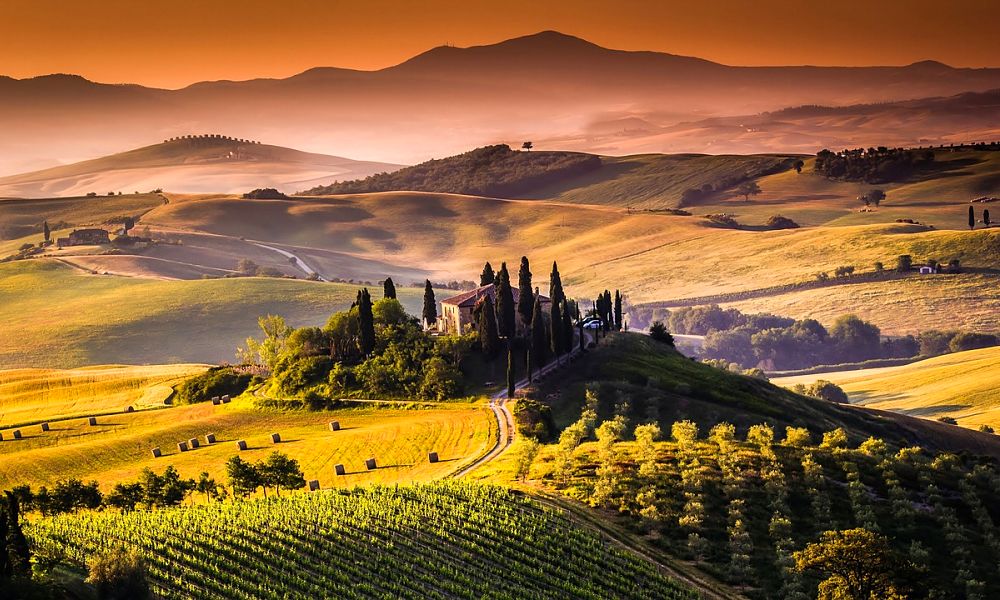
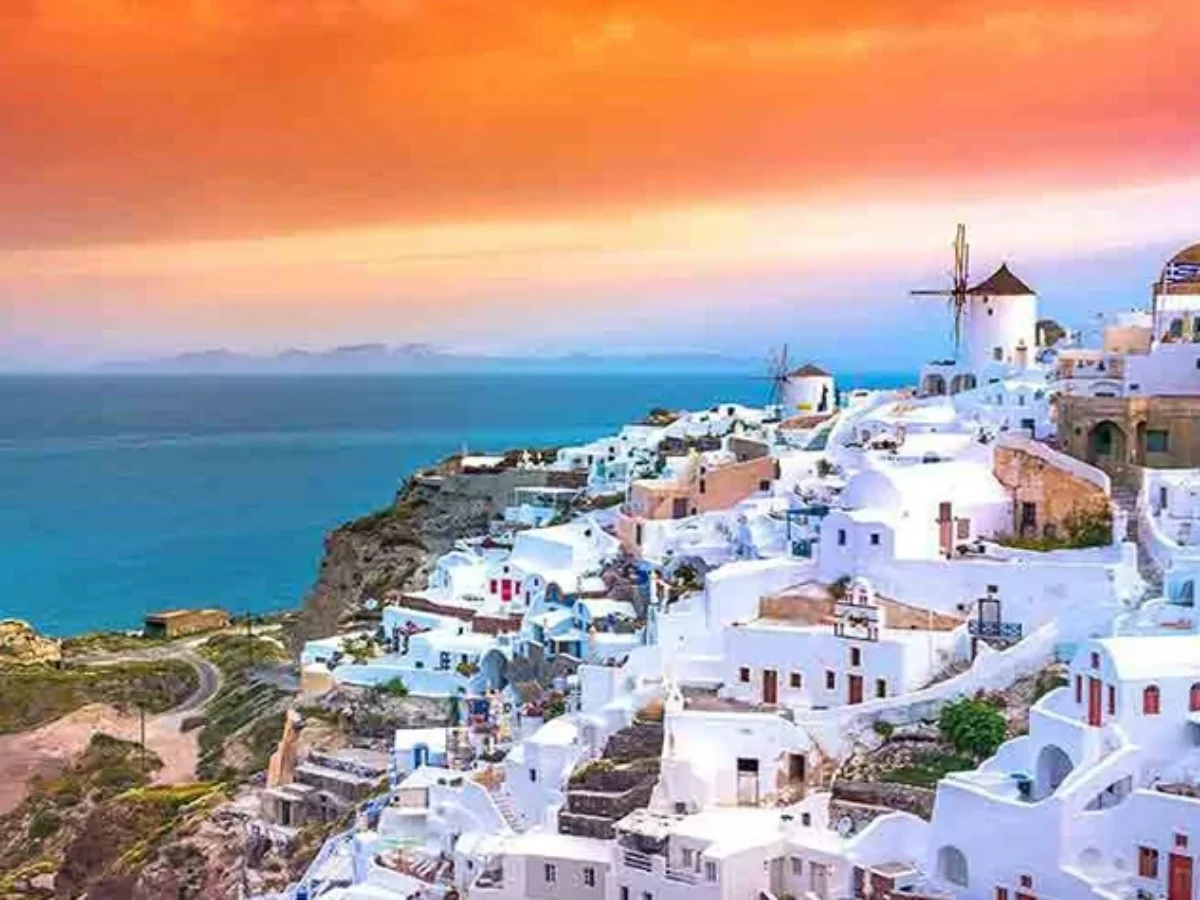
Tuscany offers a gentle, verdant beauty. Its iconic rolling hills, meticulously cultivated vineyards of Chianti and Val d'Orcia, and picturesque cypress avenues create a serene, pastoral landscape perfect for long drives and leisurely walks. Areas like the Apuan Alps offer rugged mountains, while the Maremma coast has wild beaches. It's a landscape that invites exploration and contemplation. Santorini's scenery, however, is pure drama. The crescent-shaped island, a remnant of a massive volcanic eruption, presents a breathtaking spectacle of vertical cliffs, white-washed villages like Oia and Fira perched precariously, and the deep blue Aegean contrasting with the volcanic rock. The caldera views, especially at sunset, are globally famous and truly unique. While Tuscany's beauty is diverse and inviting, Santorini's is iconic, impactful, and instantly recognizable. "Tuscany's pretty, sure, but Santorini's caldera views? That's next-level, once-in-a-lifetime stuff. My jaw was on the floor every sunset."
Winner takeaway
- Winner: Santorini
- Why: Santorini's dramatic, iconic volcanic caldera views are unparalleled and globally renowned for their unique beauty.
- Who this matters for: Photography enthusiasts, honeymooners, and anyone seeking 'wow-factor' landscapes and iconic vistas.
🍝 Food & Wine
Tuscany is a culinary paradise built on simplicity, quality ingredients, and tradition. Expect hearty pasta dishes like Pappardelle al Ragu di Cinghiale (wild boar ragu), Bistecca alla Fiorentina (Florentine steak), and fresh pecorino cheese. The wine scene is legendary, with Chianti, Brunello di Montalcino, and Vino Nobile di Montepulciano leading the charge. Agriturismos often offer cooking classes and wine tastings, like at Fattoria di Maiano near Fiesole, for around €50-100 ($54-107). Local trattorias, such as Trattoria Mario in Florence, offer authentic, affordable meals for €20-30 ($21-32) per person. Santorini’s food focuses on fresh seafood, classic Greek dishes like moussaka and souvlaki, and local specialties like fava (split pea dip) and cherry tomatoes. The crisp, mineral-rich Assyrtiko wine is a must-try. While good, dining is often pricier, especially at caldera-view restaurants like La Maison in Imerovigli where a dinner for two can easily exceed €150 ($160). "Tuscany's food just hits different. Every meal felt like a hug from an Italian nonna. Santorini was good, but not the same soul-level experience." Tuscany's culinary depth, variety, and emphasis on local, seasonal ingredients, paired with its incredible wine, make it a clear winner.
Winner takeaway
- Winner: Tuscany
- Why: Tuscany offers a more diverse, deeply rooted, and globally renowned culinary and wine experience with exceptional quality and value.
- Who this matters for: Foodies, wine connoisseurs, and travelers prioritizing authentic gastronomic journeys.
🏛️ Culture & History
Tuscany is saturated with history and culture, having been the birthplace of the Renaissance. Florence alone houses masterpieces like Michelangelo's David at the Galleria dell'Accademia (entry ~€20/$21), Botticelli's 'Birth of Venus' at the Uffizi Gallery (entry ~€25/$27), and the Duomo by Brunelleschi. Siena's Piazza del Campo, San Gimignano's medieval towers, and Pisa's leaning tower are just a few other iconic historical sites. Every town, every church, tells a story. Santorini's cultural footprint, while fascinating, is more niche. Its history revolves around the Minoan civilization, evident at the Akrotiri archaeological site (entry ~€12/$13), often called the 'Pompeii of the Aegean.' The island's unique Cycladic architecture and its volcanic origins are its primary cultural identifiers, offering a different kind of historical narrative. It's beautiful and unique, but lacks the sheer depth and breadth of artistic and historical significance found in Tuscany. "You can spend weeks in Tuscany and still not see all the art and history. Santorini's cool, but it's more about the views than the museums." For a truly immersive cultural and historical deep dive, Tuscany is unparalleled.
Winner takeaway
- Winner: Tuscany
- Why: Tuscany is a global epicenter of art, history, and Renaissance culture, offering an unmatched density of iconic historical sites and artistic masterpieces.
- Who this matters for: History buffs, art lovers, and those seeking intellectual and educational travel experiences.
🚗 Getting Around
In Tuscany, a rental car is king. It offers the freedom to explore charming hilltop towns like Montepulciano and Montalcino, picturesque backroads, and hidden vineyards at your own pace. Car rentals average €30-50 ($32-54) per day from Florence or Pisa airports, plus fuel (around €1.90/liter or $7.80/gallon) and occasional ZTL fines in city centers if you're not careful. Trains are efficient for inter-city travel (Florence to Siena ~€10/$11), but many of Tuscany's gems are not train-accessible. Santorini is much smaller and easier to navigate. Buses connect Fira to most major villages and beaches for €1.80-2.50 ($1.90-2.70) per ride. ATVs and scooters are popular rentals (€25-40/$27-43 per day), perfect for buzzing around the island. Taxis are available but expensive, e.g., Fira to Oia can be €25-30 ($27-32). The island's compact size makes getting around less of a logistical puzzle, but the variety and scenic beauty of driving in Tuscany, despite the potential navigation quirks, are a huge draw. "Driving through Tuscany's rolling hills was half the trip's magic. Santorini was easy to get around, but nothing compared to those scenic Italian drives."
Winner takeaway
- Winner: Tuscany
- Why: Tuscany wins for the sheer joy and freedom of self-driving through breathtaking landscapes, enabling deeper exploration of diverse regions.
- Who this matters for: Independent travelers, road-trippers, and those who value flexibility and scenic journeys.
🛌 Accommodation
Tuscany offers a fantastic array of accommodation options for every budget and style. You can stay in a luxurious villa near Greve in Chianti, a boutique hotel in Florence (e.g., Hotel Pitti Palace al Ponte Vecchio, from €150/$160), or, for a truly immersive experience, an agriturismo (farm stay) in the countryside, like Agriturismo Fattoria di Maiano (from €120/$129) or Tenuta di Sticciano (from €100/$107), often including meals or cooking classes. These offer incredible value and authenticity. Santorini's accommodation scene is largely defined by its iconic caldera-view cave hotels in Oia, Fira, and Imerovigli. These are often luxurious, boasting private plunge pools and unparalleled views, but come with a hefty price tag, easily €400-1000+ ($430-1070+) per night (e.g., Canaves Oia Epitome). Budget options exist in towns like Perissa or Kamari (e.g., Villa Voula from €80/$86), but they lack the signature Santorini experience. "Finding a great agriturismo in Tuscany felt like hitting the jackpot. Santorini's hotels were gorgeous but felt like I needed to take out a second mortgage." While Santorini offers an iconic luxury experience, Tuscany's diverse, authentic, and more affordable options make it a winner for overall accessibility and value.
Winner takeaway
- Winner: Tuscany
- Why: Tuscany provides a broader range of authentic, high-quality, and more affordable accommodation options, including unique agriturismo experiences.
- Who this matters for: Travelers seeking diverse lodging experiences, value for money, and authentic local stays.
🏖️ Beaches & Water Activities
Tuscany isn't renowned for its beaches, though it does have a coastline. The Maremma region in the south offers pleasant sandy beaches like Cala Violina or Castiglione della Pescaia, which are popular with Italians, but they generally lack the dramatic beauty or turquoise waters found elsewhere in the Mediterranean. They're nice for a summer day, but not a primary reason to visit. Santorini, on the other hand, excels in unique beach experiences and water activities. Its volcanic origin gives it distinct beaches: the famous Red Beach with its towering red cliffs, the black sand beaches of Perissa and Kamari, and the white pebbles of White Beach (accessible by boat). The Aegean Sea is incredibly clear and inviting. Boat tours around the caldera, to the hot springs (Nea Kameni), and to nearby islands like Thirasia are immensely popular (€50-100/$54-107 for a half-day tour). Snorkeling, diving, and sailing are also prevalent. "The Red Beach in Santorini was mind-blowing, unlike anything I'd ever seen. Tuscany's beaches were just... regular." Santorini's distinct volcanic beaches and wide array of water-based excursions make it the clear victor for beach lovers and water sports enthusiasts.
Winner takeaway
- Winner: Santorini
- Why: Santorini's unique volcanic beaches and dramatic coastal landscape offer unparalleled and visually stunning water experiences.
- Who this matters for: Beach lovers, snorkelers, boat enthusiasts, and those seeking unique geological coastal formations.
🍹 Nightlife
Tuscany's nightlife varies greatly. Florence boasts a lively scene with numerous bars, pubs, and clubs, especially around the Oltrarno district, catering to students and tourists. Think places like Space Club or jazz bars like Jazz Club Firenze. However, outside of Florence, and to a lesser extent Siena, the nightlife is much more subdued. Evenings in smaller Tuscan towns are typically spent enjoying a leisurely dinner, a glass of wine at a quiet enoteca, and the traditional 'passeggiata' (evening stroll). Santorini offers a more focused nightlife, primarily centered in Fira, the capital. Here, you'll find a strip of bars and clubs clinging to the caldera edge, like Koo Club or Enigma Club, which get quite lively, especially in peak season. Prices for drinks can be high, €12-18 ($13-19) for cocktails. Oia's nightlife is more sophisticated and romantic, focused on sunset cocktails at elegant bars like Sunsets Bar or Marykay's Bar, followed by dinner. "Fira surprised me, it was actually really fun and clubby if you want that. Oia was more my speed though, those sunset drinks are legendary." While Florence can hold its own, Santorini's concentrated and often dramatic nightlife, particularly in Fira, makes it the winner for those seeking evening entertainment beyond a quiet dinner.
Winner takeaway
- Winner: Santorini
- Why: Santorini offers a more concentrated and vibrant nightlife scene, especially in Fira, with iconic caldera-view bars.
- Who this matters for: Younger travelers, party-goers, and those seeking lively evening entertainment and bar hopping.
🗺️ Day Trips & Exploration
Tuscany is a day-tripper's dream, offering an almost endless array of destinations. From a base in Florence or Siena, you can easily visit the medieval towers of San Gimignano, the leaning tower of Pisa, the walled city of Lucca, or the wine regions of Chianti. A popular day trip involves driving through the Val d'Orcia, stopping at Pienza for pecorino cheese and Montalcino for Brunello wine. Even further afield, the Cinque Terre is accessible by train for a full-day adventure. The variety and historical depth of these options are astounding. Santorini, being a small island, has more limited day-trip possibilities. The most common and iconic day trip is a boat tour to the volcano (Nea Kameni), the hot springs, and the small island of Thirasia (€50-100/$54-107). You can also take ferries to nearby Cycladic islands like Ios (known for partying) or Anafi (more tranquil), but these require more planning and time. "Every day in Tuscany was a new adventure, a new town, a new view. Santorini was great for relaxing, but after a few days, you've pretty much seen the island itself." Tuscany's wealth of diverse, easily accessible, and historically rich day-trip options makes it the superior choice for explorers.
Winner takeaway
- Winner: Tuscany
- Why: Tuscany offers an unparalleled wealth and diversity of easily accessible, historically rich, and visually distinct day trip destinations.
- Who this matters for: Explorers, those who enjoy varied itineraries, and travelers preferring a dynamic vacation.
☀️ Weather & Seasons
Both destinations shine brightest in their shoulder seasons. In Tuscany, late spring (April-May) offers lush green landscapes, blooming flowers, and comfortable temperatures (15-25°C / 59-77°F) perfect for sightseeing and hiking. Early autumn (September-October) brings harvest festivals, rich colors, and pleasant warmth. Summers (June-August) can be hot (30-35°C / 86-95°F) and crowded in major cities, while winters are mild but can be rainy. Santorini's peak season (June-August) is characterized by intense heat (often 30°C+ / 86°F+) and overwhelming crowds, especially at sunset spots in Oia. The shoulder seasons of May and September-October are ideal, offering warm, sunny weather (20-28°C / 68-82°F) and fewer tourists, allowing for more enjoyable exploration and better photo opportunities. "Both places are gorgeous in May or September. Avoid August in either unless you love sweating and fighting crowds." While Tuscany's summer heat can be intense for exploring cities, Santorini's smaller size means crowds feel more concentrated. Ultimately, both are best enjoyed outside peak summer. Hence, a tie.
Winner takeaway
- Winner: Tie
- Why: Both destinations are equally stunning and best experienced during their respective shoulder seasons (Spring/Fall) to avoid extreme heat and crowds.
- Who this matters for: Travelers prioritizing comfortable weather, fewer crowds, and optimal conditions for activities and photography.
❓ Frequently Asked Questions
Which destination is better for a honeymoon?
Santorini often wins for honeymoons due to its unparalleled romantic atmosphere, iconic sunset views, and luxurious accommodations, making it feel incredibly special and picture-perfect. Tuscany offers a more understated romance with charming agriturismos, wine tastings, and scenic drives, which appeals to couples seeking a more active, culinary-focused getaway.
Is it easy to travel between Tuscany and Santorini?
It's possible but requires planning. You'd typically fly from Florence (FLR) or Pisa (PSA) to Athens (ATH), then take another flight or a ferry to Santorini (JTR). The entire journey could take 6-10 hours, often involving an overnight stay in Athens depending on connections. It's not a quick hop.
Which destination is more family-friendly?
Tuscany is generally more family-friendly. Its diverse activities (farm stays, cooking classes, exploring medieval castles, outdoor adventures), slower pace, and more affordable options cater well to families with children of various ages. Santorini, with its cliffside locations, often crowded villages, and focus on luxury/romance, can be less ideal for young kids.
Do I need a car in both Tuscany and Santorini?
A car is highly recommended for Tuscany to fully explore the countryside, vineyards, and smaller towns at your leisure. In Santorini, you don't necessarily need a car; the island is small enough for buses, ATVs, or taxis, though an ATV provides more flexibility for exploring beaches and viewpoints.
Which has better photo opportunities?
Both offer incredible photo opportunities, but for different aesthetics. Santorini excels with its iconic white-washed villages, blue domes, and dramatic caldera sunsets. Tuscany provides endless landscapes of rolling hills, cypress trees, medieval architecture, and vibrant food photography. It depends if you prefer iconic drama or picturesque charm.
What's the best time of year to visit each?
For Tuscany, late spring (April-May) and early fall (September-October) are ideal for comfortable weather and fewer crowds. For Santorini, the shoulder seasons of May and September offer warm, sunny weather with slightly fewer tourists than the peak summer months of June-August, which are very hot and crowded.
Is English widely spoken in both places?
In both Tuscany's major tourist hubs (Florence, Siena) and Santorini's main villages (Oia, Fira), English is widely understood and spoken, especially in hotels, restaurants, and tourist attractions. In more remote Tuscan villages, knowing a few basic Italian phrases will be helpful and appreciated.
Which destination is better for solo female travelers?
Both destinations are generally safe for solo female travelers. Tuscany offers more opportunities for independent exploration, cultural immersion, and meeting locals, especially if staying at an agriturismo. Santorini is very popular for solo travelers as well, though its romantic vibe can sometimes feel more geared towards couples. Both are great options, but Tuscany offers more diverse solo activities.
Ready to plan your unforgettable trip?
Get a free custom itinerary for Tuscany, Santorini, or both — built from real traveler insights and tailored to your preferences.
🎟️ Book Tours & Experiences
Hand-picked tours and activities for both destinations — book with free cancellation
Experiences via Viator — free cancellation on most tours