Hotel and hostel room theft, four mechanics inside the room you locked.
A Bangkok Khaosan Road hostel safe with the manufacturer default-PIN 999999 unlocking it during housekeeping. A Bali Canggu hostel where 30 USD goes missing from your wallet during the daily cleaning window. A Marrakech medina riad with a duplicated physical key letting a return-trip thief in while you tour the souk. A Hanoi Old Quarter hostel left-luggage room where electronics walk out of stored bags. Four mechanics across 8 countries, defeated by the same five-second rule: split your cash and cards across two physical locations.


Hotel room and hostel theft runs four mechanics across 8 countries: housekeeping cash skim during the daily cleaning window, in-room safe override (manufacturer default PIN 999999 / 000000 / 123456 / room number), key duplication / lock-pick, and left-luggage / luggage-storage theft. The universal defense is one five-second rule: split your cash and cards across two physical locations. The defense in depth is testing the in-room safe override before storing valuables, using the front-desk safe (caja fuerte de la recepcion) for high-value items, locking luggage with a TSA-compliant padlock, and using only official luggage-storage with a printed claim ticket.
"Sir, your safe? PIN nine-nine-nine-nine-nine-nine, manager forgot."
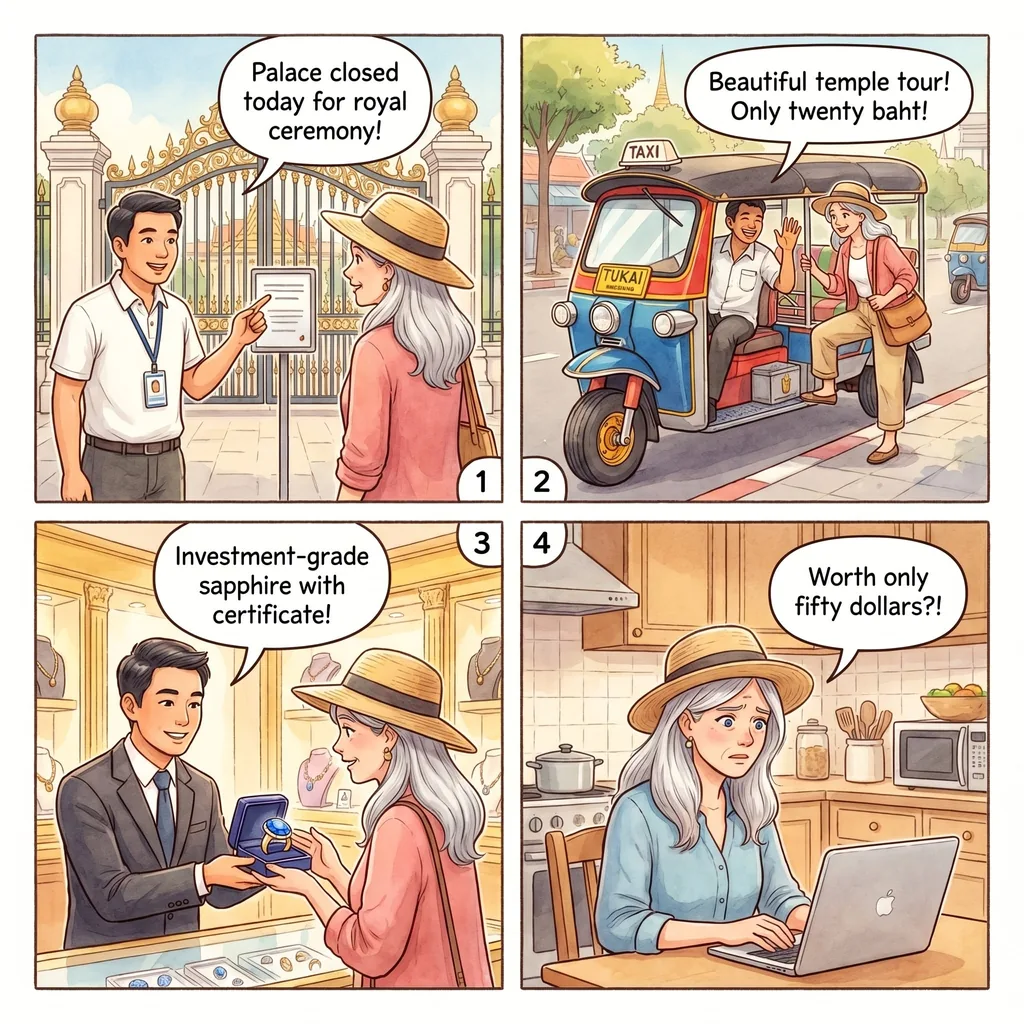
You stay at a 4-bunk dorm room at a popular hostel on Soi Rambuttri (just off Khaosan Road) for 350 THB per night. The room has individual lockable in-room safes for each bunk: small Sentry-Safe-style cabinets the size of a microwave with a 6-digit PIN keypad. You set your PIN as 583942 (random), lock 4,000 THB in cash plus your second credit card and your earbuds inside, head out for the day at 9:30am to walk through Wat Pho.
You return at 6pm. The room has been cleaned. The safe is locked, the digital display shows the green LED. You enter your PIN: 583942. The safe opens. The 4,000 THB is gone. The credit card is still there. The earbuds are still there.
You re-test the safe. You set a new PIN, lock with a single small bill inside. You try 999999. The safe opens. You try 000000. Doesn't open. You try 123456. Doesn't. You try 111111. Doesn't. You try the bunk number 4. Doesn't. You try the room number 12. Doesn't. The 999999 manufacturer master code is the override that the front desk can use to unlock guest safes when guests forget PINs. The hostel has not changed it from the manufacturer default since installation.
The variant ran during the housekeeping window (probably 11am-2pm). A staff member with knowledge of the override code opened the safe, took 4,000 THB (a bit more than half of what was visible), left the credit card and earbuds (which would have triggered immediate police-report-required loss), re-locked the safe. The amount is small enough that you might attribute it to misplacement; small enough that the staff member can repeat the variant across 5-10 guests per shift without triggering ownership-level alarms.
You take ninety seconds. You report to the front desk; they apologize, offer a 200 THB credit on the next night, refuse to file a police report (the loss is below the Thai Tourist Police threshold for action). You move your remaining cash to a money belt and split your cards (one in your daypack front pocket, one in your money belt). You write down your remaining cash before leaving each day; on Day 5 of your stay, the running total matches.
What just happened: you were hit by the in-room safe override variant of the hotel-and-hostel-theft family. The variant runs at budget-tier accommodations where the in-room safe is provided as a check-the-box amenity but not actually security-rated. The Thai Tourist Authority advises tourists at budget hostels to use the front-desk safe for amounts above 5,000 THB; your hostel has one (as required by Thai hostel licensing) but did not advertise it.
That is the canonical in-room safe override variant of the hotel-room-and-hostel-theft family, executed at one of the most-documented locations in Asia. The rest of this page is the four-mechanic playbook, the four other places where it runs in different forms (Bali, Hanoi, Marrakech, Lisbon), and the split-stash rule that defeats every variant.
Read the full Bangkok scam guide →Key Takeaways
The split-stash rule
Hotel room and hostel theft depends on you keeping all your cash and cards in one location accessible during the cleaning window. Splitting the stash across two physical locations bounds the worst-case loss; testing the in-room safe override before use eliminates the silent-PIN variant. The defensive routine is the split-stash habit. The play falls apart instantly because the operator can take half but not everything.
- Split your cash and cards across two physical locations. Carry a daily-use wallet with one card and small cash; keep the rest (extra card, passport, larger cash) in a hotel safe or money belt. The split-stash rule means a thief can take half but not everything.
- Test in-room safe PIN before storing valuables. Most hotel safes ship with a manufacturer override code (typically 999999, 000000, or 123456). Test the safe by setting a PIN, locking with cash inside, then checking that the override codes do NOT open it.
- Use the front-desk safe (caja fuerte de la recepcion) for high-value items. The hotel safe behind the front desk has chain-of-custody (signed deposit/withdrawal slips). Store passport, large cash, expensive jewelry there.
- Use a luggage padlock with a TSA-compliant combination. TSA-approved combination padlocks prevent housekeeping from accessing your suitcase contents. The padlock visibly signals that the bag is locked, deterring opportunistic skim.
- Refuse luggage-storage offers from informal staff or strangers. Use only the official hotel luggage-storage room with a printed claim ticket. The variant runs as: bag held in unsecured back room, items removed, bag returned with apparent normalcy.
The four mechanics
Different accommodation tiers and operator types lean on different mechanics within the same family. Here are the four sub-variants documented globally. Each has a recognition tell, a primary geography, and the routine step that defeats it.
1. Housekeeping Cash Skim
The most-common variant globally. During the daily housekeeping window (typically 9am-3pm), staff with master keys access guest rooms to clean. A subset of housekeepers skim small amounts of cash from wallets, suitcases, or backpacks during cleaning: 5-50 USD per room. The amount is small enough that many guests do not notice or attribute the loss to misplacing cash.
Defense: split your cash; use the front-desk safe for amounts over 100 USD; check wallet against a written daily-cash log. Most reported in: budget-tier hotels and hostels in Bangkok Khaosan Road; Bali Canggu and Kuta; Hanoi Old Quarter; Ho Chi Minh City Pham Ngu Lao; Marrakech medina; Lisbon Bairro Alto and Alfama; Mexico City Centro.
2. In-Room Safe Override
Most hotel in-room safes ship with a manufacturer override code that the front desk can use if guests forget their PIN. Common defaults: 999999, 000000, 123456, 111111, the room number, or a 4-digit code in the front-desk's master file. A subset of housekeeping or front-desk staff with override-code access remove cash and jewelry from the safe during cleaning windows, then re-lock the safe with the same PIN the guest set.
Defense: test the override before storing. Lock the safe with cash visible inside, leave the room for 30 minutes, return and check; test all manufacturer default codes. Most reported in: Sentry Safe and Onity-style in-room safes globally; documented at all tiers but most prevalent at 3-star and below in Bangkok, Bali, Hanoi, Cairo, Marrakech, Mexico City, Lisbon.
3. Key Duplication / Lock-Pick
Documented at older hotels and riads with physical keys (not key cards). Hostel-tier accommodations in Marrakech medina, Fez, Cairo, parts of India and Nepal use traditional pin-tumbler key locks; the keys are sometimes copied by previous guests or by staff and used for re-entry days or weeks later. The variant runs as: a return-trip thief uses the duplicated key to enter the room during the guest's day-out; takes electronics, jewelry, larger cash; re-locks.
Defense: in older properties with physical keys, place a chair or wedge against the door from inside when you are in the room; for outdoor periods, store all valuables in the front-desk safe. Most reported in: Marrakech medina riads (especially budget-tier with shared physical keys); Fez old medina; Cairo Tahrir budget hotels; parts of India (Delhi Paharganj) and Nepal (Kathmandu Thamel).
4. Left-Luggage / Luggage-Storage Theft
Many hotels and hostels offer to store guest luggage on check-out day or after-hours arrivals. The luggage is typically held in an unsecured back room, hallway, or lobby corner, accessible to all staff and sometimes to other guests. A subset of staff or opportunistic guests remove items from bags during the storage window: cash, electronics, anything not locked.
Defense: use only the official hotel luggage-storage room with a printed claim ticket; refuse offers from informal staff or strangers to "just put it in the back." Most reported in: Bangkok Khaosan and Sukhumvit hostels; Hanoi Old Quarter; Bali Canggu hostels; Marrakech medina; Lisbon Bairro Alto; Mexico City Centro.
Where it runs
Hotel and hostel theft concentrates in budget-tier accommodations in Southeast Asia, North Africa, and parts of Latin America where staff turnover is high and operational oversight is weak. The eight countries below cover the bulk of global tourist exposure.
| Country | Documented variants | Iconic location pattern |
|---|---|---|
| 🇹🇭 Thailand | 4 | Bangkok Khaosan Road and Sukhumvit budget hostels; Chiang Mai backpacker hostels; Phuket Patong all-tier hotels |
| 🇮🇩 Indonesia | 4 | Bali Canggu and Kuta hostels; Lombok and Gili islands hostels; Jakarta budget hotels |
| 🇻🇳 Vietnam | 3 | Hanoi Old Quarter hostels; Ho Chi Minh City Pham Ngu Lao hostels; Hoi An Old Town |
| 🇲🇦 Morocco | 3 | Marrakech medina riads; Fez old medina; Casablanca downtown budget |
| 🇵🇹 Portugal | 2 | Lisbon Bairro Alto and Alfama hostels; Porto Ribeira budget |
| 🇲🇽 Mexico | 2 | Mexico City Centro and Roma Norte hostels; Cancun all-tier; Playa del Carmen |
| 🇮🇳 India | 1 | Delhi Paharganj hostels; Mumbai Colaba; Goa beach hostels |
| 🇪🇬 Egypt · 🇳🇵 Nepal | 1 | Cairo Tahrir hostels; Hurghada Red Sea budget; Kathmandu Thamel |
Bar width is data-bound at 30 pixels per documented variant. Thailand and Indonesia together account for 40% of global exposure, driven by Khaosan Road and Bali Canggu hostel concentration.
Four more places, four more theft mechanics
The Bangkok Khaosan Road safe-override scene above showed the canonical Asian variant. Here are four more places where different sub-variants dominate. Each links to the full city scam guide.
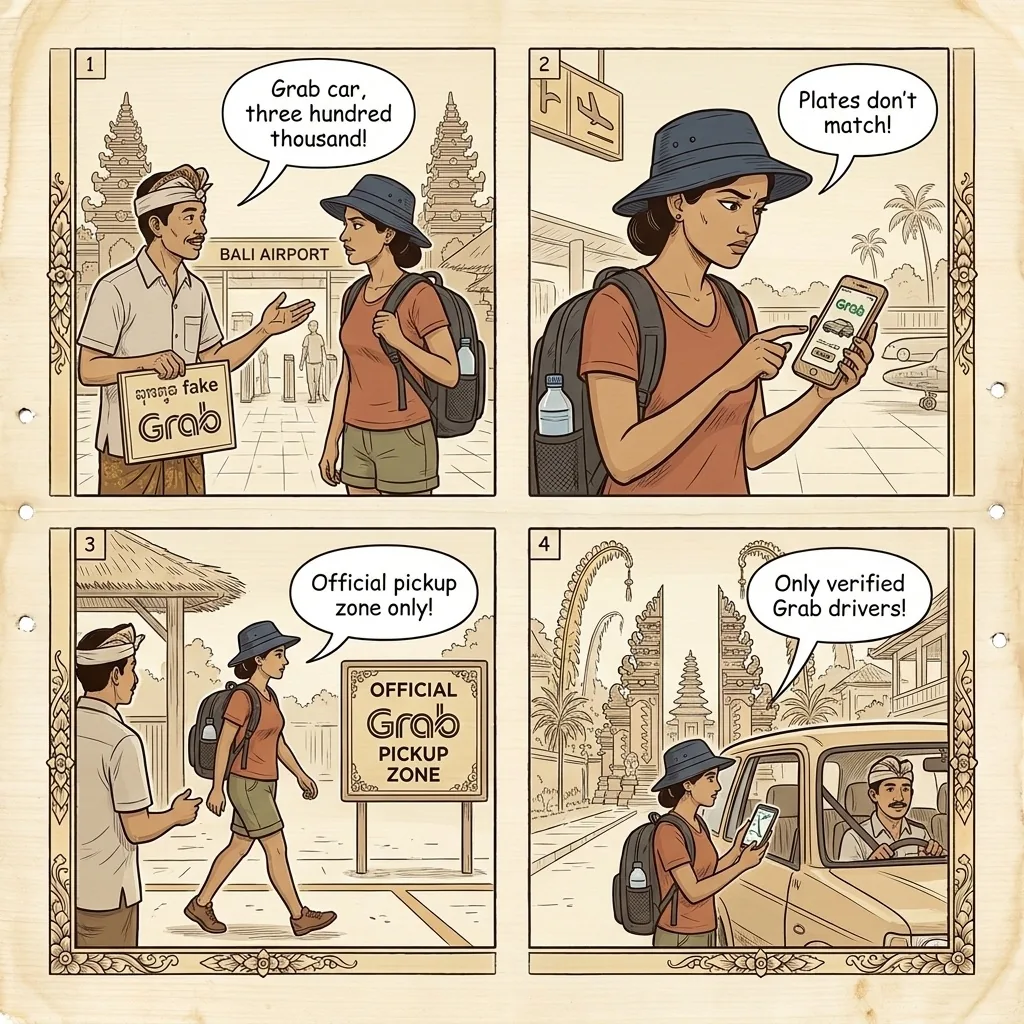
You stay at a 6-bunk dorm in Canggu, Bali for 200,000 IDR per night. The hostel has nightly turnover; daily housekeeping runs 10am-2pm. On Day 3 of your stay, you notice your daily cash log doesn't match: 50,000 IDR (about 3 USD) is missing from your wallet, which you had left on the bedside table inside the locked dorm. On Day 4, another 100,000 IDR. By Day 6, total skim is about 350,000 IDR (about 22 USD). Across the whole stay, the daily small amounts are easy to attribute to misplacement, but the cumulative loss is real. The Bali Tourist Police 0361 754 599 (English-speaking) accepts theft reports for amounts above 500,000 IDR (about 32 USD); below that threshold, the police take a written statement but do not pursue investigation. The variant has been documented at Canggu, Kuta, and Ubud budget hostels continuously; the Indonesian Hostels Association (PHRI) has published guidance to member properties about staff training, but the variant persists at non-member properties. Defense: never leave a wallet visible in a Bali hostel dorm. Lock daily cash in the in-room safe (after testing the override; many Canggu hostel safes use 0000 or 1234 default), or move all cash to a money belt for the duration. Keep a running daily cash log; check at end of each day.
Read the full Bali scam guide →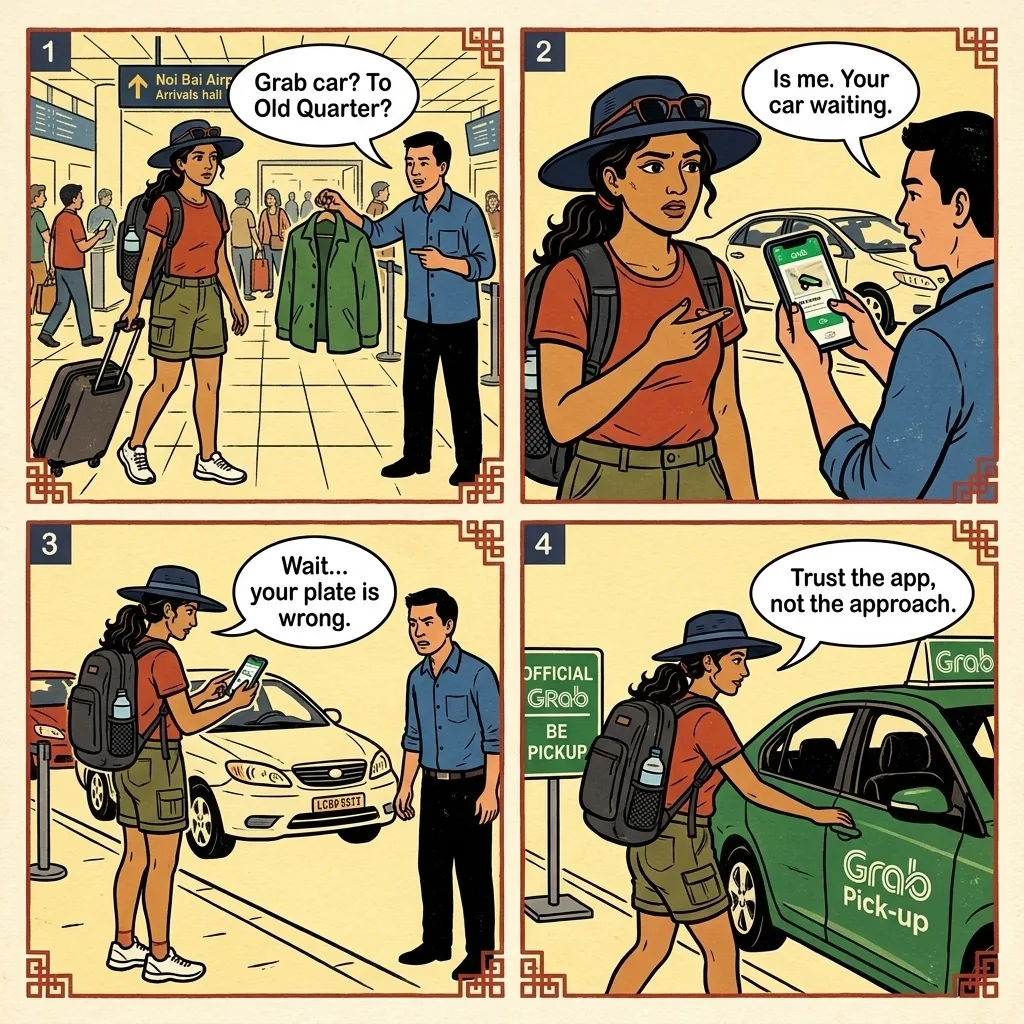
You check out of a hostel near Hoan Kiem Lake in Hanoi Old Quarter at 11am on a Tuesday; your overnight train to Hue departs at 7pm. The hostel offers free luggage storage until departure: "leave your bag in the back, no problem, very safe." You agree; staff puts your backpack in an unmarked corner of the lobby behind a curtain, no claim ticket. You return at 5:30pm to retrieve. The backpack is there; the contents look intact. Two days later in Hoi An, you discover your Bose noise-canceling earbuds (worth 250 USD) are missing from a side pocket where you had stored them during the storage window. The bag returned with apparent normalcy; the loss only surfaces days later when you reach for the earbuds. The Vietnamese Tourist Police 080-71-080 accepts reports of hostel-storage theft, but pursuit is limited because the loss surfaces post-storage and the time-stamped chain-of-custody is unclear. Defense: in Hanoi (and across Southeast Asia), use only hostels with formal luggage-storage rooms (locked door, claim ticket). Better: at major Hanoi train stations, use Bagbnb or LuggageHero (insured, photographed luggage with timestamps). The 30-50,000 VND fee for proper storage is the cheapest insurance against the variant.
Read the full Hanoi scam guide →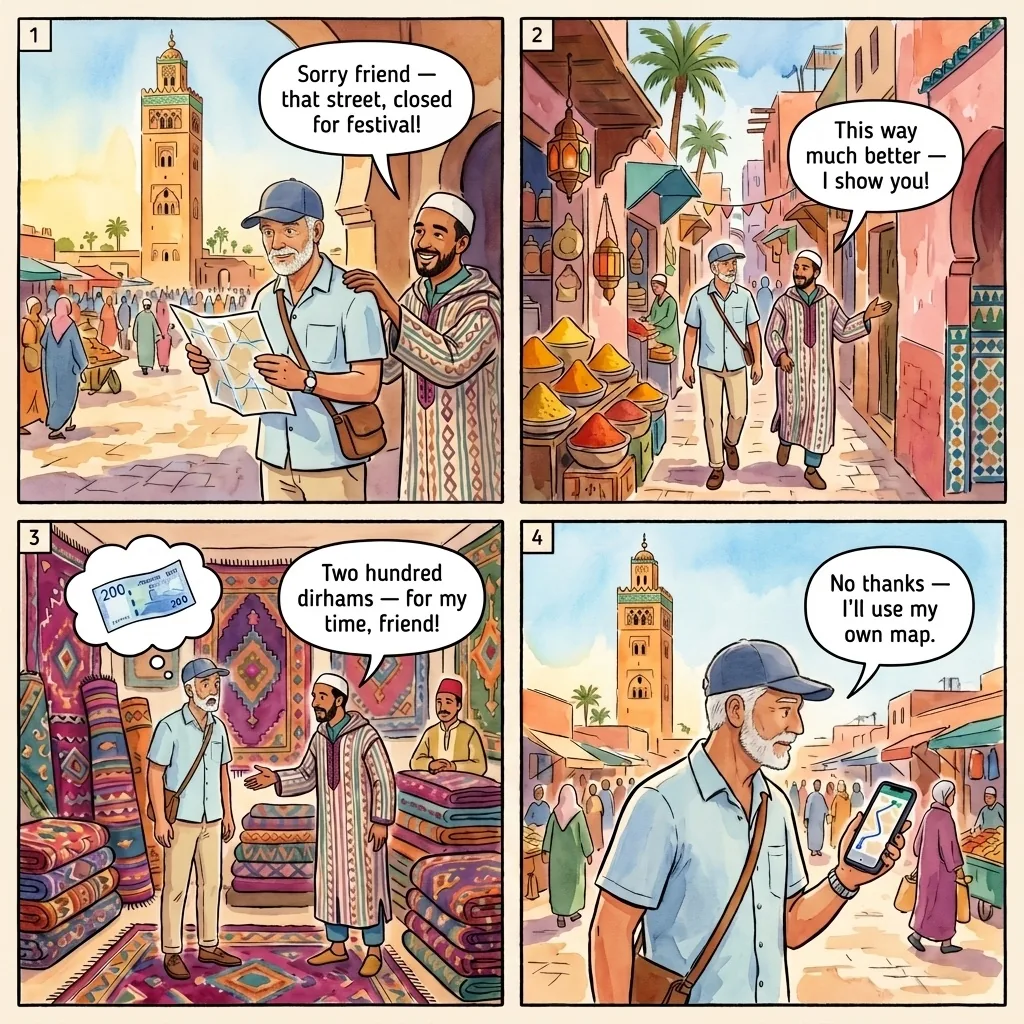
You stay at a budget riad (4-room family-run accommodation) in Marrakech medina near Bab Doukkala for 350 MAD per night. The room uses a traditional pin-tumbler physical key with a heavy brass key fob; the riad has 4 rooms, each with a single key the guest carries during the day. On Day 4 of your stay, you return from a day at the Saadian Tombs and Bahia Palace (out of room 9am-5pm) to find your room entered: the door was unlocked when you arrived (you had locked it), and 1,200 MAD in cash plus a small silver pendant are missing from your suitcase (which was unlocked, contents disturbed). The riad's owner expresses sympathy; he says the previous guest in the same room (who checked out the day you arrived) probably copied the key at a metalworker in the souk before returning it. The Marrakech Brigade Touristique at Place Bab Doukkala accepts walk-in theft reports; the police can investigate but the variant has a multi-day window for the previous-guest copy. Defense: at older Moroccan riads with physical keys, store all valuables in the riad's front-desk safe or on your person (money belt). The room key is not security-equivalent to a re-coded RFID card. If the riad has multiple guest rooms with same-style keys, treat the variant as a structural risk and use the front-desk safe categorically.
Read the full Marrakech scam guide →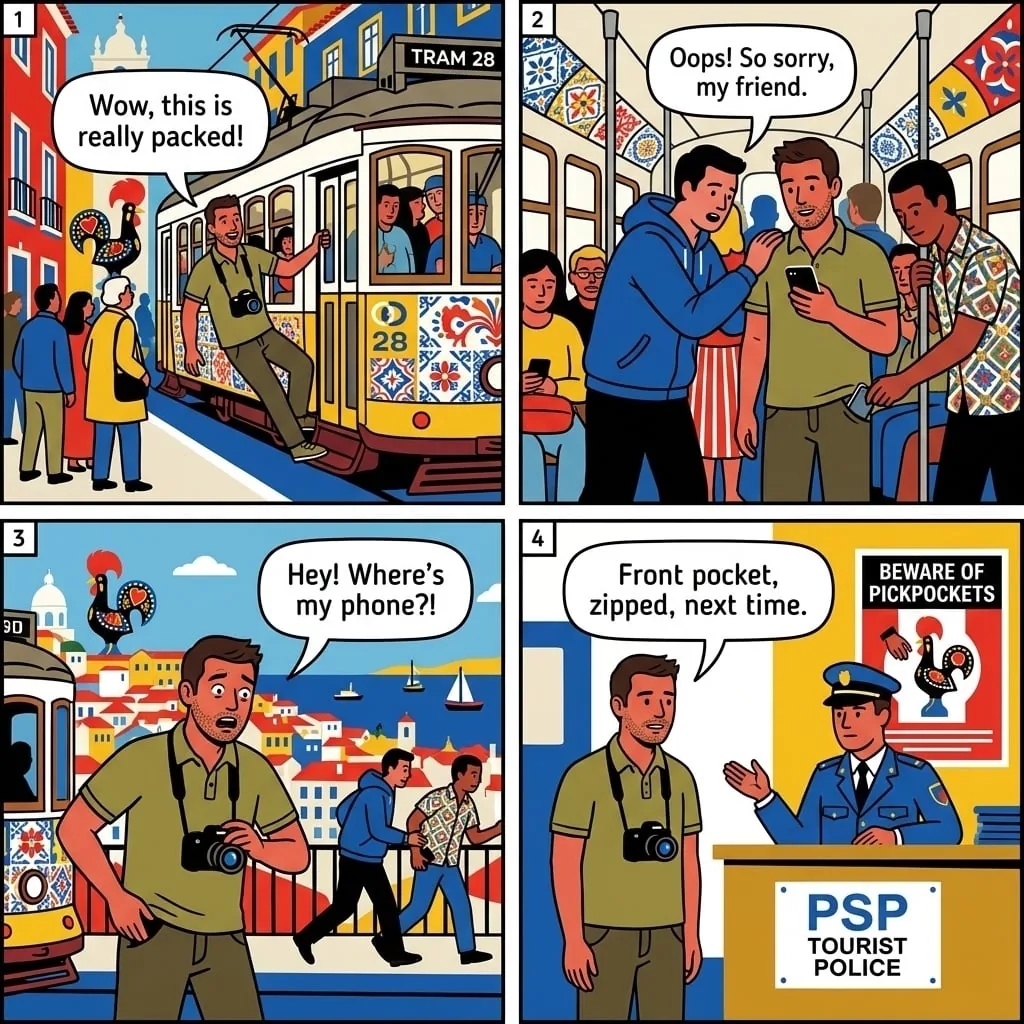
You stay at a hostel in Lisbon Bairro Alto for 22 EUR per night; the property has individual in-room safes with 4-digit PIN keypads. You set your PIN as 7491, lock 200 EUR cash plus a backup credit card in the safe, head out for the day. On return at 6pm, the safe is locked but you find 80 EUR cash missing; the credit card is still there. You test the override: 0000 unlocks the safe. The variant ran during the housekeeping 10am-1pm window; staff used the default PIN that the hostel had not changed since installation. ASAE Portugal (Autoridade de Seguranca Alimentar e Economica) accepts complaints about hostel theft; the Lisbon PSP Tourist Help office at Praca dos Restauradores (+351 21 342 1623) accepts walk-in reports. The variant is documented at Bairro Alto, Alfama, and Mouraria hostel concentrations in Lisbon. Defense: in Lisbon hostels, always test the in-room safe override (try 0000, 1234, 1111, the room number, the bunk number). If any unlock, store amounts above 50 EUR in the front-desk safe. Lisbon hostels are required by Portuguese hostel licensing to offer a front-desk safe; ask: "Tem um cofre na recepcao?"
Read the full Lisbon scam guide →Red flags
If two or more of these signals fire when you are checking into a hotel or hostel, route around or escalate to using the front-desk safe. The compounding rule: a single signal might be a coincidence; two signals are a structural risk.
- The in-room safe opens with 999999, 000000, 1234, or the room number
- The hostel uses a physical key (not a re-coded RFID card)
- The hostel does not offer a front-desk safe (legitimate properties always do)
- The luggage-storage area is an unsecured back room or lobby corner
- No claim ticket is issued for stored luggage
- The property is in Bangkok Khaosan, Bali Canggu, Hanoi Old Quarter, Marrakech medina
- The property tier is 3-star or below (variant most prevalent at budget tier)
- Housekeeping enters during days when "Do Not Disturb" is on the door
- Other guests in the same property have reported missing items
- Your daily cash log shows discrepancies between days
The phrases that shut it down
Asking for the front-desk safe works in any language because most hotel staff understand the request immediately. The phrase pattern is the same: front-desk safe.
If you got hit
Cash is missing from the in-room safe, your wallet, or your stored luggage. Hotel and hostel theft losses are partially recoverable through travel insurance with a police report. Cash is rarely recovered; electronics and jewelry have moderate recovery rates if reported within 24 hours and the property has CCTV.
Within 30 minutes: report to the front desk. Get the manager's name and a written incident report (some properties resist; insist). Document the property's response: did they offer to call police, refund the night, swap rooms? Did they insist no theft is possible at their property?
Within 1 hour: file a police report at the local tourist police. The report number is required for travel-insurance claims, even if the cash amount is below the police-action threshold. Bangkok Tourist Police 1155, Bali Tourist Police 0361 754 599, Hanoi Tourist Police 080-71-080, Marrakech Brigade Touristique, and Lisbon PSP all accept English-language reports.
Within 24 hours: file a travel-insurance claim. Allianz Travel, World Nomads, AIG Travel Guard, IMG Global all cover hotel theft up to policy limits with a police report. Cash typically capped at $200-500; electronics at original purchase price minus depreciation; jewelry varies by policy.
Within 7 days: leave a public review (TripAdvisor, Booking.com, Google Maps). The variant persists because budget-tier properties have weak operational oversight; public reviews create market pressure for property owners to address. Be specific: "in-room safe used default PIN 0000" or "luggage storage room had no claim ticket."
- Bangkok: Tourist Police 1155 (24/7, English-speaking).
- Bali: Bali Tourist Police 0361 754 599 (English-speaking).
- Hanoi: Vietnam Tourist Police 080-71-080.
- Ho Chi Minh City: Tourist Police via 113.
- Marrakech: Brigade Touristique, Place Bab Doukkala (24/7); ONMT for property complaints.
- Lisbon: PSP Tourist Help, Praca dos Restauradores, +351 21 342 1623.
- Mexico City: Policia Turistica CDMX; English-language reports accepted.
- Travel insurance: Allianz Travel +1 800 654 1908; World Nomads in-app claim; AIG Travel Guard +1 877 244 6871.
Recovery rates: cash 5-15% recovery (mostly via insurance); electronics / jewelry 30-50% with police report and pre-trip serial-number documentation; per-incident insurance settlement typically 30-90 days. The actionable response is preventive: split the stash; test the safe; use the front-desk safe; lock luggage; refuse informal storage.
Related atlas entries
Sister entries in the Scam Atlas. Hotel and hostel theft sits in the Pickpocketing & Theft section alongside pickpocketing tactics; Airbnb fraud covers the broader booking-fraud family.
Sources
- Tourist Authority of Thailand (TAT), Bangkok hostel theft enforcement bulletins (Thailand, ongoing).
- Bali Tourist Police 0361 754 599, Canggu and Kuta hostel skim incident logs (Indonesia, ongoing).
- Vietnam Tourism Ministry, Hanoi Old Quarter and HCMC Pham Ngu Lao hostel reports (Vietnam, ongoing).
- Office National Marocain du Tourisme (ONMT), Marrakech medina riad-key complaints (Morocco, ongoing).
- ASAE Portugal, Lisbon Bairro Alto hostel-safe override complaints (Portugal, ongoing).
- Sentry Safe and Onity manufacturer documentation, default override codes (global, multi-decade).
- Bangkok Post, The Jakarta Post, hostel-theft investigative coverage (Asia, 2018-2025).
- r/travel, r/Thailand, r/Bali, r/Vietnam, r/Morocco continuing thread monitoring 2018-2026.
- UNICEF Cambodia, Friends-International on hostel-staff oversight in budget-tier accommodation (multi-country).
Get the full hotel-room-theft playbook for your destination.
Each Travel Safety atlas covers every documented hostel, hotel, and accommodation scam in one country, plus the country's full scam catalog: pickpocket, taxi, ATM, restaurant, fake authority. Buy once, lifetime updates as scams evolve. $4.99 on Kindle.