Drink Spiking & Bar Bill Trap: the same scam, in 4 countries.
Across Bangkok Sukhumvit, Tokyo Kabukicho, Bogota Zona Rosa, and Hanoi Bui Vien the same trap runs with local accents: a tout, a lured drink, a padded bill, a blocked exit. The drink-discipline rules below shut every variant down before the door closes.


Drink spiking and bar bill traps run four mechanics across 4 countries: lady-drink padding (Bangkok and Pattaya, with 350-750 USD bills after 60-90 minutes), host-club catch (Tokyo Kabukicho, with 300-2,000 USD bills from "3,000 yen all-you-can-drink" touts), scopolamine compliance (Bogota and Medellin, where the drug removes free will while leaving the victim conscious), and honeytrap pre-authorized card charge (Hanoi and Saigon, with 800-2,500 USD bills enforced by bouncers). The universal defense is one rule: do not enter a bar without a printed menu. The defense in depth is drink discipline (only sealed bottles or pours you watched), card discipline (never authorize a tab, pay cash drink-by-drink), and exit discipline (phone tourist police if a bouncer blocks the door — Thailand 1155, Japan 110, Colombia 123, Vietnam 113).
"Just a little bar, my friend, ladies very nice, all-you-can-drink five hundred baht."
The man on the corner of Soi 4 and Sukhumvit is in his thirties, wearing a button-down. He smiles, holds up a laminated card. Five hundred baht. Two beers. Lady company. Air conditioning. He gestures down the soi to a doorway with a velvet rope and a small neon sign that reads PINK PUSSYCAT.
You and your travel partner step inside. The lights are low. Two women in cocktail dresses sit at the table immediately. The bartender pours drinks without being asked. One of the women orders a bottle of water; she calls it her drink. There is no menu in sight. You ask. The hostess shrugs and giggles: "no menu, all friendly price, mama-san takes care."
An hour later the bill arrives folded on a tray. The total is 18,400 baht — about 540 USD. Itemized line items you did not order: ten "lady drinks" at 800 baht each, a "champagne service" at 6,000, a "mama-san fee" at 2,400. The card terminal is already on the table. Behind it, two men in tight black t-shirts stand between the table and the door.
This is the lady-drink bar bill trap, the most-documented bar variant in Southeast Asia. It runs the same way in three other countries with three other accents. The defense is a single rule: do not enter a bar without a printed price list. The defense in depth, when you find yourself in the variant: phone Thai tourist police 1155 from the table, photograph the bill, pay cash for the items you actually ordered, and walk out with the police on the line.
That is the lady-drink variant of the drink-spiking-bar-bill-trap family, executed at one of the most-documented locations in Asia. The rest of this page is the four-mechanic playbook, the four other places where it runs in different forms (Tokyo Kabukicho, Bogota Zona Rosa, Hanoi Bui Vien, Pattaya Walking Street), and the drink-discipline rules that defeat every variant.
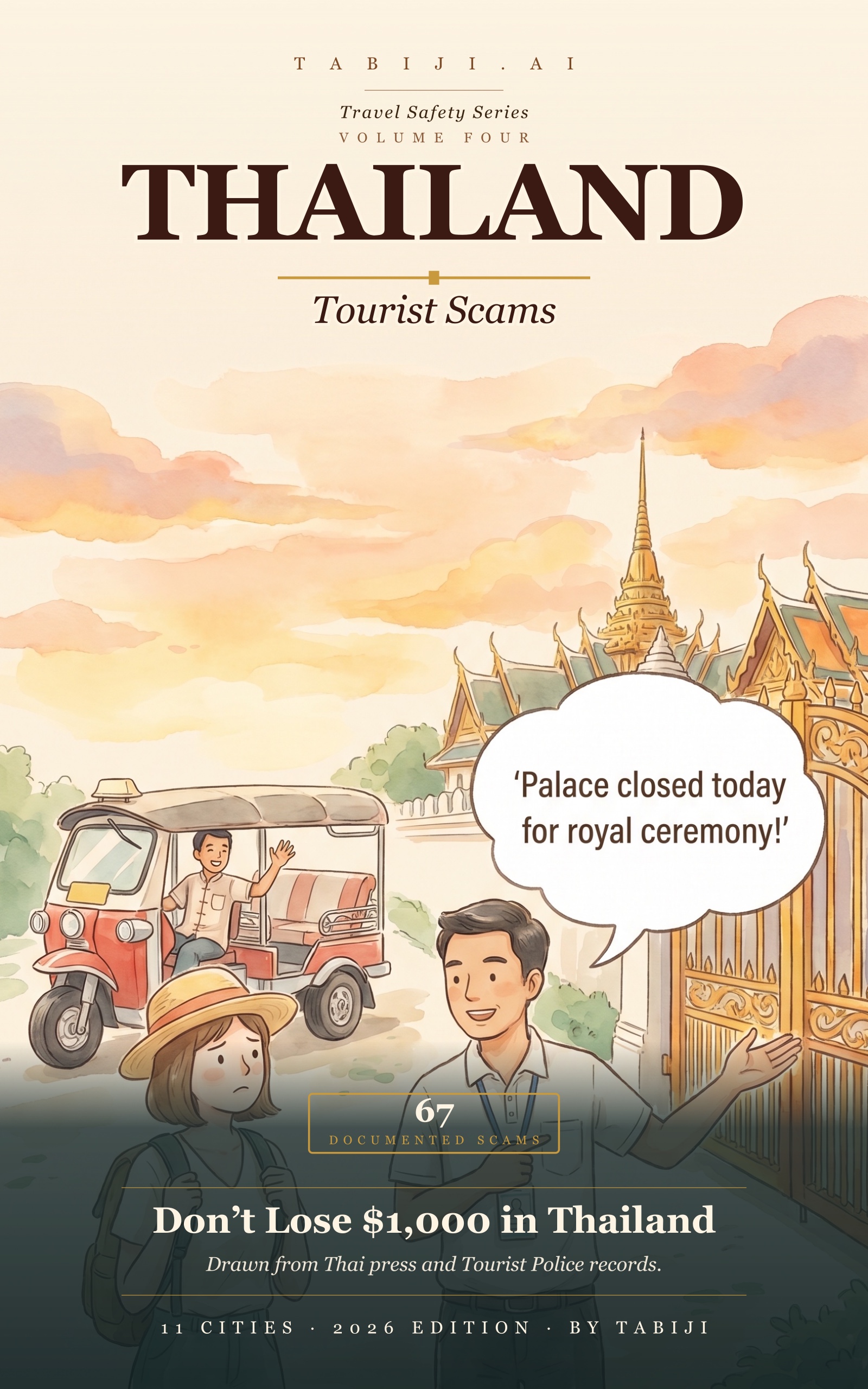
Read the full Bangkok scam guide →Key Takeaways
The drink-discipline rule
Every variant of this scam is defeated by the same three lines: do not accept drinks you did not watch poured. Do not enter venues without printed prices. Do not hand over your card for any reason. Each line maps to one stage of the trap.
The first line stops the spiking variant. Scopolamine, GHB, and benzodiazepines are administered at the moment of pour or in the moments after, often by a "fellow tourist" who buys you a drink. If you accept only drinks poured in front of you from sealed bottles, the variant cannot operate.
The second line stops the lady-drink and host-club variants. Both rely on the absence of a printed menu so the staff can invent prices at the end. A bar that publishes prices on a printed menu has nothing to gain from the trap; a bar that refuses to show a menu is operating the trap. Walk out at the menu request.
The third line stops the honeytrap variant. The Vietnamese and Latin American honeytrap is built around a pre-authorization hold on your credit card. Once your card has been swiped for "the bottle service" the trap holder can run any amount they want. Pay cash for the agreed-upon items only; if cash is refused, leave.
The fourth defense, used at the moment of trap discovery, is the tourist-police call. Phone the local tourist-police number with the venue's address and tell them in English you are being blocked from leaving over a disputed bill. Most venues will collapse the bill within five minutes of the call.
The four mechanics
Drink spiking and bar bill traps run on four distinct mechanics. Each has a signature region, a signature lure, and a signature payout shape.
1. Lady-drink padding (Bangkok, Pattaya)
Tout offers cheap entry; bar has no menu; hostesses sit immediately and order their own drinks billed at 5-10x. After 60-90 minutes the padded bill arrives. Documented heavily in Bangkok Sukhumvit Soi 4, Patpong, Soi Cowboy, Nana Plaza; Pattaya Walking Street; Phuket Bangla Road. Typical bill: 12,000-25,000 THB (350-750 USD). Defense: ask for printed menu before sitting; if no menu, walk out.
2. Host-club catch (Tokyo Kabukicho, Osaka Namba)
Street tout offers "3,000 yen all-you-can-drink" or similar; venue is a "catch-bar" front for an unlicensed host club. Hostess or host orders her own drinks at 10,000+ yen each; bouncers block exit. Documented heavily in Tokyo Kabukicho, Roppongi, Shibuya; Osaka Namba; Sapporo Susukino. Typical bill: 50,000-300,000 JPY (300-2,000 USD). The Tokyo Metropolitan Police publishes ongoing catch-bar warnings. Defense: do not follow street touts; only enter venues with published price lists at the door.
3. Scopolamine compliance (Bogota, Medellin, Cartagena)
"Fellow tourist" or attractive stranger approaches at upscale bar; buys a drink; tourist becomes compliant within 15-30 minutes; perpetrator walks tourist through ATM withdrawals, takes credit cards, jewelry, phones, occasionally assaults. Scopolamine ("burundanga") is the most-documented agent; the US State Department has issued repeated advisories. Documented in Bogota Zona Rosa, La Candelaria, Chapinero; Medellin El Poblado, Provenza; Cartagena Old City. Typical loss: 800-5,000 USD. Defense: never accept a drink from a stranger; never allow strangers within close-face distance (powder forms exist).
4. Honeytrap pre-authorized card charge (Hanoi, Saigon)
Solo male traveler approached by attractive person at one bar; relocated to second venue; bottle service ordered; card pre-authorized at high amount; "service charge" added at exit; bouncers enforce payment. Documented heavily in Hanoi Bui Vien (Old Quarter) and Tran Hung Dao bars; Saigon Pham Ngu Lao and Bui Vien. Typical loss: 800-2,500 USD. Defense: never relocate to a second venue with a stranger; never let your card out of sight; never agree to "bottle service" without seeing the price.
Where it runs
The trap concentrates in nightlife districts where tourist density is high and the local police presence is light or unevenly enforced. The geography below covers the most-documented venues per country.
- Thailand: Bangkok — Sukhumvit Soi 4 (Nana), Soi 21/Asok, Patpong (Silom), Soi Cowboy, RCA, Khao San Road. Pattaya: Walking Street, Soi 6. Phuket: Bangla Road (Patong). Chiang Mai: Loi Kroh.
- Japan: Tokyo — Kabukicho (Shinjuku), Roppongi, Shibuya Center-gai. Osaka: Namba (Doutonbori), Umeda. Kyoto: Pontocho rare incidents. Sapporo: Susukino. Catch-bars are concentrated in Kabukicho.
- Colombia: Bogota — Zona Rosa (Zona T), La Candelaria, Chapinero. Medellin: El Poblado (Parque Lleras, Provenza), Laureles. Cartagena: Old City, Getsemani. Cali: Granada.
- Vietnam: Hanoi — Old Quarter (Ta Hien), Tran Hung Dao bars. Saigon (Ho Chi Minh City) — Bui Vien (Pham Ngu Lao), Le Thanh Ton. Da Nang: An Thuong rare incidents.
- Adjacent (also documented): Cambodia — Phnom Penh Riverside, Sihanoukville. Philippines: Manila Burgos Street, Angeles City Fields Avenue. Mexico: Mexico City Zona Rosa, Cancun nightlife strip.
Four more cities, four more bar variants
Tokyo Kabukicho — the catch-bar
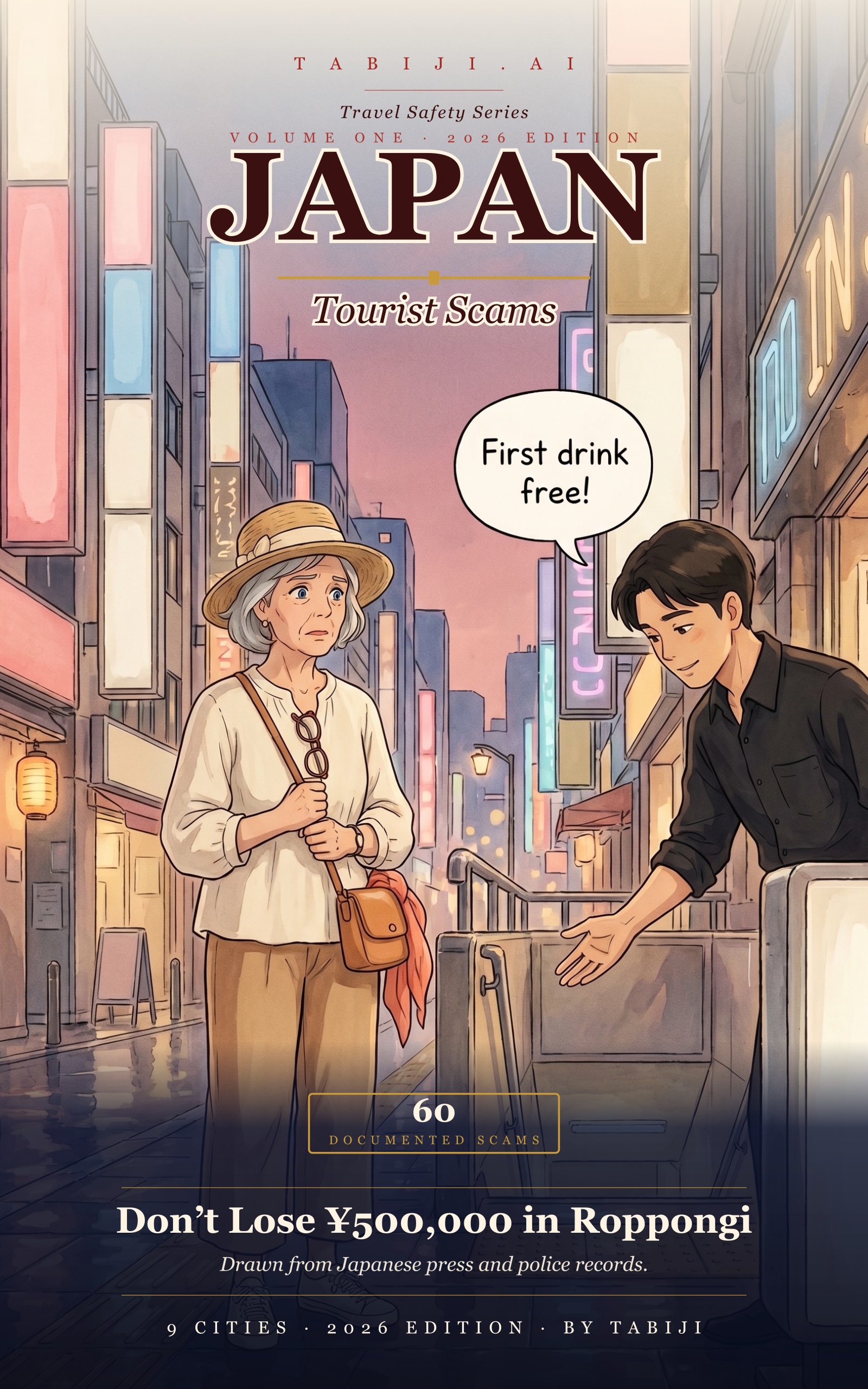
The tout works the corner of Yasukuni-dori and Kabukicho 1-chome. He speaks English. He shows a laminated card: 3,000 yen, 60 minutes, all you can drink, two free hostess drinks. He walks the tourist down a side street, up a narrow staircase, into a windowless room with red leather booths.
The tourist orders two beers. The hostess sits down and orders three "champagne flutes" at 12,000 yen each; she has finished them within ten minutes and ordered three more. The tourist tries to leave at minute 45 (under the supposed limit). The bill is 78,000 yen. The card terminal is already on the table. Two men in suits stand at the doorway.
What the Tokyo Metropolitan Police recommend: phone 110 from inside the venue. Photograph the bill and the venue. Refuse to pay by card; offer cash for the original 3,000-yen quoted price only. Stay calm and verbal; physical resistance is rarely effective.
Bogota Zona Rosa — the scopolamine approach
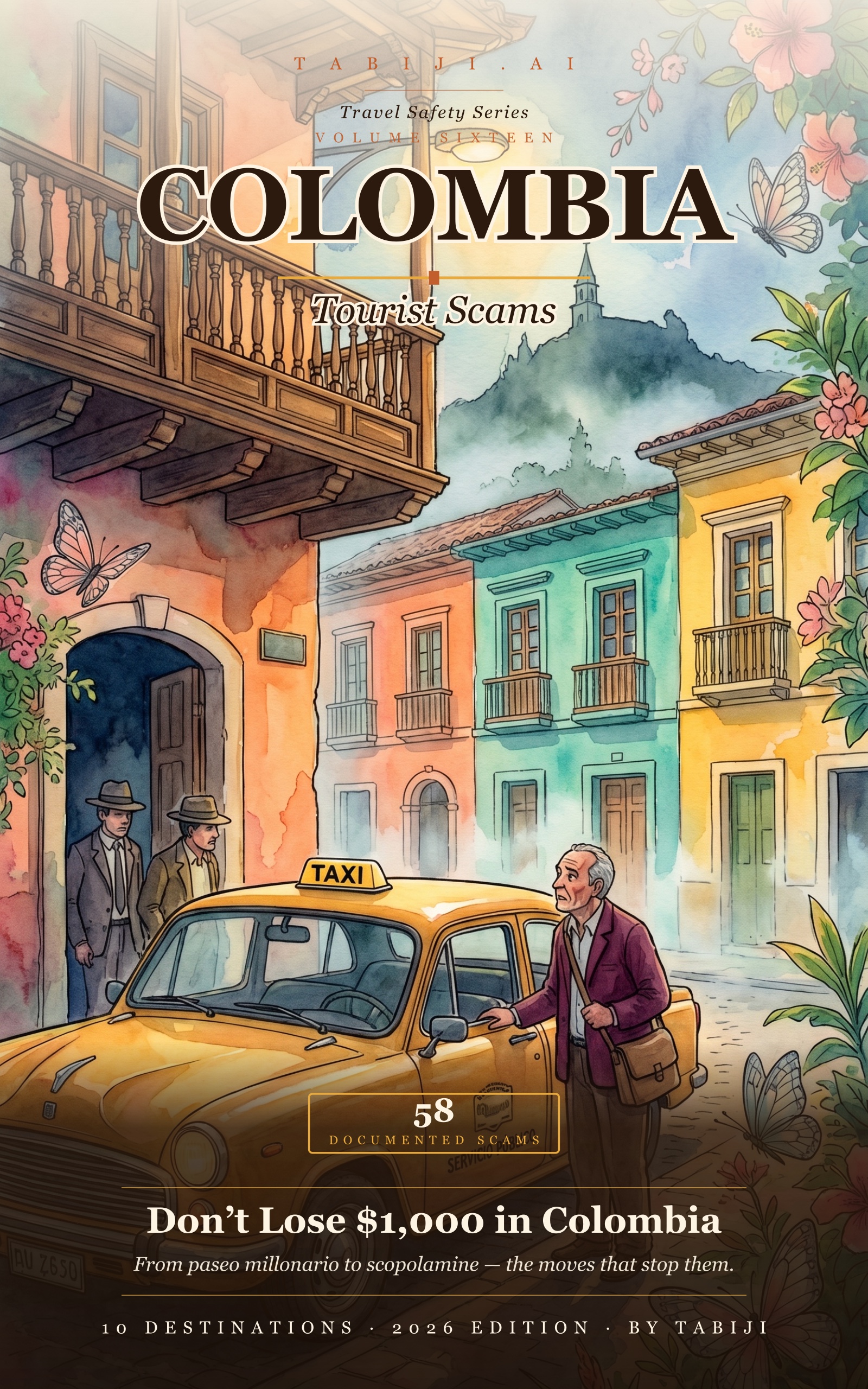
The bar is upscale, on Carrera 13 in Zona T. The tourist is at the bar alone. A well-dressed couple in their thirties strikes up conversation; they say they are tourists from Argentina. They buy a round. Twenty minutes later the tourist feels strange. The next clear memory is dawn at a hostel in a neighborhood the tourist does not recognize. The phone is gone. The wallet is empty. The credit card has been used at five ATMs.
This is the scopolamine variant. The drug ("burundanga") removes resistance while leaving the victim conscious enough to walk and type passwords. The US State Department, FCO (UK), and Canada Travel Advice all warn about it explicitly. Defense: never accept a drink in Bogota that you did not watch the bartender pour; never let "fellow tourists" buy you a round; never go to a "second bar" with someone you just met.
Hanoi Old Quarter — the honeytrap
The tourist is solo male, late twenties, drinking on Ta Hien Street. An attractive woman in her late twenties sits next to him. She speaks English; she says she is a university student. After two beers she suggests a quieter bar she knows down the street. They walk three minutes to a windowless basement venue. She orders bottle service in Vietnamese. The bouncer takes his card to "open a tab."
An hour later the bill is 32 million dong (about 1,200 USD). The card has been pre-authorized at 50 million. Two men block the stairway. The woman has slipped out the back. He pays.
The Vietnam tourist police line is 113. The defense rule that defeats this variant entirely: do not relocate to a second venue with anyone you just met. Stay at the first bar where you can see the menu and the door.
Pattaya Walking Street — the bottle dance
Walking Street, 1:00am. The tout offers free entry. Inside, the dancers walk to the table immediately and ask the tourist to "buy a bottle." The bottle is on the menu at 4,000 baht; the bill on exit shows 18,000. The "tip pool" line item adds 6,000. The dancer's "lady drink" line items add 5,000. The card terminal arrives. Two men stand at the door.
This is the same lady-drink mechanic as Bangkok Soi 4, scaled to a louder venue and with a "bottle service" upcharge. Same defense: walk out at the menu request. The Pattaya tourist police are unusually responsive on Walking Street; phoning 1155 from the venue floor typically collapses the bill to its menu-shown total within ten minutes.
Red flags
- No printed menu. The single biggest tell. Any venue that refuses to show a menu before you order is operating the trap.
- Tout on the street with a laminated card. Real bars do not need touts. Touted venues with cheap-drinks-on-card offers are catch-bars in 95%+ of documented cases.
- Hostess sits down without asking. Lady-drink and host-club bars route hostesses to the table the moment you sit; her drinks are the padding mechanic.
- "Special service charge" at the end. Mama-san fee, tip pool, champagne service, room charge, table fee; these are post-hoc inventions that appear only on the final bill.
- Bouncer at the door during bill negotiation. The trap relies on physical intimidation. If the staff posts the door before the bill is settled, you are in the variant.
- Strangers buying you a drink at upscale bars in Bogota/Medellin/Cartagena. The scopolamine pattern. Treat every "fellow tourist" round as suspect; politely decline.
- Suggestion to relocate to "a quieter bar I know." The honeytrap pivot. Stay at the first venue or part ways at the door.
- Card asked for "to open a tab." Pre-authorization is the trigger for the Vietnamese and Latin American honeytrap variants. Pay cash, drink by drink.
The phrases that shut it down
Each language below shuts down the local variant before you have committed to entering. Learn one for each country you visit.
If you got hit
If the bill trap closed and you paid: file a police report at the local tourist-police office within 48 hours (most insurance and card-chargeback windows require it). Photograph the venue exterior, the receipt, and the card terminal if possible. Phone your card issuer immediately to dispute the charge as "fraud / coercion at point of sale"; this is a recognized chargeback category at Visa, Mastercard, and Amex. Most bar-bill-trap charges are reversible if reported within 30 days.
If you suspect drink spiking: get to a hospital within four hours for toxicology; benzodiazepines and GHB clear in 6-12 hours and scopolamine in 12-24 hours. Phone your embassy. The US, UK, Canadian, and Australian embassies in Bogota, Mexico City, Bangkok, and Hanoi all have 24-hour duty officers who handle drink-spiking cases. Cancel cards immediately; check ATM withdrawals on your statement; file a police report with the tourist police line and request a copy in English for insurance.
If you were physically blocked from leaving and felt threatened: phone the embassy duty officer in addition to local police. The State Department's Overseas Citizens Services line is +1 202 501 4444 for US travelers; the equivalent FCO line is +44 20 7008 5000. Both will coordinate with local police on your behalf.
Related atlas entries
Sources & references
- US State Department: Colombia Travel Advisory: scopolamine specifically named.
- UK FCO: Colombia: safety and security.
- Tokyo Metropolitan Police: catch-bar warnings, ongoing publication.
- Royal Thai Police, Tourist Police Bureau: 1155 hotline, ongoing bar-bill-shock advisories.
- Hanoi Tourism Department: Old Quarter advisories.
- Tabiji field reports: Bangkok Sukhumvit, Pattaya Walking Street, Tokyo Kabukicho, Bogota Zona Rosa, Hanoi Old Quarter (2024-2026).
Get the full bar-and-nightlife scam playbook for your destination.
Each Travel Safety atlas covers every documented bar bill, drink spiking, and nightlife scam in one country, plus the full scam catalog: pickpocket, taxi, ATM, restaurant, fake authority. Buy once, lifetime updates as scams evolve. $4.99 on Kindle.