Express kidnapping by taxi, four mechanics turn a hailed cab into a forced ATM run.
A 2am Mexico City taxi from Roma Norte that picks up an armed second man and drives to three ATMs in sequence. A Caracas Maiquetia "taxi" at the curb that turns out to be a driver-plus-accomplice team. A Bogota Centro after-dark cab where the driver detours to a held-for-ransom location for 18 hours. A Buenos Aires Recoleta hailed-cab forced PIN demand. Four mechanics across 5 Latin American countries, defeated by the same five-second rule: pre-book everything through Uber / DiDi / Cabify / Beat / 99, never hail a taxi off the street.


Express kidnapping taxi (secuestro express in Spanish; sequestro relampago in Portuguese) runs four mechanics across 5 Latin American countries: hailed-cab forced ATM run, airport unauthorized-taxi pre-meditated kidnap, driver-plus-accomplice complicity, and held-for-ransom (12-48 hour detention). The universal defense is one five-second rule: pre-book all taxis through licensed apps (Uber, DiDi, Cabify, Beat, 99) or, in Caracas, only through authorized hotel taxi-por-contrato. Never hail a taxi off the street, especially after dark. The defense in depth is using only the official airport authorized-taxi counter, carrying minimal cash plus a single low-daily-limit card after dark, and full compliance if detained.
"Manana en el banco, cabron, vamos a sacar todo lo que tienes."
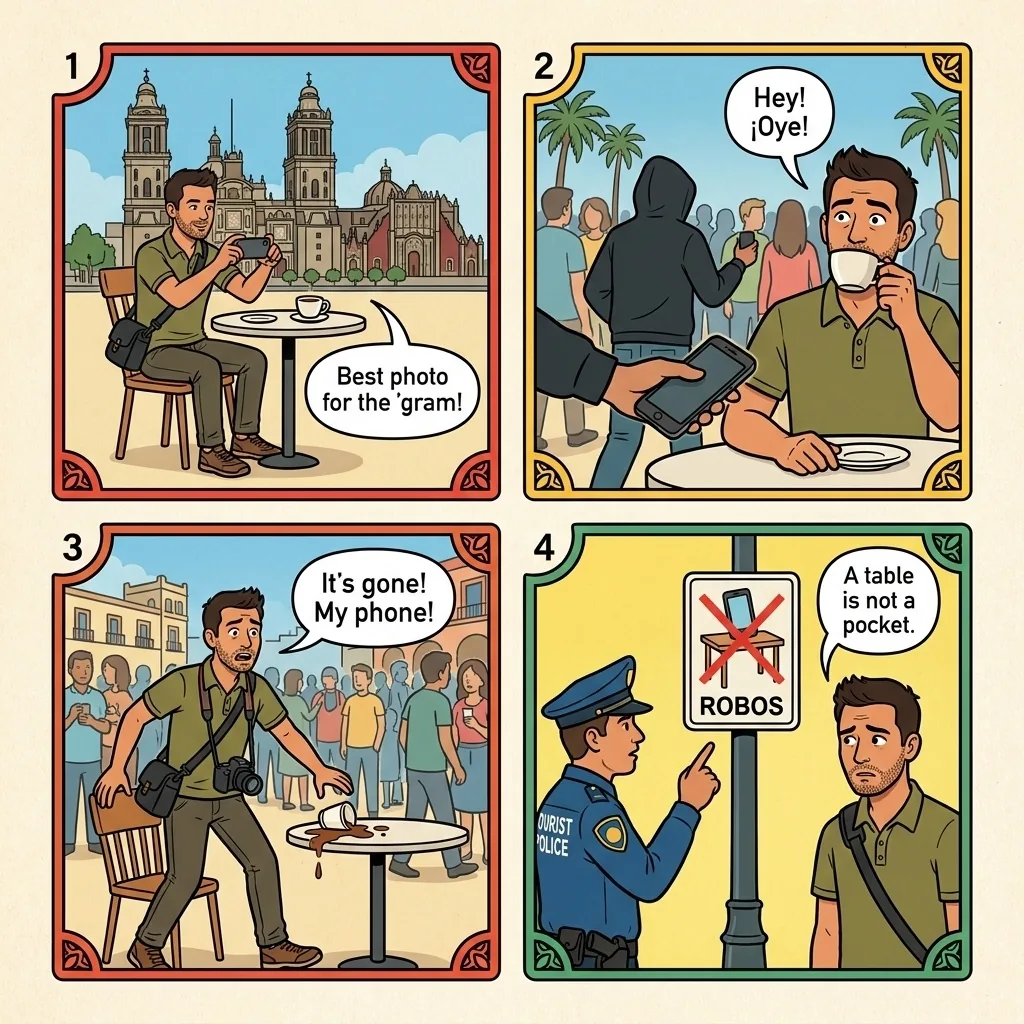
You leave a bar on Avenida Alvaro Obregon in Mexico City Roma Norte at 2:15am on a Saturday. The Uber app is showing 8-minute pickup times because of weekend surge. There is a yellow CDMX taxi stopped at the corner, driver smoking a cigarette, looking at you. He waves: "A donde vas, amigo? Roma Sur? Polanco? Te llevo, treinta pesos mas barato que Uber, vamonos." (Where you going? Roma Sur? Polanco? I'll take you, thirty pesos cheaper than Uber, let's go.)
You are tired. The Uber wait is 8 minutes. The taxi will leave now. The price is reasonable. You get in the back seat. The driver pulls onto Calle Tonala heading north. Three blocks later he stops at a corner; a man you did not see waiting steps from a doorway, opens the front passenger door, gets in. The driver does not introduce him; the new passenger does not look back at you.
The new passenger turns to face you. He has a small black handgun visible in his right hand resting on his lap. He says, evenly: "Calmate, amigo. Es muy facil, muy rapido. Vas a sacar dinero del cajero. Te voy a soltar despues. Si haces problema, te corto. Vamos a tres cajeros, sacas el limite diario en cada uno." (Calm down. It's very easy, very fast. You're going to withdraw cash from ATMs. I'll release you afterward. If you make trouble, I cut you. We go to three ATMs, you withdraw the daily limit at each.)
The CDMX daily ATM limit on most US cards is 5,000-9,000 MXN ($250-450 USD). Multiplied by three ATMs and across both your debit and credit cards, the total potential loss is $1,500-3,000 USD. The driver pulls onto the Periferico heading toward Iztapalapa. The first ATM is a 7-Eleven in Colonia Granjas Mexico, far from any tourist zone.
You comply fully. You give the PIN. You withdraw the daily limit on your debit card at the first ATM (8,000 MXN). The accomplice takes the cash and stands beside you. You move to a second ATM five minutes away in Colonia Iztapalapa; the daily limit on your credit card is 7,000 MXN. The accomplice takes that too. The driver and accomplice discuss whether to go to a third ATM; they decide the cash from two is sufficient. The driver drops you on a corner in Colonia Doctores at 3:50am. He pulls away before you can read the license plate.
You walk three blocks to a 24-hour OXXO, ask the clerk to call a police number, give your incident report. The Comision de Atencion al Turista CDMX dispatches an English-speaking officer to take your statement at the OXXO. Your first call after the police is to your card issuer to freeze the cards (typically the operator team uses the cards for 24-48 hours after release for online purchases or additional ATM withdrawals at non-bank-controlled cajeros). The total loss after the police take your report and you reach the embassy: 15,000 MXN ($740 USD) plus the time and psychological cost.
The Mexico City Comision de Atencion al Turista has logged the variant continuously since the 1990s; the rideshare adoption (Uber 2013, DiDi 2018, Cabify 2014) reduced the volume by an estimated 70%, but the airport-curb and after-dark-hailed scenarios remain documented every weekend. The US State Department maintains an active Mexico Travel Advisory specifically mentioning express kidnapping. The Comision recommends: never hail; always pre-book; if detained, comply fully.
That is the canonical hailed-cab variant of the express-kidnapping-taxi family. The rest of this page is the four-mechanic playbook, the four other places where it runs in different forms (Caracas, Bogota, Buenos Aires, Sao Paulo), and the pre-book-only rule that defeats every variant.
Read the full Mexico City scam guide →Key Takeaways
The pre-book-only rule
Express kidnapping by taxi depends on the tourist boarding a vehicle the operator controls. Pre-booked rideshare via licensed apps eliminates the variant for almost all tourist scenarios because the platform verifies the driver, tracks the GPS route, and provides emergency-call integration. The defensive routine is a single trained habit: pre-book everything; never hail. The play falls apart instantly because the operator cannot select tourists who are inside an Uber.
- Pre-book all taxis through licensed apps or radio dispatch. Use Uber, DiDi, Cabify, Beat, or 99 in Mexico City, Bogota, Sao Paulo, Buenos Aires; in Caracas use only authorized hotel taxis. Never hail a taxi off the street, especially after dark.
- At airports, use only the official authorized-taxi counter inside the terminal. Mexico City Benito Juarez, Caracas Maiquetia, Bogota El Dorado, and Lima Jorge Chavez all have authorized counters. Skip all curb solicitations.
- Carry minimal cash and a single low-daily-limit card on visible occasions. Set the daily ATM limit to $300-500 in your card issuer's app. Most US issuers allow this through the mobile app or by calling customer service.
- If detained, comply fully and give the PIN. The express-kidnap operators are armed; the variant ends fastest and most safely with full compliance. Try to memorize the driver's appearance, the license plate, the vehicle make/color for the police report.
- After release, contact embassy / police / cards immediately. First call: embassy emergency line. Second: card issuer. Third: tourist police for the report number. Travel insurance covers the loss with the police report.
The four mechanics
Different cities and operator networks lean on different mechanics within the same family. Here are the four sub-variants documented across Latin America. Each has a recognition tell, a primary geography, and the routine step that defeats it.
1. Hailed-Cab Forced ATM Run
Tourist hails a taxi off the street (often after-dark, often after leaving a bar or restaurant). The driver picks up an armed accomplice mid-route, runs the tourist through 1-3 ATMs withdrawing daily limits on debit and credit cards. Total cash extraction: 30-90 minutes; total loss: $300-3,000 USD. The variant has decreased significantly with rideshare adoption but remains documented in every major Lat Am tourist city.
Defense: never hail. Pre-book via Uber, DiDi, Cabify, Beat, 99. Most reported in: Mexico City CDMX after-dark Roma Norte, Condesa, Polanco, Centro Historico; Buenos Aires Microcentro, Recoleta, Palermo after-dark; Bogota Centro and Chapinero; Sao Paulo Centro and Vila Madalena; Cancun Centro and Hotel Zone late-night.
2. Airport Unauthorized-Taxi Kidnap
The most-documented variant. Tourist arrives at airport curb, approached by men offering "taxi service" without authorized signage. The car is unmarked or has fake livery; the driver is sometimes part of an organized group with an accomplice waiting. Once in transit, the driver detours, picks up the accomplice, runs the express-kidnap playbook. Mexico City and Caracas airports have decade-long enforcement campaigns against the variant.
Defense: use only the official authorized-taxi counter inside the terminal. Most reported in: Mexico City Benito Juarez (MEX) Terminal 1 and 2 curbs; Caracas Simon Bolivar / Maiquetia (CCS); Lima Jorge Chavez (LIM); Bogota El Dorado (BOG); Sao Paulo Guarulhos (GRU) night arrivals.
3. Driver-Plus-Accomplice Complicity
The taxi driver works with a 1-2 person accomplice team. The driver picks up the tourist as a normal fare; once en route, the driver makes a brief stop ("something with the car, one minute") and an armed accomplice gets in the back seat with the passenger. The driver continues to ATMs. The variant works because the driver appears legitimate at hail / pickup; the threat materializes mid-route.
Defense: pre-book all taxis. Verify driver name, photo, and plate at pickup. Most reported in: Bogota Centro and Chapinero; Caracas Las Mercedes nightlife; Sao Paulo Centro and Vila Madalena; Mexico City CDMX after-dark; Cali nightlife districts; Cartagena old town late-night.
4. Held-for-Ransom (12-48 Hours)
The most severe variant. After the initial cash withdrawal phase, the tourist is held for 12-48 hours while an accomplice calls the victim's family demanding additional cash via Western Union, MoneyGram, or wire transfer. Most international travel insurance does not cover ransom payments. The US, UK, Canadian, and Australian governments all advise against ransom payment but the local family pressure to pay is real.
Defense: avoid the variant entirely through pre-booking. Most reported in: Caracas (continuous since 1990s); Mexico City peripheral areas (Iztapalapa, Ecatepec, Naucalpan); Bogota outskirts (Soacha, Suba); Sao Paulo periphery; Cali rural perimeter.
Where it runs
Express kidnapping is concentrated in major Latin American urban centers with high after-dark hailed-taxi volume and weak organized-crime enforcement. The five countries below cover the bulk of global tourist exposure.
| Country | Documented variants | Iconic location pattern |
|---|---|---|
| 🇲🇽 Mexico | 5 | Mexico City Benito Juarez airport unauthorized taxis; CDMX after-dark hailed cabs (Roma Norte, Condesa, Polanco, Centro); Cancun late-night; Guadalajara Centro |
| 🇻🇪 Venezuela | 4 | Caracas Maiquetia airport unauthorized taxis; Las Mercedes nightlife; Caracas suburbs held-for-ransom; Maracaibo |
| 🇨🇴 Colombia | 4 | Bogota Centro and Chapinero after-dark; Cartagena old town late-night; Cali nightlife districts; Medellin El Poblado |
| 🇧🇷 Brazil | 2 | Sao Paulo Centro and Vila Madalena nightlife; Rio de Janeiro Centro and Lapa; Brasilia after-dark hailed cabs |
| 🇦🇷 Argentina | 2 | Buenos Aires Microcentro and Recoleta after-dark hailed cabs; Ezeiza airport unauthorized cabs (decreasing with Cabify/DiDi adoption) |
Bar width is data-bound at 28 pixels per documented variant. Mexico alone accounts for 29% of global exposure, driven by Mexico City CDMX after-dark and Benito Juarez airport curb. Variant volume has dropped 60-80% since rideshare adoption (2013-2018) but remains documented in every major Lat Am tourist city.
Four more cities, four more express-kidnap mechanics
The Mexico City Roma Norte hailed-cab scene above showed the canonical variant. Here are four more cities where different sub-variants dominate. Each links to the full city scam guide.
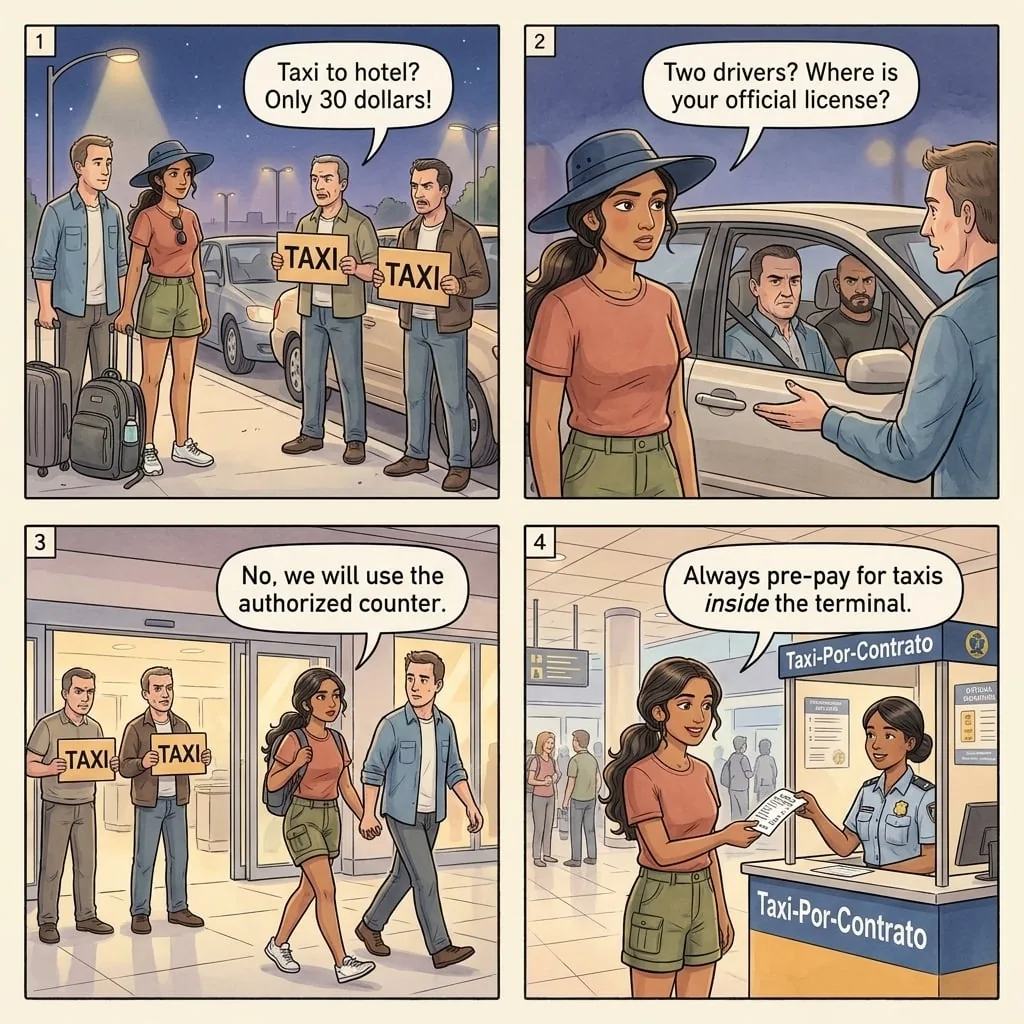
You land at Caracas Simon Bolivar International (Maiquetia, CCS) at 11:30pm on a Thursday. The flight from Bogota was delayed; you exit immigration at midnight and walk through customs to the arrivals hall. The hall is dim; signs in Spanish-only; a long line of men in plainclothes with cardboard signs reading "TAXI - HOTEL - HOTEL" form a gauntlet from the customs exit to the curb. One approaches: "Senor, taxi a Caracas, treinta dolares, vamos." The official taxi por contrato counter is to your right, with a small queue; the rate is 65-80 USD per ride, paid in advance, vehicles are radio-dispatched and tracked. You are tired; the 30 USD price is half. You agree. The man takes your suitcase, walks to a unmarked white sedan in the curb-side parking. A second man is in the front passenger seat. The driver pulls onto the Caracas-La Guaira highway. Twenty minutes in, the second man turns around with a handgun. The variant has been documented in Caracas continuously since the 1990s; the US, UK, Canadian, and Australian governments maintain active Travel Advisories specifically about Caracas Maiquetia airport unauthorized taxis. The Venezuelan tourist police office at the airport accepts walk-in reports during day-time hours; the SEBIN (intelligence agency) handles serious incidents. Defense: at Maiquetia, use only the official taxi por contrato counter. Booked rides have radio-dispatched verified vehicles. The 30 USD discount from a curb solicitation is the price of the variant; pay the 65-80 USD official rate. Pre-book via your Caracas hotel's front desk before departure; most hotels arrange airport pickup with verified drivers as part of the booking.
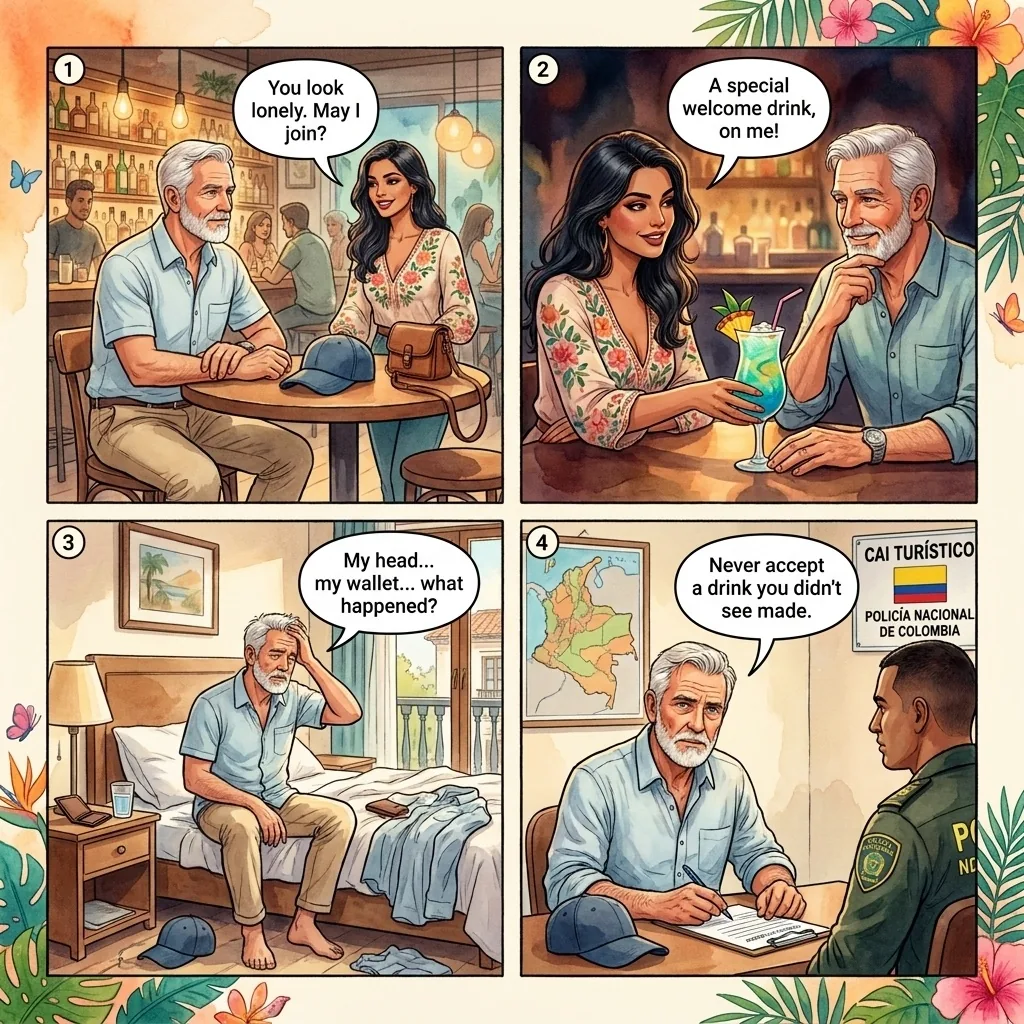
You leave a restaurant in Chapinero (Bogota's nightlife district) at 1:30am on a Saturday. The Uber estimated wait is 12 minutes due to weekend surge; you are tired and the closest taxi is right there. You hail it, get in, give the address of your hotel near La Candelaria. The driver pulls onto Carrera Septima heading south. Three blocks later he stops at a corner; a man you did not see steps from a doorway, opens the front passenger door, gets in. The driver does not introduce him. The new passenger turns around. Same playbook as Mexico City. The Colombian Tourist Police (Policia de Turismo) at Plaza de Bolivar accepts English-language reports; the National Police 112 emergency line takes incident calls. The Colombian rideshare market (Uber, DiDi, Cabify, Beat) is mature; Beat in particular has high market share in Bogota and verified-driver coverage. Defense: Bogota's after-dark variant is well-documented enough that the US State Department maintains an active advisory. Pre-book via Beat or DiDi; never hail in Centro or Chapinero after dark. The 12-minute Uber wait is the price of avoiding the variant.
Read the full Bogota scam guide →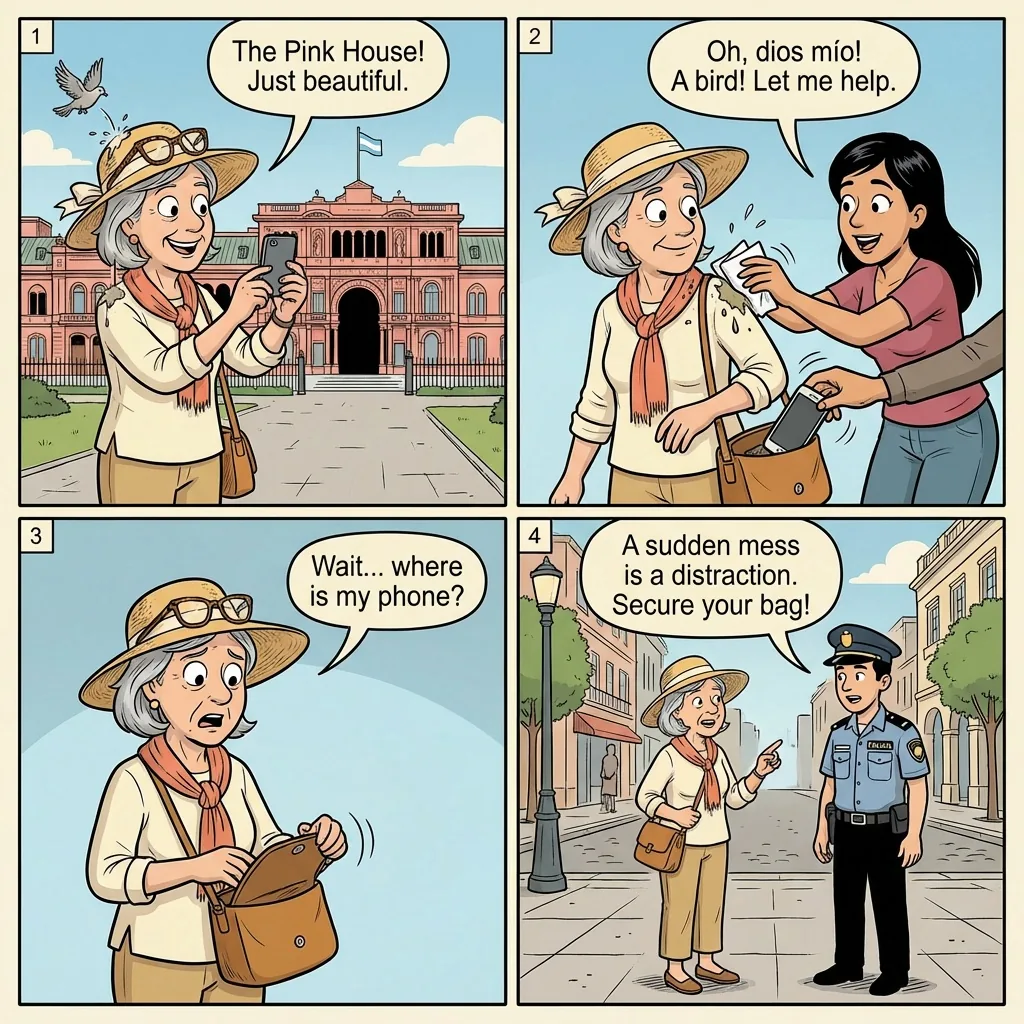
You leave a parrilla (Argentine steakhouse) in Recoleta at 11:45pm on a Saturday. The Cabify wait is 9 minutes; a yellow-and-black porteño taxi is at the corner. You hail it, get in. The driver pulls onto Avenida Las Heras heading north. Five blocks later he stops; a man steps in. Same playbook. The Comisaria Turistica at Avenida Corrientes 436 (24/7, English-speaking) accepts walk-in reports; Buenos Aires Police 911 takes emergency calls. The Buenos Aires rideshare market (Uber, Cabify, DiDi, Beat) is mature, with Cabify and DiDi being the dominant licensed apps. The variant has decreased significantly in Buenos Aires since 2017 (Cabify launch) and 2020 (DiDi launch); volumes are estimated to be 70-85% below pre-rideshare-era levels. Defense: Buenos Aires after-dark in Microcentro, Recoleta, and Palermo is well-served by Cabify and DiDi. The 9-minute Cabify wait is the price of avoiding the variant. The Comisaria Turistica posts daily incident summaries on its Facebook page; check during high-tourist-density events (the Pope's funeral, the World Cup) when variant volumes spike.
Read the full Buenos Aires scam guide →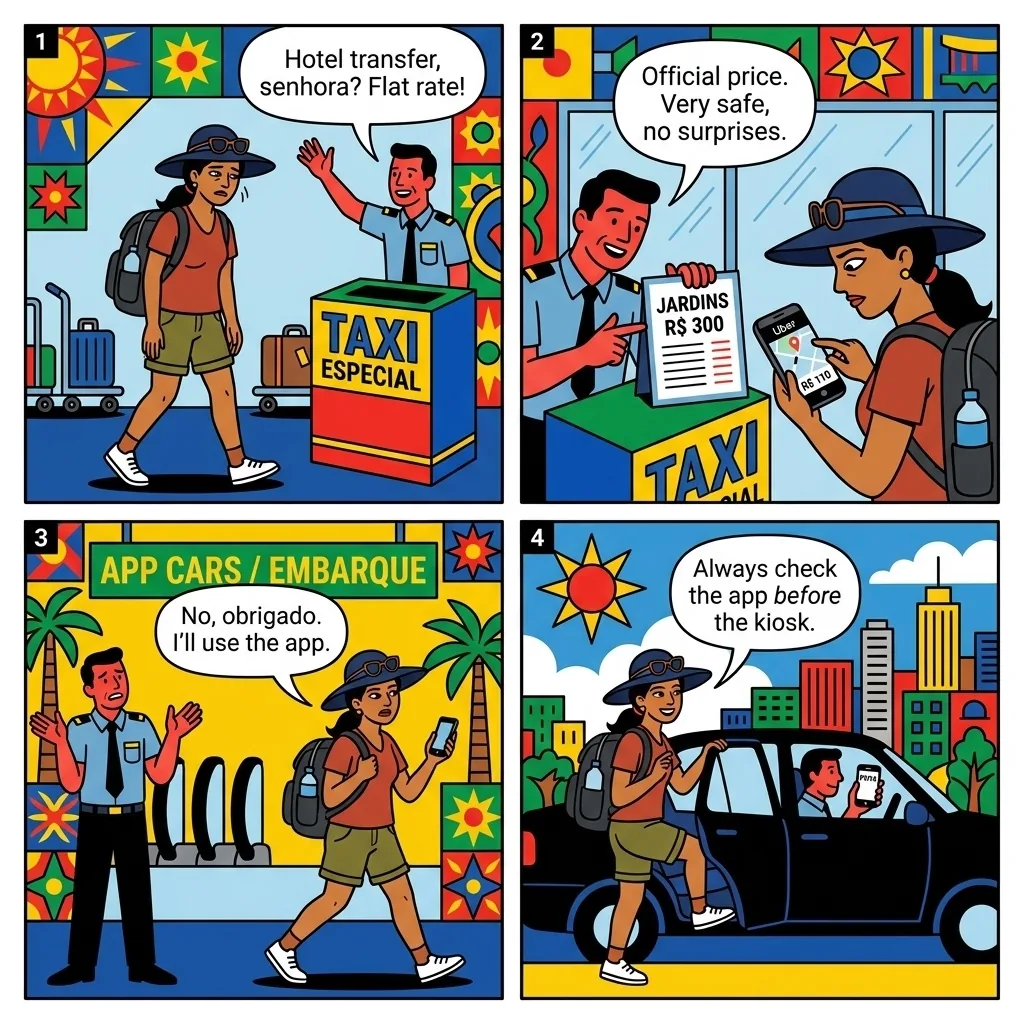
You leave a bar in Sao Paulo Vila Madalena (nightlife district) at 2:30am on a Sunday. The 99 wait is 15 minutes (weekend surge); you hail a yellow taxi at the corner. The driver pulls onto Rua Harmonia heading east. Five minutes later he stops; an armed accomplice gets in the back seat with you. Same playbook, but the route this time goes deeper into Sao Paulo's eastern peripheral neighborhoods (Sapopemba, Itaquera) for an extended hold. The Tourist Police DEATUR (Departamento Estadual de Atendimento ao Turista) at Avenida Sao Luis 91 (24/7, English-speaking) accepts reports; the Brazilian Tourist Office maintains an active advisory about Sao Paulo after-dark hailed taxis. The Sao Paulo rideshare market (Uber, 99, InDriver) is mature; 99 has the highest local market share. The variant in Sao Paulo overlaps with the broader violent-crime statistics for the city's peripheral areas. Defense: never hail in Sao Paulo Centro or Vila Madalena after dark. Pre-book via 99 or Uber; the 15-minute wait is the price. If you are at a Vila Madalena bar that closes at 2-3am, ask the bar to call you a 99 directly; many bars have direct-dispatch arrangements.
Read the full Sao Paulo scam guide →Red flags
If two or more of these signals fire when you are about to take a taxi in Latin America, route around the encounter. The compounding rule: a single signal might be a coincidence; two signals are a script.
- You are at an airport curb after dark, approached by a man with a "TAXI" sign
- The vehicle is unmarked, has fake livery, or different color than official taxis
- The driver offers a price below the official rate (e.g. 30 USD vs 80 USD official)
- The driver wants to leave immediately without a metered or radio-dispatched booking
- You are after-dark in CDMX Roma / Condesa, Bogota Centro / Chapinero, Sao Paulo Vila Madalena, Buenos Aires Recoleta
- The Uber / DiDi / Cabify / Beat / 99 wait time is long and a hailed taxi is right there
- The driver makes a brief unscheduled stop and a second man approaches the car
- The driver detours from the agreed route, especially toward peripheral neighborhoods
- The driver asks unusual questions about your hotel, length of stay, or travel companions
- The driver discourages you from using GPS or refuses to share the route on the app
The phrases that shut it down
Refusing the curb solicitation works when you signal you have already pre-booked. The phrase pattern is the same in every Latin American country: I already requested an Uber.
If you got hit
You were detained for 90 minutes, the operator extracted 15,000 MXN ($740 USD) in cash from two ATMs, and they released you in a peripheral neighborhood. Express-kidnapping recovery is a 4-stage sequence: immediate physical safety, card freeze, embassy contact, police report. The first hour matters because the operator team typically uses the cards for an additional 24-48 hours after release for online purchases or non-bank-controlled-cajero withdrawals.
Within 5 minutes of release: walk to the nearest 24-hour business (OXXO, 7-Eleven, hotel lobby) to call for help. Do not wait at the drop location; the operators sometimes circle back. Ask the clerk to call the emergency line; describe the incident in basic Spanish ("secuestro express, taxi") and your nationality.
Within 30 minutes: call your card issuer to freeze every card you carried during the trip, including any not used during the kidnap (the operators may have photographed your wallet contents). Most US issuers have a 24/7 international fraud line on the back of every card; keep a photo saved on your phone for exactly this moment.
Within 1 hour: contact your embassy emergency line. The US, UK, Canadian, and Australian embassies in Mexico City, Caracas, Bogota, Buenos Aires, and Sao Paulo all have 24/7 duty officers who can help with travel-document support, hospital referrals, and police-coordination. The embassy will instruct you on which local police station to file the report.
Within 2 hours: file a police report at the local tourist police. The report number is required for travel-insurance claims, embassy travel-document re-issuance, and in some cases for credit-card chargeback claims if the operators continue using the cards online.
- Mexico City: Comision de Atencion al Turista CDMX (24/7, English); Policia Turistica CDMX 911; US Embassy +52 55 5080 2000.
- Caracas: Venezuelan tourist police; SEBIN for serious incidents; US Interests Section through Swiss embassy +58 212 975 6411 (US suspended diplomatic relations 2019).
- Bogota: Policia de Turismo at Plaza de Bolivar; Colombian National Police 112; US Embassy +57 1 275 2000.
- Buenos Aires: Comisaria Turistica Av. Corrientes 436 (24/7, English-speaking); Policia 911; US Embassy +54 11 5777 4533.
- Sao Paulo: DEATUR Departamento Estadual de Atendimento ao Turista, Av. Sao Luis 91 (24/7); Policia Militar 190; US Consulate +55 11 5186 7000.
- Travel insurance: Allianz Travel, World Nomads, AIG Travel Guard, IMG Global all cover express-kidnapping cash extraction with police report.
- Card recovery: Visa Global Customer Assistance +1 303 967 1090 (collect from anywhere); Mastercard Global Service +1 636 722 7111.
- Embassy emergency lines (24/7): US Department of State Overseas Citizens Services +1 202 501 4444; UK FCO +44 20 7008 5000.
Recovery rates: cash extraction is rarely recoverable; the cash is in the operator's hands within minutes of withdrawal. Card-related fraud after release is typically refunded by the issuer with a clean police report. Travel insurance covers the cash loss with the report number; processing takes 30-90 days. The actionable response is preventive: pre-book all taxis, never hail, set low daily ATM limits.
Related atlas entries
Sister entries in the Scam Atlas. Express kidnapping by taxi sits in the Transport section as the most severe variant; pre-book-only rule connects to rideshare fare inflation defense; airport-arrival overlap is documented separately.
Sources
- US State Department Mexico Travel Advisory and Venezuela Travel Advisory, express kidnapping warnings (US, ongoing).
- UK Foreign Office travel advice for Mexico, Venezuela, Colombia, Brazil, Argentina (UK, ongoing).
- Comision de Atencion al Turista CDMX, express-kidnapping incident logs and rideshare-adoption volume reduction analysis (Mexico City, ongoing).
- Caracas Maiquetia airport tourist-police office, unauthorized-taxi enforcement bulletins (Venezuela, ongoing).
- Policia de Turismo Colombia, Bogota Centro and Chapinero express-kidnap reports (Colombia, ongoing).
- DEATUR Sao Paulo, Vila Madalena and Centro nightlife taxi-incident logs (Brazil, ongoing).
- Comisaria Turistica Buenos Aires, Microcentro and Recoleta after-dark taxi reports (Argentina, ongoing).
- El Universal (Mexico), El Tiempo (Colombia), El Nacional (Venezuela), Folha de Sao Paulo, express-kidnapping investigative coverage (multi-country, 2018-2025).
- r/travel, r/MexicoCity, r/Bogota, r/SaoPaulo, r/argentina, r/Venezuela continuing thread monitoring 2018-2026.
Get the full express-kidnapping-taxi playbook for your destination.
Each Travel Safety atlas covers every documented transport, taxi, and after-dark scam in one country, plus the country's full scam catalog: pickpocket, ATM, restaurant, fake authority, distraction. Buy once, lifetime updates as scams evolve. $4.99 on Kindle.