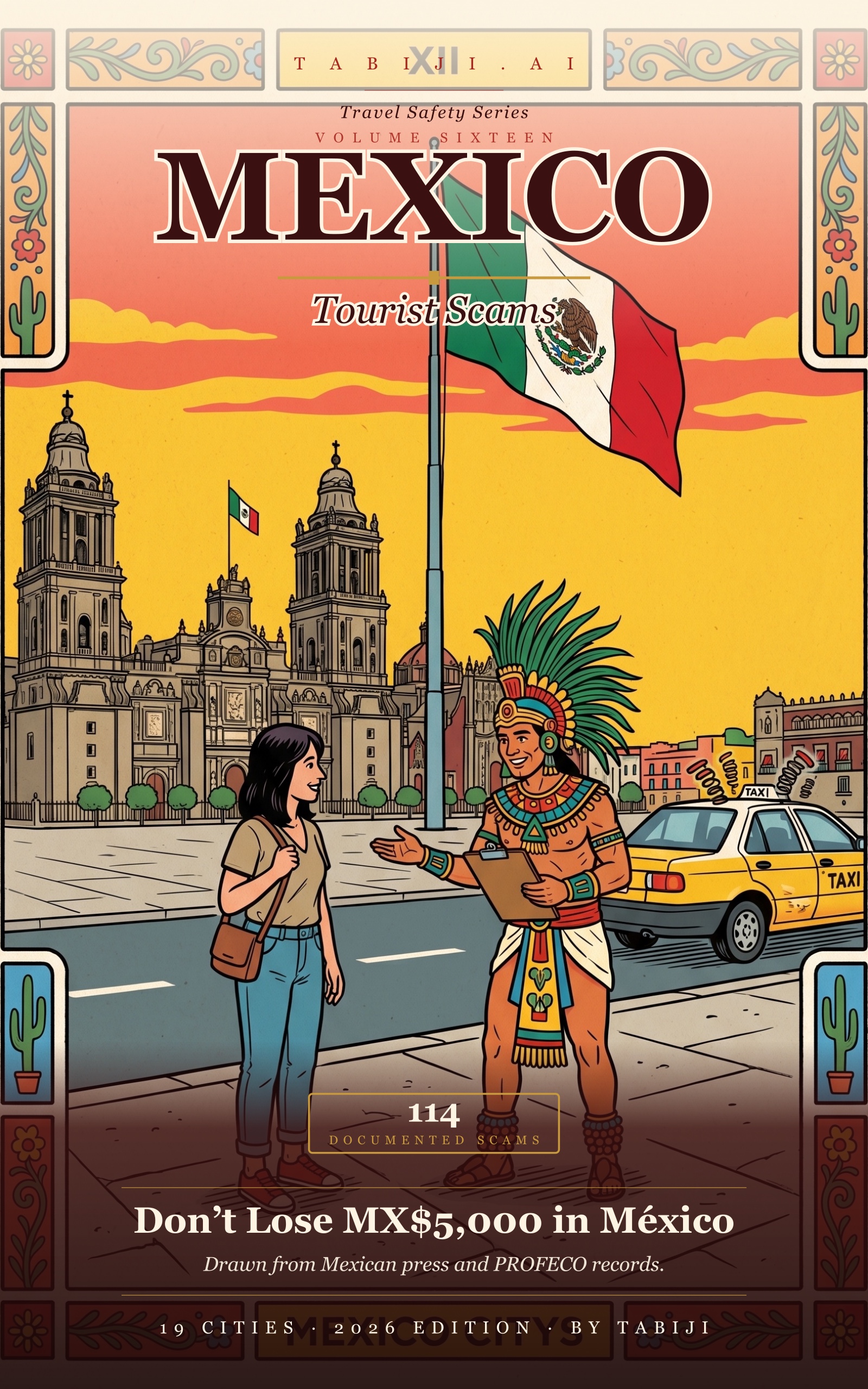
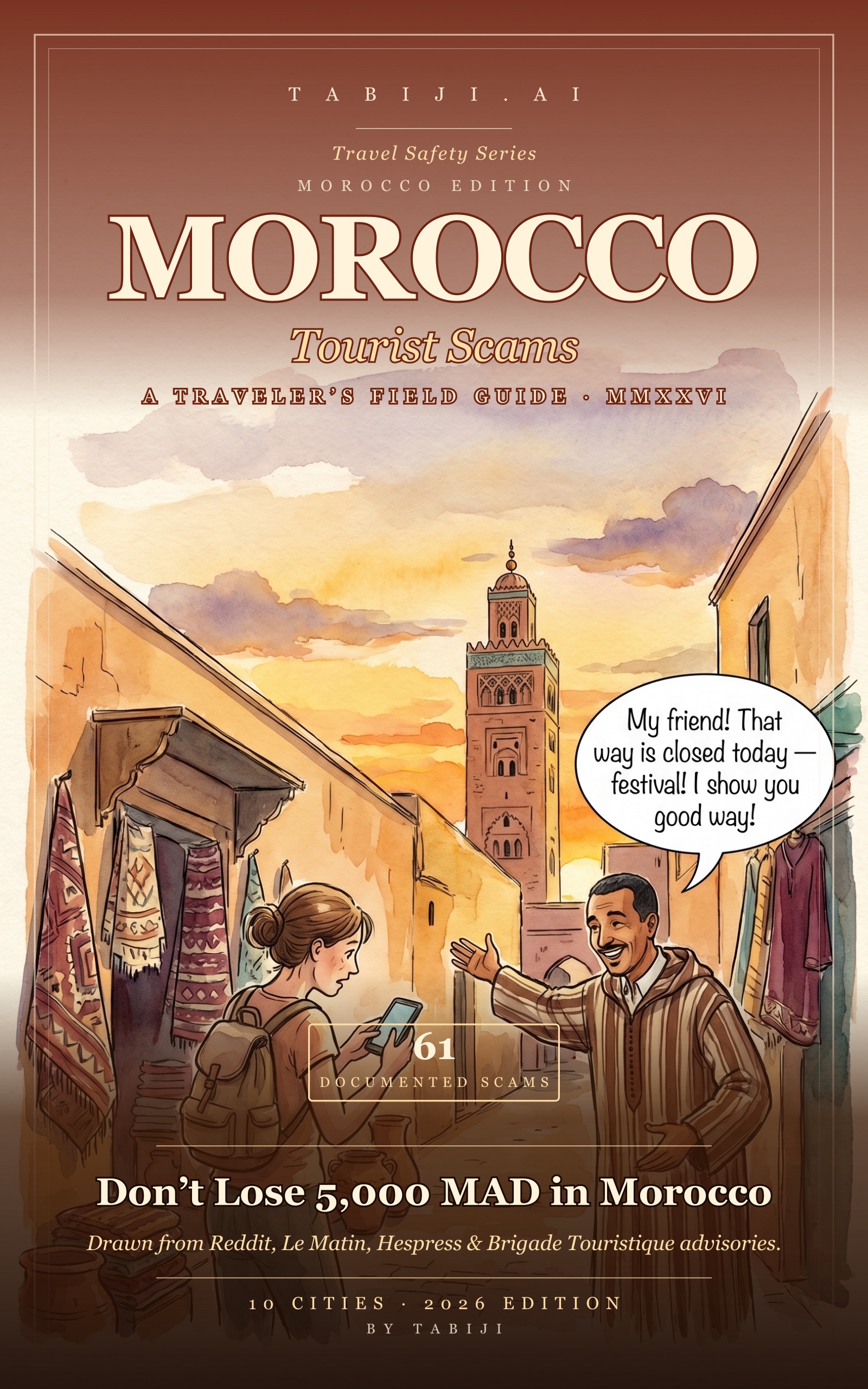
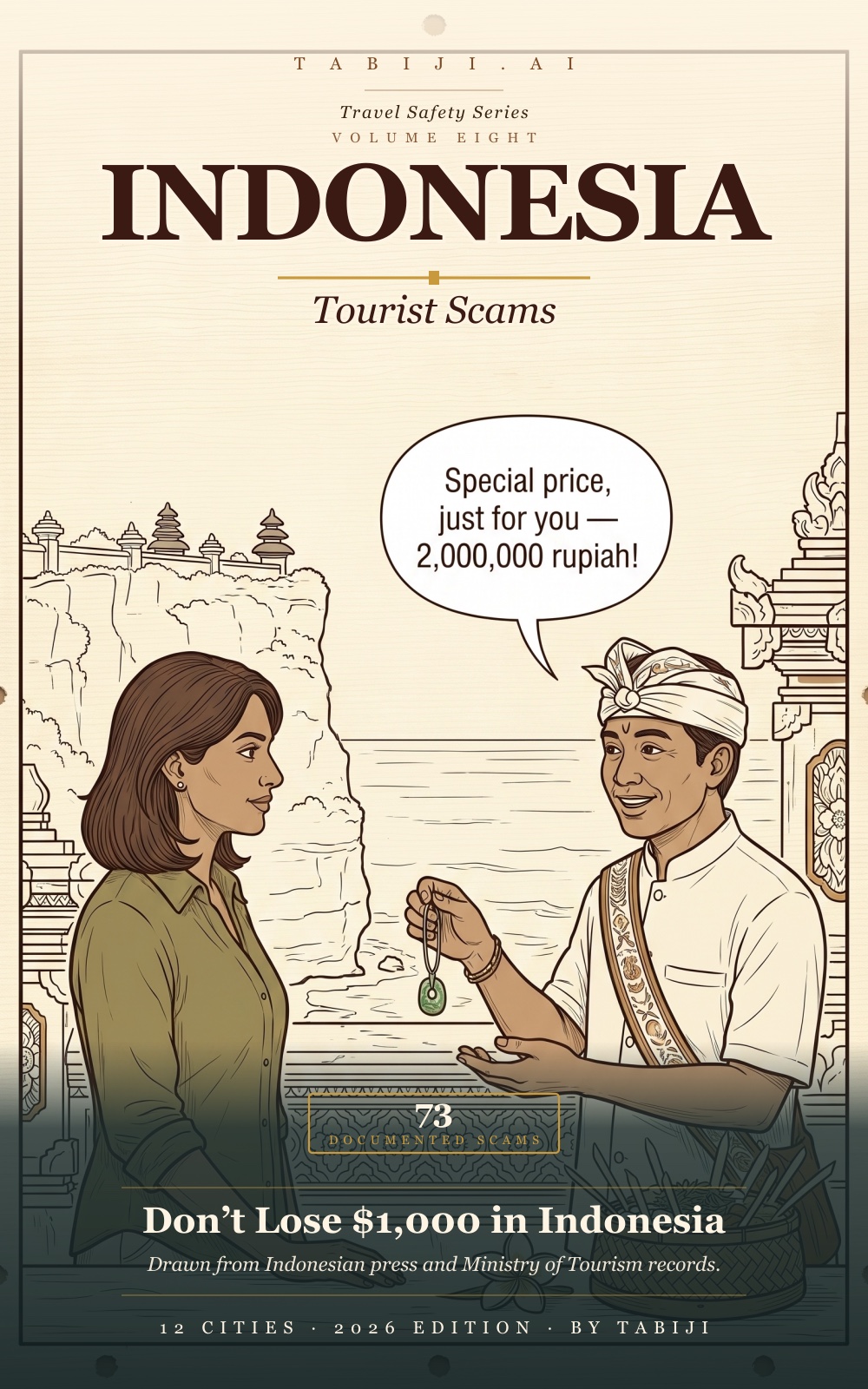
Rideshare fare inflation, four ways the driver pads the trip.
A driver waits at Mexico City Benito Juarez airport, then demands 800 pesos cash above the app price. A Cairo Uber driver routes you to the parking lot outside the airport rideshare zone. A Marrakech Bolt driver cancels at the last minute and charges a no-show. A man at Bali Ngurah Rai airport says "are you Sarah" and drives you to a different car. Four mechanics across 10 countries, defeated by the same five-second reflex: screenshot the app fare and matched plate before you open the door.


Rideshare fare inflation runs four mechanics across 10 countries: airport-zone ban (driver routes pickup outside the official rideshare zone), fake cancellation fee, off-app cash demand on arrival, and license-plate mismatch. The universal defense is one five-second reflex: screenshot the in-app fare, the matched driver name, the license plate, and the car make/model/color before you open the door. The screenshot defeats off-app cash demands (you have proof of the contractual price) and plate mismatches (you have proof the wrong car drove you). Most platforms refund off-app cash extortion when the in-app evidence is clear.
"Senor, son 800 pesos por el peaje. La aplicacion no lo cobra."
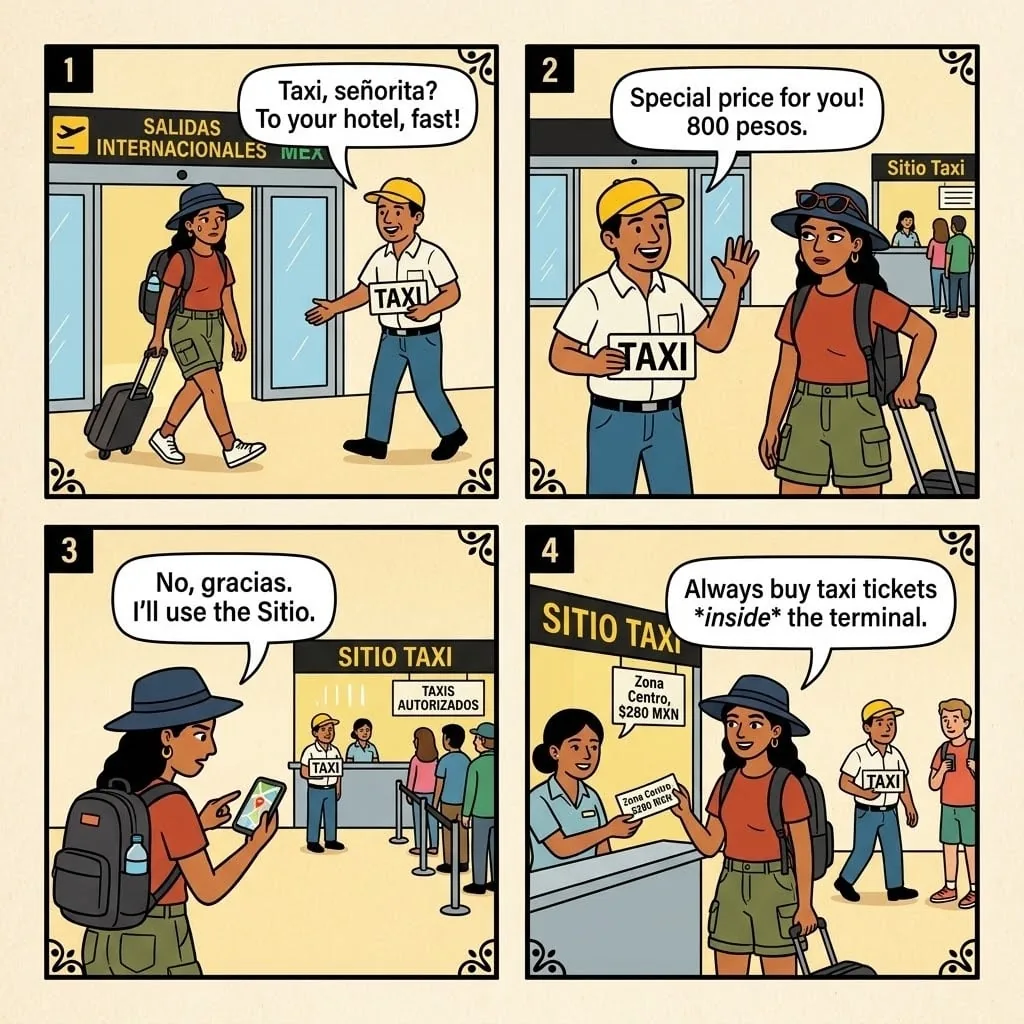
You land at Benito Juarez Terminal 2 at 10:40pm on a Tuesday. You walk through immigration, pick up your one checked bag, and exit through the customs corridor into the arrivals hall. The official Uber and DiDi pickup zone is on the upper level outside Door 8. You open the Uber app while you walk, request a ride to the Polanco hotel where you have a reservation; the matched fare is 287 pesos, the matched driver is Carlos in a white Nissan Versa, plate number visible.
You walk to the official zone. A black Nissan Versa pulls up; the driver leans across and says "Carlos, eres tu? Vamos." You confirm. He helps with your bag, drives onto the Periferico. Forty minutes later, he stops in front of your hotel. The app fare on your phone still says 287 pesos. He shifts in his seat, turns to face you, and says: "Senor, son 800 pesos. La aplicacion no incluye el peaje del Periferico. Estos 500 mas son del peaje. Tienes que pagar."
The Periferico has no toll on this route. The app price is contractual. There is no surge that did not register; there is no app glitch. This is the canonical off-app cash demand: a driver who accepts a trip at the in-app price, then demands cash above that price on arrival, citing tolls, night surcharge, or any other plausible-sounding category, with the implication that you cannot leave the car or get your luggage out until you pay.
You take ninety seconds to think. You open the in-app message thread and type: "Driver is requesting 500 pesos cash above the in-app fare for a peaje that does not exist on this route; please continue with the in-app payment." You take a screenshot of the trip details. You let your hand rest on the door handle. You say in clear Spanish: "Solo voy a pagar el precio de la aplicacion. Si tu quieres mas, llama a Uber Soporte ahora mismo y arreglamos." He calculates for ten seconds. He shrugs. He waves you out. The app charges 287 pesos automatically.
That is the canonical off-app cash demand variant of the rideshare-fare-inflation family, executed at one of the most-documented locations on Earth. The rest of this page is the four-mechanic playbook, the four other cities where it runs in different forms (Cairo, Marrakech, Bali, Buenos Aires), and the screenshot reflex that defeats every variant.
Read the full Mexico City scam guide →Key Takeaways
The screenshot reflex
Rideshare fare inflation depends on you arriving without evidence of the contractual price. The driver needs you to forget the app price, accept their framing of tolls or surge, and pay the extra without an audit trail. The defensive routine is a single trained reflex: before you open the door, screenshot the app trip details. The screenshot is the contractual proof. Most platforms refund off-app cash extortion when the in-app evidence is clear.
- Screenshot the app fare and the matched plate before getting in. Before opening the door, screenshot the in-app fare quote, the driver name, the license plate, and the car make/model/color. The screenshot is your evidence for any later dispute and your verification that the car at the curb is actually your match. Five seconds.
- Match the plate to the app before the door opens. License-plate mismatch is the most expensive variant. The app shows the matched plate; the car at the curb must match exactly. If a driver approaches saying "are you Sarah, your Uber," do NOT confirm your name; ask THEM for the matched plate or your trip code. Real drivers know it; fake drivers do not.
- Refuse off-app payment categorically. If a driver demands cash on arrival above the app price citing tolls, peaje, surge, night surcharge, or any other reason, decline. The app price is contractual. Use in-app message: "Driver is requesting cash above the quoted fare; please continue with the in-app payment." Do not pay the difference to keep the peace; the platform refunds extortion when the message thread is clear.
- Walk to the airport rideshare zone, not where the driver suggests. Major airport rideshare hustles work by routing you outside the official rideshare zone where insurance and fare protections do not apply. The app names the official pickup point; do not let a driver tell you to meet outside, in a different parking deck, at the bus drop-off, or at a hotel shuttle stop. If they cancel, take the next match from inside the official zone.
- If the driver tries to make you cancel, do not. If the driver waits, then says "app is broken, just cancel and book again," the play is to charge you the cancellation fee while booking another tourist. Do NOT cancel. Wait for them to cancel. Their cancellation forfeits their fee. If they sit for 5 minutes without moving, file an in-app no-show and request a different driver.
The four mechanics
Different markets and platforms (Uber, DiDi, Bolt, Cabify, Grab, InDriver, Yango, Careem) lean on different mechanics within the same family. Here are the four sub-variants documented globally. Each has a recognition tell, a primary geography, and the routine step that defeats it.
1. Airport Rideshare-Zone Ban
Major airports including Bangkok Suvarnabhumi, Bali Ngurah Rai, Mexico City Benito Juarez, Cairo, Delhi IGI, Jakarta, and Marrakech have either banned rideshare pickup at the standard arrivals curb or restricted it to a designated rideshare zone elsewhere on the property. The scam works by routing you outside the official zone where insurance and fare protections do not apply. The driver messages "come to parking 4" or "meet me at the gas station next to the airport." Once you are off-property, the driver runs cash-inflation, off-route, or in extreme cases express-kidnapping plays.
Defense: the app shows the official rideshare pickup zone in the trip details. Walk only to that zone. Most reported in: Bali Ngurah Rai (DPS); Bangkok Suvarnabhumi (BKK); Mexico City Benito Juarez (MEX); Cairo (CAI); Delhi IGI (DEL); Marrakech Menara (RAK); Jakarta Soekarno-Hatta (CGK).
2. Fake Cancellation Fee
The driver accepts the trip, drives slowly toward the pickup point, then either cancels at the last moment (charging the rider a no-show fee) or pressures the rider to cancel saying the app is broken or they cannot find the location. If the rider cancels, the platform charges a cancellation fee; the driver collects most of it; the driver immediately accepts another match. The variant is most prevalent in markets where driver wages are low relative to ride volume.
Defense: never cancel. If the driver waits without moving, send in-app messages; after 5 minutes file a no-show. Most reported in: Bali (Grab and Gojek); Buenos Aires (Cabify and DiDi); Bangkok (Bolt and Grab); Mexico City (DiDi and Uber); Manila (Grab); Mumbai (Ola).
3. Off-App Payment Demand
The driver accepts the trip at the in-app price, then on arrival demands cash above that price, citing tolls (peaje), night surcharge (tarifa nocturna), surge that did not register in the app, or distance the app underestimated. The cash demand is non-negotiable in the driver's framing; rejection escalates to refusal to unlock luggage, blocked exit, or threatening posture. Most-documented variant in Latin America and North Africa.
Defense: refuse categorically. The app price is contractual. Send an in-app message documenting the demand. Most reported in: Mexico City (Uber and DiDi); Cairo (Uber and Careem); Marrakech (Bolt and Careem); Casablanca (Careem); Buenos Aires (Cabify and DiDi).
4. License-Plate Mismatch
A fake driver approaches you at the airport curb saying "are you [your name], your Uber." If you confirm your name, they walk you to a non-rideshare car, drive you to your destination, and demand cash. The Uber app is still showing your real driver waiting elsewhere. The variant works because most riders default to confirming their name when an apparent driver names them.
Defense: do NOT confirm your name to anyone approaching at the curb. Ask THEM to read your matched license plate or trip code. Most reported in: Bali Ngurah Rai (DPS); Cancun (CUN); Mexico City Benito Juarez (MEX); Cairo (CAI); Bangkok Suvarnabhumi (BKK).
Where it runs
Rideshare fare inflation is concentrated in markets where the rideshare price is low relative to the gap between in-app payment and cash, where regulatory enforcement is weak, and where airport rideshare-zone routing is contested. The ten countries below cover the bulk of global tourist exposure.
| Country | Documented variants | Iconic location pattern |
|---|---|---|
| 🇲🇽 Mexico | 4 | Mexico City Benito Juarez airport off-app cash · Cancun airport plate mismatch · Playa del Carmen Quinta Avenida cancellation |
| 🇪🇬 Egypt | 3 | Cairo airport off-app cash · Sharm el Sheikh airport ban · Hurghada cash inflation |
| 🇲🇦 Morocco | 3 | Marrakech airport ban · Casablanca cash inflation · Fez old-medina cancellation |
| 🇮🇩 Indonesia | 2 | Bali Ngurah Rai airport ban and plate mismatch · Jakarta cancellation |
| 🇦🇷 Argentina | 2 | Buenos Aires Ezeiza airport ban · Buenos Aires Microcentro cash inflation |
| 🇹🇭 Thailand | 2 | Bangkok Suvarnabhumi airport ban · Phuket cash inflation |
| 🇮🇳 India | 1 | Delhi IGI airport ban · Mumbai BOM cash inflation |
| 🇻🇳 Vietnam · 🇵🇭 Philippines · 🇰🇪 Kenya | 2 | Ho Chi Minh City airport ban · Manila NAIA cancellation · Nairobi JKIA cash inflation |
Bar width is data-bound at 30 pixels per documented variant. The ten countries above account for 19 of 19 total variants documented at airports and major tourist hubs.
Four more cities, four more rideshare hustles
The Benito Juarez off-app cash scene above showed the cash-demand variant. Here are four more cities where different sub-variants dominate. Each links to the full city scam guide.
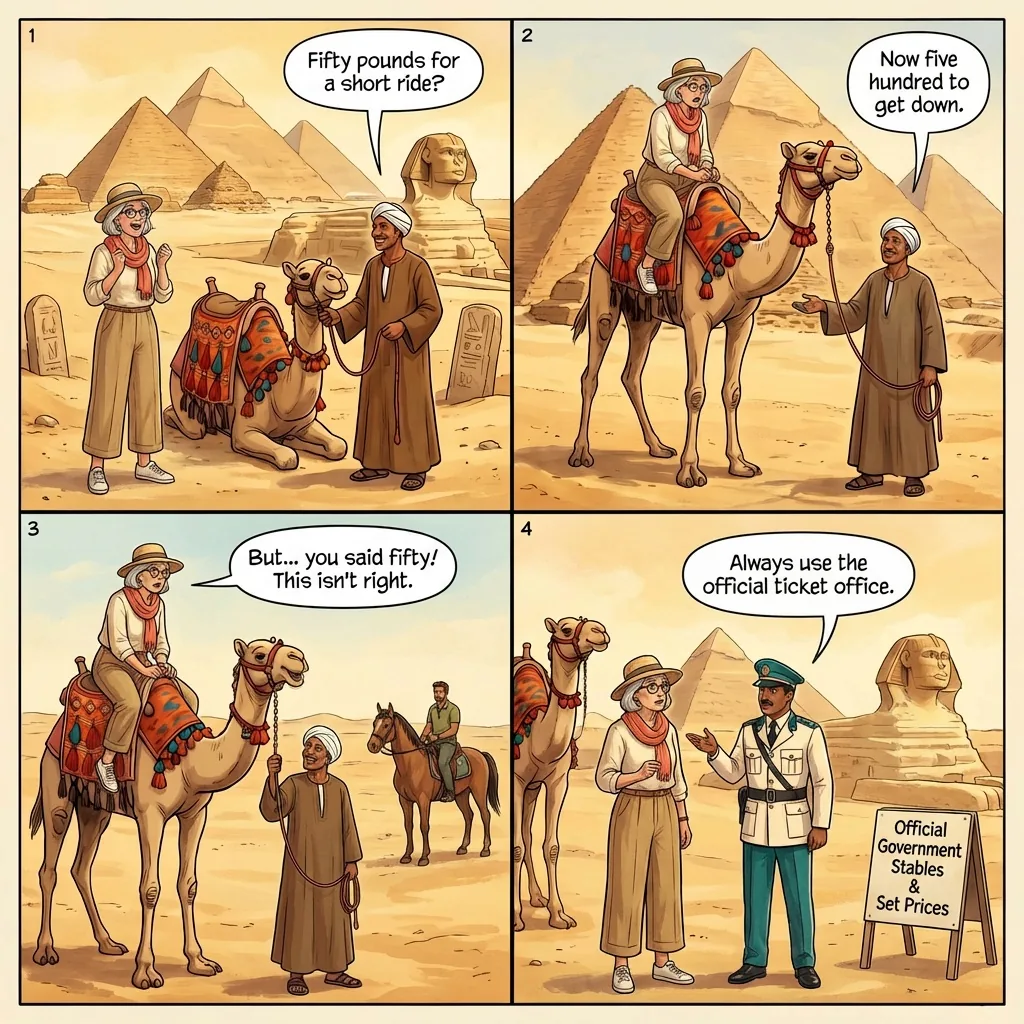
You land at Cairo International Terminal 2 at 1:30am after a night flight. You request an Uber to your hotel in Zamalek; the matched fare is 220 EGP, the driver is in the official rideshare lot beyond the parking deck. The driver messages: "I cannot enter the airport zone, I am at the gas station outside, walk through the exit gate." The exit gate is 800 meters across an unlit parking lot. The play is to get you off-property, then either run the off-app cash variant on arrival or refuse to drive at all unless you pay an upfront cash premium. The Egyptian Tourist Police office at Cairo Airport Terminal 1 has logged the variant continuously since 2018 with quarterly enforcement sweeps; volume of operators makes it a containment exercise. Defense: the official rideshare zone at CAI is named in the app trip details (Terminal 2: rideshare lot directly adjacent to baggage claim exit). Walk only there. If the driver insists on a different meeting point, cancel and rebook from the official zone. Tourist Police 126 takes English-language reports.
Read the full Cairo scam guide →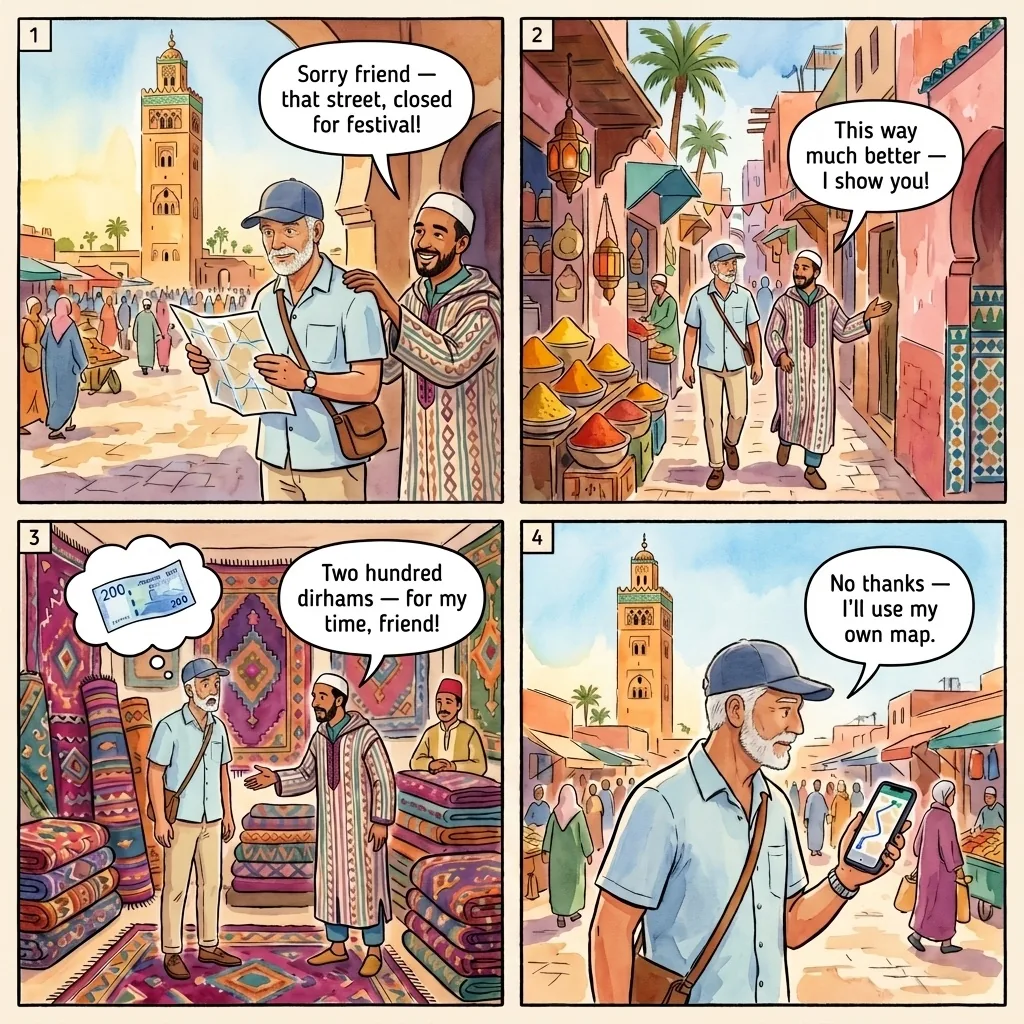
You walk out of Marrakech Menara arrivals at 4pm. Bolt and Careem are the dominant platforms. You request a ride to your riad in the medina; the matched driver shows up on the map but does not move toward the airport. After three minutes the driver cancels; you are charged a 7 MAD cancellation fee. You request again; the same play repeats. Marrakech taxi unions have aggressively contested rideshare presence at the airport since 2019; many drivers run the cancel-and-recharge play as protest revenue, not to actually pick up. The Marrakech Tourist Police office at Place Ben Youssef accepts English-language reports of the variant, though enforcement against rideshare drivers specifically is rare. The Office National Marocain du Tourisme has issued advisories during peak season. Defense: never cancel. If the driver waits without moving, send in-app messages; after 5 minutes file a no-show through the platform support menu. The platform refunds the cancellation fees when the message thread is clear. As fallback, the official Petit Taxi rank outside the airport runs metered rides into the medina at posted rates (typically 150-200 MAD).
Read the full Marrakech scam guide →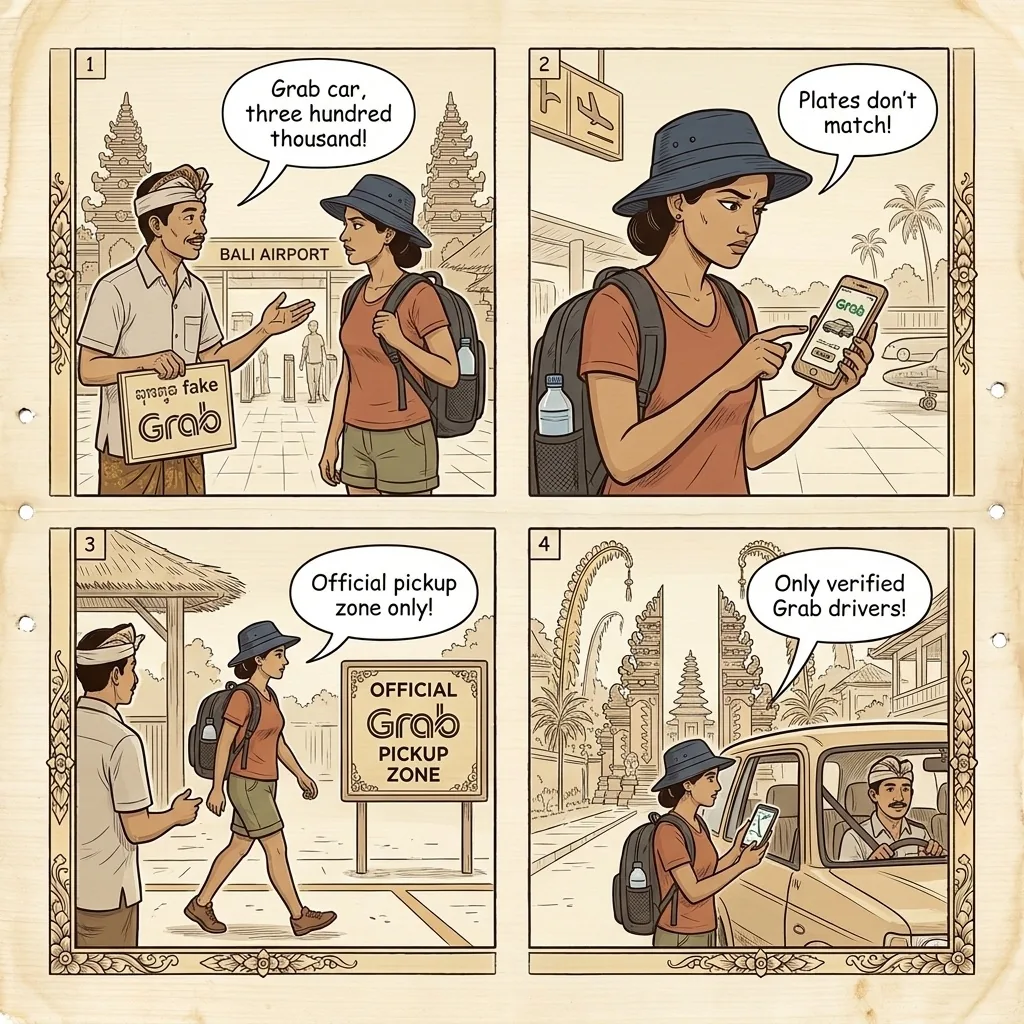
You land at Denpasar Ngurah Rai (DPS) at 6pm. Grab and Gojek are the dominant rideshare platforms. The official rideshare pickup is in a designated lot 400 meters from arrivals; the airport taxi cooperative has actively pressured rideshare presence. As you walk out of arrivals, men in Hawaiian shirts with hand-written cardboard signs approach saying "Grab? Gojek? Are you Sarah?" If you confirm, they walk you to an unmarked car (not the matched Toyota Avanza in your app), drive you to your hotel in Seminyak, and demand 250,000 IDR cash on arrival (the in-app fare was 90,000 IDR). The Bali Tourist Police office at the airport runs spot enforcement; the volume of operators means the variant runs nightly in peak season. Defense: do NOT confirm your name to anyone approaching at the curb. The official rideshare pickup is named in the app (parking lot, not the arrivals curb). Walk to that lot only. Match the plate exactly to what the app shows before opening any door. The Bali Tourist Police 0361 754 599 takes English-language reports.
Read the full Bali scam guide →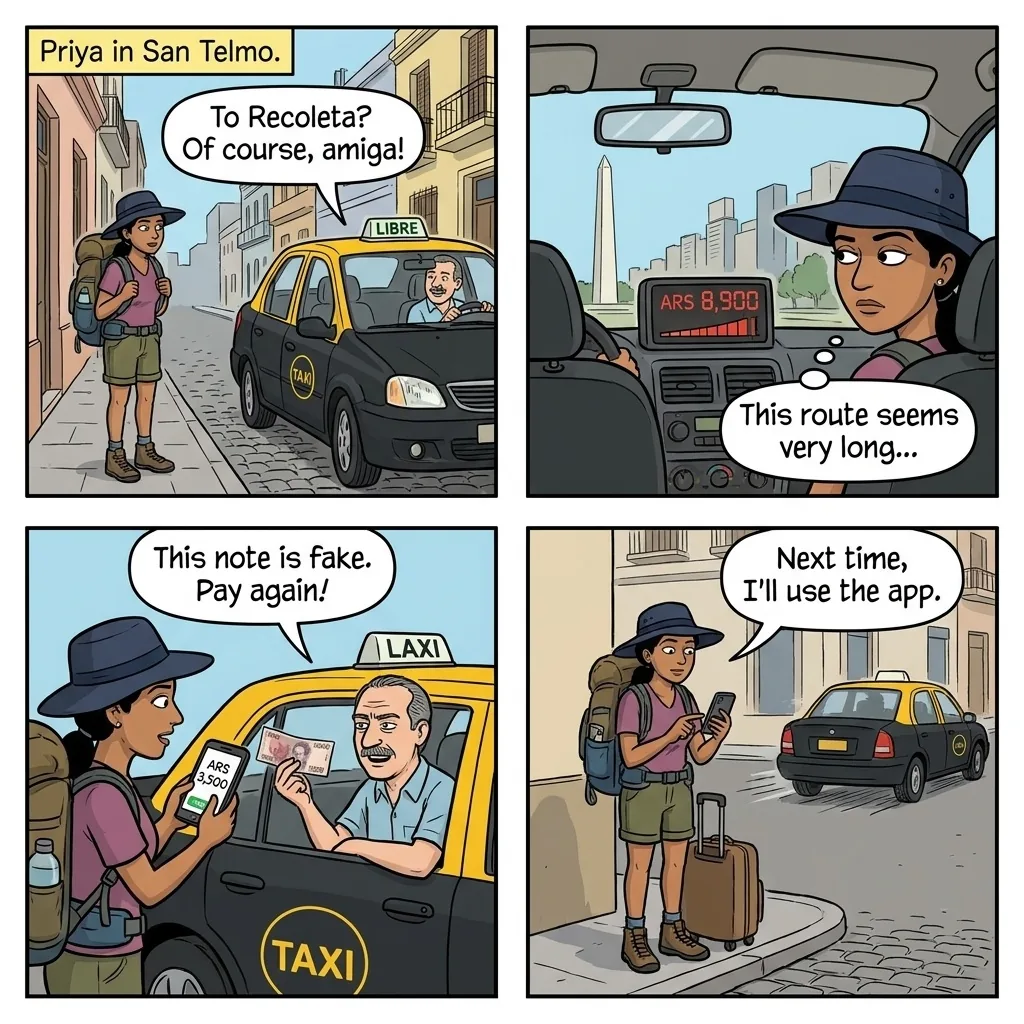
You land at Ezeiza International (EZE) at 11pm on a Tuesday. Cabify, DiDi, and Uber operate at EZE but are pushed to a designated rideshare zone outside the main arrivals concourse. You request a Cabify; the matched fare to Microcentro is 6,200 ARS. The driver picks you up at the rideshare zone and starts driving on the Autopista Ricchieri. Forty-five minutes later he stops at your hotel and says: "Senor, son 8,500 pesos. La aplicacion no incluye la tarifa nocturna. Estos 2,300 mas son del recargo nocturno." There is no contractual nighttime surcharge above the app price; the app already incorporates time-of-day pricing in the fare quote. The Comisaria Turistica at Av. Corrientes 436 takes English-language reports of the off-app cash variant on the +54 11 4346 5748 line. Defense: refuse categorically. Use in-app message: "El conductor pide cobro en efectivo arriba del precio en la aplicacion; por favor procedan con el cobro de la app." Send a screenshot of the trip details. Most platforms refund off-app cash extortion when the message thread is clear.
Read the full Buenos Aires scam guide →Red flags
If two or more of these signals fire when you are using a rideshare app, screenshot the trip details and route around the encounter. The compounding rule: a single signal might be a coincidence; two signals are a script.
- The driver messages you to meet outside the official rideshare pickup zone
- The license plate at the curb does not match the app exactly
- The car make/model/color does not match the app exactly
- A man approaches at the curb saying "are you [your name], your Uber"
- The driver asks you to confirm your name before showing the matched plate
- The driver waits at the pickup point without moving toward you
- The driver pressures you to cancel saying the app is broken
- On arrival, the driver demands cash above the app price for tolls, peaje, surge
- The driver refuses to unlock the trunk until you pay the cash difference
- You are at a major airport and rideshare is "banned" but not actually banned
The phrases that shut it down
Refusing rideshare fare inflation works when you signal the app price is contractual and you have evidence. The phrase is the same idea in every language: only the in-app price.
If you got hit
The driver took the cash and drove off. Most rideshare fare-inflation losses are recoverable through the platform, not the police. The first hour matters because the in-app message thread freshness and the screenshot evidence are the only things the platform support team will look at.
Within five minutes of the trip ending: open the trip in the app and select "Get help" or equivalent (Help > Trip issues > Driver charged extra). Submit the screenshot of the trip details (the one you took before getting in). Submit any in-app messages from the driver demanding off-app payment. State the amount paid and request a refund of the difference.
Within thirty minutes: rate the driver one star and write a brief written report in the rating screen. The combination of one-star rating, written report, and trip-issue claim triggers the platform's escalation queue. Most claims are decided within 24-48 hours; cash-extortion claims with clear in-app evidence are refunded at high rates.
Within one hour: if the driver detained you, threatened you, or refused to unlock luggage, file a police report with the local tourist-police line. The report number is what your travel-insurance carrier requires for any incident-related claim.
- Mexico City: Policia Turistica CDMX, Centro Historico station; English-language reports accepted. Uber Mexico support: in-app or +52 800 953 8350.
- Cairo: Tourist Police 126 (24/7); Uber Egypt support: in-app or website.
- Marrakech: Tourist Police, Place Ben Youssef; Bolt and Careem support: in-app.
- Bali: Bali Tourist Police 0361 754 599 (English-speaking); Grab and Gojek support: in-app.
- Buenos Aires: Comisaria Turistica, Av. Corrientes 436, +54 11 4346 5748 (24/7 English); Cabify and DiDi support: in-app.
- Bangkok: Tourist Police 1155 (English-speaking dispatch); Bolt and Grab support: in-app.
- Delhi: Delhi Police 100; Uber India support: in-app or +91 80 6196 1196.
- Manila: Tourist Police 117; Grab Philippines support: in-app.
For platform-level escalation, the Uber, DiDi, Bolt, Grab, Cabify, and Careem support teams all accept screenshots as primary evidence. The cash refund (in app credit or back to the original payment card) typically issues within 48-72 hours. Travel insurance carriers including Allianz Travel and World Nomads cover rideshare extortion only when a police report number is on file; the in-app refund is usually faster and easier than the insurance claim.
Related atlas entries
Sister entries in the Scam Atlas. Rideshare fare inflation is the modern app-era cousin of taxi meter manipulation; airport arrival scams are the broader airport-curb family; tuk-tuk and rickshaw detour scams are the equivalent in markets where rideshare is weak.
Sources
- Uber, DiDi, Bolt, Grab, Cabify, Careem published support documentation on cash-extortion claim filing (multi-platform, ongoing).
- SCT (Mexico Secretaria de Comunicaciones y Transportes) Benito Juarez airport rideshare-zone advisories (Mexico City, 2019-2025).
- Egyptian Tourist Police 126 quarterly enforcement bulletins, Cairo airport rideshare-zone routing (Egypt, ongoing).
- Moroccan Office National du Tourisme advisories on Marrakech airport rideshare cancellation play (Morocco, peak-season).
- Bali Tourist Police 0361 754 599 incident logs, Ngurah Rai license-plate-mismatch reports (Indonesia, ongoing).
- Comisaria Turistica Buenos Aires, off-app cash-extortion logs at Ezeiza and Microcentro (Argentina, ongoing).
- El Universal, Reforma, Mexico City Benito Juarez rideshare-zone enforcement coverage (Mexico, 2020-2025).
- The National and Egypt Today, Cairo airport rideshare advisory coverage (Egypt, 2019-2025).
- r/travel, r/MexicoCity, r/Bali, r/Morocco, r/cairo continuing thread monitoring 2018-2026.
Get the full rideshare-scam playbook for your destination.
Each Travel Safety atlas covers every documented rideshare and taxi scam in one country, plus the country's full scam catalog: airport hustles, ATM, restaurant, distraction theft, fake authority. Buy once, lifetime updates as scams evolve. $4.99 on Kindle.