Henna Tattoo Street Ambush: the same scam, in 4 countries.
From Marrakech Jemaa el-Fnaa to Cairo Khan el-Khalili to Istanbul Sultanahmet to Jaipur Pink City, henna artists grab tourist wrists and apply paint before consent. The black-henna PPD additive adds a chemical-allergy risk on top of the price extraction. The hands-in-pockets rule and the black-henna refusal rule defeat every variant.


The henna tattoo street ambush is a two-stage scam: stage one is grab-and-paint coercion (henna artist grabs tourist wrist or arm without consent, applies a quick design before tourist can step back); stage two is price extraction (200-800 EUR-equivalent demand for the half-finished design; refusal means walking through the tourist square with an incomplete pattern). Documented at Marrakech Jemaa el-Fnaa, Cairo Khan el-Khalili and Pyramids approach, Istanbul Sultanahmet and Grand Bazaar, Jaipur Pink City and Delhi Chandni Chowk, Tunis medina. Some operators add black-henna PPD chemical (paraphenylenediamine) which causes severe skin reactions including chemical burns, permanent scarring, and lifelong PPD allergy in 5-10 percent of users. The universal defenses are two rules: the hands-in-pockets rule (when crossing tourist squares in Marrakech, Cairo, Istanbul, Jaipur — keep hands in pockets or holding bag straps; henna artists need wrist access to initiate), and the black-henna refusal rule (never accept black henna, long-lasting henna, or henna that develops in under 12 hours; PPD additive in black henna causes severe skin reactions). Tourist police: Morocco 19, Egypt 126, Turkey 153 (tourism complaint), India 1363.
"You are beautiful, free henna, just one minute, lucky symbol."
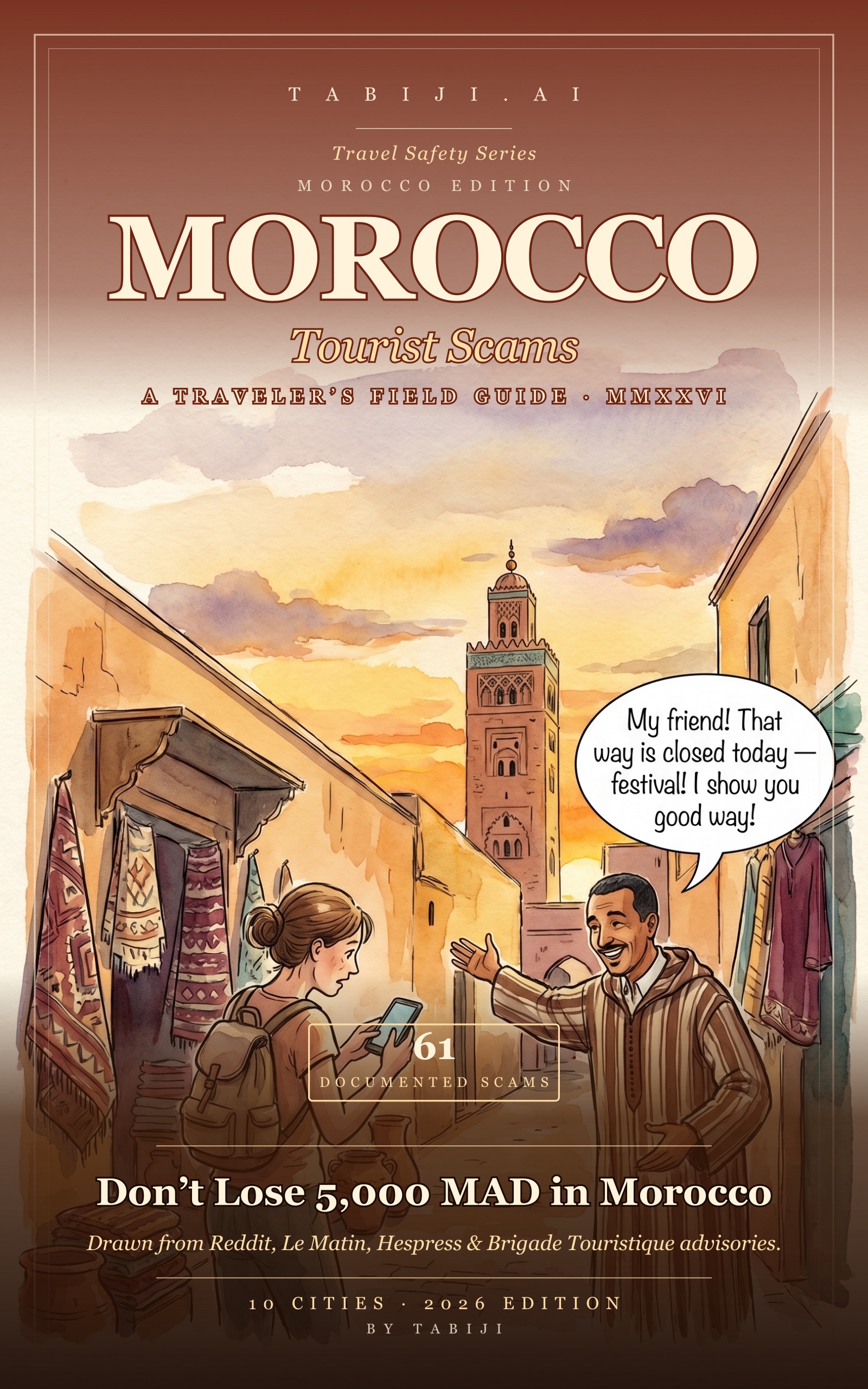
You and your travel partner walk into Jemaa el-Fnaa square at sunset. The square is already filling with food stalls, drum circles, snake charmers, juice vendors, storytellers. The Koutoubia Mosque minaret glows in the late light. You walk along the southern edge of the square toward the Cafe de France for the rooftop view.
Three women in colorful kaftans materialize beside you, smiling. One of them — your travel partner is on the closer side — holds a small henna cone in her right hand. She speaks fast English-French-Arabic: "you are beautiful, free henna, just one minute, lucky symbol, no money, free for you, very nice." Before your partner has finished saying "no thank you," the woman has reached out, grasped your partner left wrist firmly, and pressed the henna cone to the back of her hand. Three quick lines of paint. The artist starts a small flower design.
"No, no, please stop," your partner says. The artist smiles, continues painting. "Just one minute, just lucky symbol, very nice." She finishes the small flower in another twenty seconds, then steps back, gesturing at the wet paint. "Now, just two hundred dirham, please, for the artist, very lucky." 200 dirham is about 20 USD. The other two women in kaftans have moved closer, blocking the path back the way you came.
You hand over a 100 dirham note. The artist shakes her head: "two hundred, two hundred, very lucky design, you must respect." You hand over a second 50 dirham note. She accepts the 150 total, frowns, walks off. The other two women disperse. The henna design on your partner hand will last about ten days.
This is the canonical Marrakech Jemaa el-Fnaa henna ambush, the most-documented Moroccan tourist scam in the square. The Marrakech tourist police 19 issue ongoing advisories; the Royal Gendarmerie of Morocco runs periodic enforcement waves at Jemaa el-Fnaa; the variant has been documented continuously since at least the 1990s. Tourist losses are typically small (10-50 EUR) but the variant has a more severe risk: some operators add PPD (paraphenylenediamine) to make black henna, which causes severe skin reactions in 5-10 percent of users — chemical burns, permanent scarring, lifelong PPD sensitivity.
The defense is two rules. The hands-in-pockets rule: when crossing tourist squares in Marrakech Jemaa el-Fnaa, Cairo Khan el-Khalili, Istanbul Sultanahmet, Jaipur Pink City — keep hands in pockets or holding bag straps. Henna artists need wrist access to initiate the variant; bag-front and pocket-hands deny the grip-point. If grabbed, pull back firmly and walk away. The black-henna refusal rule: if you do want henna (rare for most tourists, but happens), never accept black henna, long-lasting henna, or henna that develops in under 12 hours. Real henna is reddish-brown / olive-green when applied, takes 12-48 hours to develop, and lasts 1-3 weeks. Black henna contains PPD; the chemical-allergy risk outweighs the cosmetic appeal.
That is the canonical Marrakech variant of the henna-tattoo-ambush family, executed at the most-documented Moroccan tourist square. The rest of this page is the five-mechanic playbook, the four other places where it runs in different forms (Cairo Khan el-Khalili, Istanbul Sultanahmet, Jaipur Pink City, the black-henna PPD risk), and the two rules that defeat every variant.
Read the full Marrakech scam guide →Key Takeaways
The hands-in-pockets rule and the black-henna refusal rule
Every variant of the henna-tattoo street ambush is defeated by the same two rules. The hands-in-pockets rule: when crossing tourist squares in Marrakech Jemaa el-Fnaa, Cairo Khan el-Khalili, Istanbul Sultanahmet, Jaipur Pink City — keep hands in pockets or holding bag straps. Henna artists need wrist access to initiate the variant; bag-front and pocket-hands deny the grip-point. If grabbed, pull back firmly and walk away; do not haggle over a half-finished design. The black-henna refusal rule: never accept black henna, long-lasting henna, or henna that develops in under 12 hours. PPD (paraphenylenediamine) additive in black henna causes severe skin reactions including chemical burns, permanent scarring, and lifelong PPD sensitivity in 5-10 percent of users.
The first rule addresses the physical-grab asymmetry. Real Moroccan, Egyptian, Turkish, Indian henna artists at licensed studios apply henna only after explicit consent and price agreement. The street-ambush variant requires non-consensual physical contact: the grab on the wrist, the cone touching the skin within seconds. The grip-point is the wrist or back of the hand; pocket-hands and bag-front straps deny both. The variant cannot operate against a tourist who maintains hand discipline.
The second rule addresses the chemical-allergy asymmetry. Real henna (Lawsonia inermis plant) is generally safe and produces a reddish-brown stain over 12-48 hours. Black henna with PPD additive is faster and darker but illegal for skin use in most countries; the operator uses it because it produces a more striking visual result that tourists find appealing in social-media photographs. PPD causes Type IV hypersensitivity reactions; the first exposure may not produce symptoms but sensitizes the immune system. Subsequent exposures (and sometimes the first exposure for already-sensitized users) produce severe reactions: redness, blistering, chemical burns, permanent scarring, and lifelong PPD sensitivity that disqualifies the user from most hair dyes and many leather goods, printer inks, and other PPD-containing products.
The third defense is the decline-before-touch rule. If a henna artist approaches with a cone in hand, refuse politely before contact. Said firmly while walking past at normal pace, the artist typically moves on within 5 seconds. Refusing after the cone touches your skin is harder; the artist will demand payment for the partial design and the social pressure to pay rather than walk away with a half-pattern is significant.
The fourth defense, if you do want henna: only book at a licensed studio with displayed health certifications, plant-only henna verification (verify the cone contents are reddish-brown not black), and a published price list. Marrakech Henna Cafe (Rue de la Liberte) is a documented licensed studio; Cairo licensed Khan el-Khalili henna shops accept walk-in but verify before sitting; Istanbul Sultanahmet recommended studios are listed in TripAdvisor and Lonely Planet; Jaipur Pink City government-licensed henna parlors. Real studios welcome the verification questions and produce health certificates on demand.
The fifth defense, if you have a reaction: phone the embassy emergency line; visit a dermatologist immediately. Marrakech CHU Mohammed VI; Cairo Anglo-American Hospital or Cairo Specialized Hospital; Istanbul Acibadem or Liv Hospital; Jaipur Fortis Escorts. Treatment typically requires topical steroids and oral antihistamines; severe reactions may require oral steroids and dermatology follow-up at home. Document with photos for travel insurance and embassy reporting. The PPD sensitivity is lifelong; future avoidance of PPD-containing products is required.
The five mechanics
The henna-tattoo street ambush runs in five regional variants across the major North African, Levant, and South Asian tourist destinations. The mechanic is similar; the local cultural framing and operator network differ.
1. Marrakech Jemaa el-Fnaa grab-and-paint (Morocco)
The canonical variant. At Jemaa el-Fnaa square, three to five women in colorful kaftans circulate among tourists with henna cones already mixed and ready. They approach with you are beautiful, free henna, just one minute, lucky symbol. Hand grabs the wrist within seconds; cone applies design; price extraction follows at 100-500 dirham. Documented continuously since the 1990s. Royal Gendarmerie tourist police 19 enforces; some operators add PPD black henna. Defense: hands in pockets when crossing the square; refuse before contact; if grabbed, pull back firmly.
2. Cairo Khan el-Khalili offer (Egypt)
Cairo henna ambush operates similarly at Khan el-Khalili bazaar entrance gates and the Giza Pyramids approach (especially Khufu Pyramid eastern viewpoint and the Sphinx eastern side). The pitch and grab are identical to Marrakech; the price is 200-800 EGP (4-15 USD). Egyptian Tourism and Antiquities Police 126 enforces; lower volume than Marrakech. Defense: same hands-in-pockets rule; refuse politely in Arabic (La shukran).
3. Istanbul Sultanahmet square (Turkey)
Istanbul Sultanahmet square (between Hagia Sophia and Blue Mosque) and the Grand Bazaar approach are documented henna-ambush hotspots. The Turkish variant typically uses fewer operators (1-2 per location) and lower-pressure tactics; the price is 100-300 lira (3-10 USD). Black-henna usage is documented in Sultanahmet operators; PPD allergy reactions sometimes occur. Istanbul Tourist Police English-language dispatch via 153 (tourism complaint hotline). Defense: hands-in-pockets plus black-henna refusal.
4. Jaipur Pink City tourist henna (India)
Jaipur Pink City bazaar and Delhi Chandni Chowk are documented henna-tourist hotspots. India is unique in that henna (mehndi) is a culturally established practice for weddings and festivals; legitimate licensed shops operate alongside operator-aligned street artists. The street ambush variant operates at the Pink City bazaar entrance and Hawa Mahal approach with a 500-2,000 INR (6-25 USD) price extraction. Defense: only use licensed Pink City studios with health certifications; refuse street offers in Hindi (Nahin shukriya).
5. Black-henna PPD chemical allergy (universal)
Black henna is henna paste mixed with PPD (paraphenylenediamine), a chemical hair-dye additive. PPD causes Type IV hypersensitivity reactions in 5-10 percent of users: redness, itching, blistering, chemical burns, permanent scarring, lifelong PPD sensitivity. The black-henna additive is illegal for skin use in most countries; the operator uses it because it produces a faster, blacker, more visually striking result. The UK FCO, US State Department, and EU consumer protection agencies all warn about black henna; emergency rooms in tourist destinations report PPD reactions weekly during peak season. Defense: refuse any henna that is black, develops in under 12 hours, or is described as long-lasting.
Where it runs
The henna tattoo street ambush concentrates at major North African, Middle Eastern, and South Asian tourist squares with high foot-traffic and traditional henna-cultural framing. The geography below covers the most-documented locations.
- Morocco: Marrakech Jemaa el-Fnaa (canonical hotspot, peak hours late afternoon to night); Marrakech medina near Bahia Palace and Saadian Tombs; Fez Bab Boujloud and Talaa Kebira souk; Casablanca Mohammed V Square; Tangier Petit Socco. Royal Gendarmerie tourist police dial 19.
- Egypt: Cairo Khan el-Khalili bazaar entrance (gates near Al-Hussein Mosque); Cairo Old City near the Hanging Church; Giza Pyramids plateau (Cheops eastern side, Sphinx eastern viewpoint); Luxor Karnak Temple approach; Aswan souk near train station. Tourism and Antiquities Police dial 126.
- Turkey: Istanbul Sultanahmet square (between Hagia Sophia and Blue Mosque); Istanbul Grand Bazaar (Kapali Carsi) entrance gates; Cappadocia tourist towns (Goreme, Urgup) at lower volume; Ephesus / Kusadasi cruise-port approach; Antalya Old Town. Tourist police via tourism complaint hotline 153.
- India: Jaipur Pink City bazaar entrance, Hawa Mahal approach, Amber Fort entrance plaza; Delhi Chandni Chowk (Old Delhi); Agra Taj Mahal east gate; Mumbai Colaba Causeway; Goa beach-town tourist strips. Tourist helpline 1363; tourist police presence varies by city.
- Adjacent (also documented): Tunisia: Tunis medina, Sidi Bou Said, Hammamet beach strip. Jordan: Petra approach, Aqaba boardwalk. UAE: Dubai Old Souk, Sharjah Heritage Area (lower volume; primarily licensed studios). Indonesia: Bali Ubud Monkey Forest area (smaller volume). Sri Lanka: Colombo Pettah market.
Three more places, three more henna variants
Cairo Khan el-Khalili: the Pyramids approach
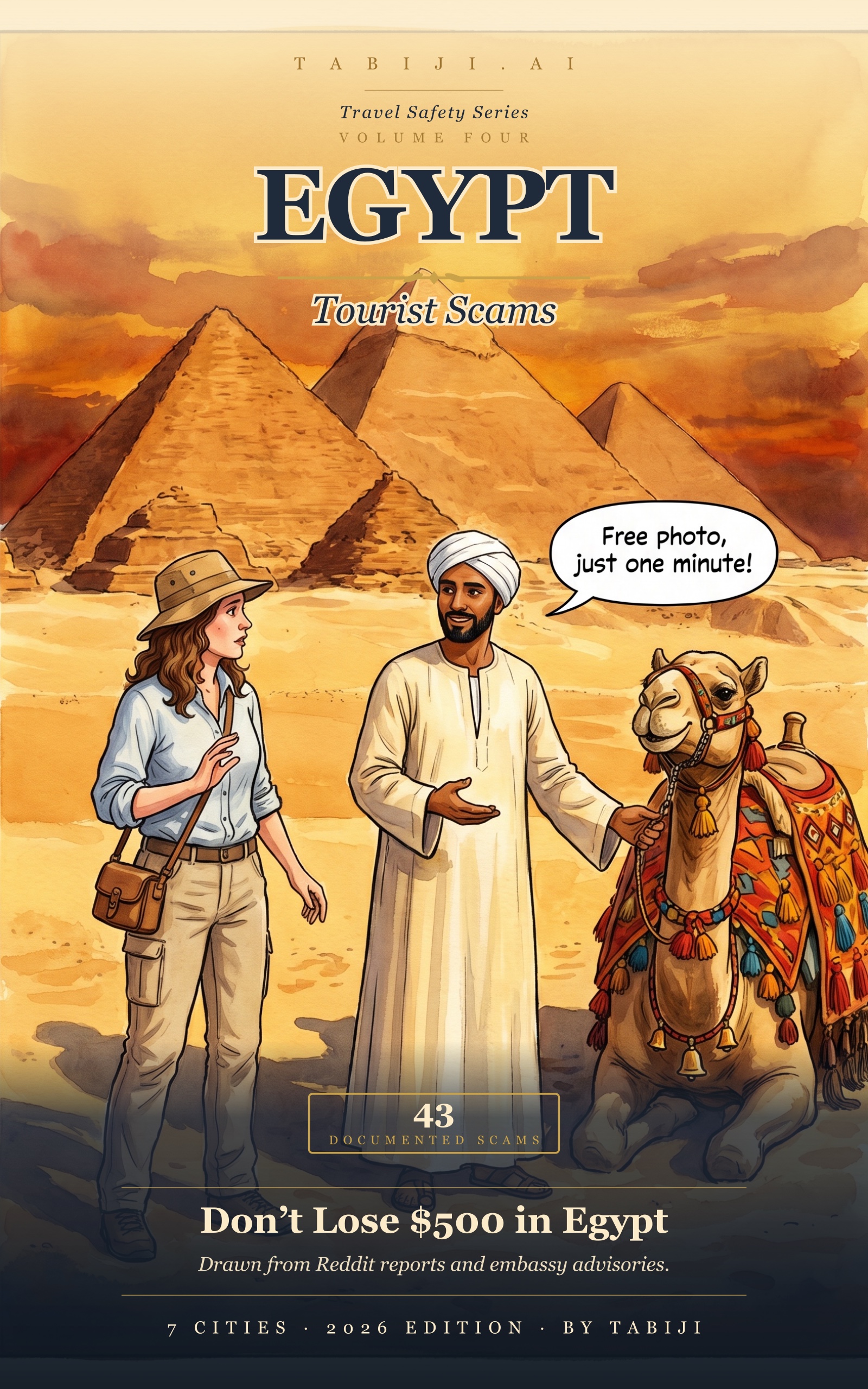
Cairo, Khan el-Khalili bazaar, mid-afternoon. You walk through the Al-Hussein Mosque gate into the bazaar. A young woman in a black abaya approaches with a small henna cone. She says: "lady, henna, very small, just for memory, ten Egyptian pounds." 10 EGP is about 0.20 USD; the price seems trivial. You hesitate. She has already grasped your forearm and is applying paint.
The design is small (about 4 cm) on the back of your hand. She finishes in 90 seconds. Then says: "now twenty euros, miss, twenty euros." 20 EUR is 100x the original price. You hand over 50 EGP (about 1 USD); she frowns, accepts. Two days later your hand develops redness and itching at the design site. You realize the henna was likely black-henna with PPD additive. You visit Cairo Anglo-American Hospital; the dermatologist confirms PPD chemical reaction, prescribes topical steroids and oral antihistamines. The reaction clears in two weeks but you now have lifelong PPD sensitivity.
Defense: at Khan el-Khalili and Pyramids approach, hands in pockets when crossing the central plaza. If approached, polite firm refusal in Arabic (La shukran) before any cone contact. The 10-EGP initial quote is the bait; the 20-EUR demand is the price extraction; the PPD chemical adds the lifelong allergy. Egyptian Tourism Police 126 dispatches in 5-10 minutes from Khan el-Khalili.
Istanbul Sultanahmet: the Hagia Sophia approach
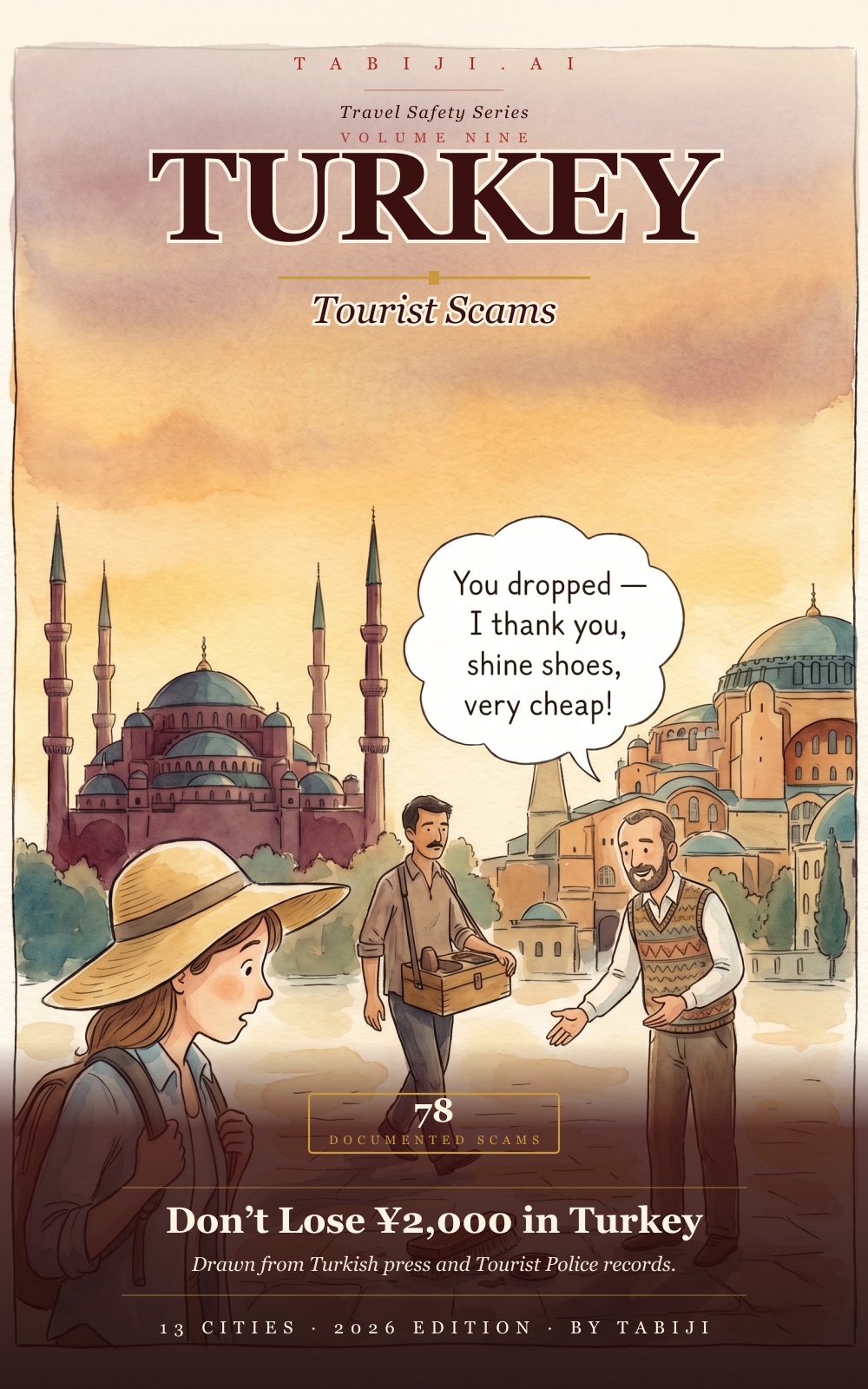
Istanbul, Sultanahmet square, evening. You and your travel partner walk between Hagia Sophia and the Blue Mosque taking photos. A woman in a hijab approaches with a small henna cone; she speaks fluent English with Turkish accent. "Welcome to Istanbul, free henna for memory, just one symbol, lucky for tourists." Your travel partner has her hand in her pocket; you do not. The woman grabs your right hand and starts a quick design.
You pull back; the design is incomplete (a half-flower, dripping). The woman demands 200 lira for the partial design. You decline; offer 50. She accepts 50, walks off. The design is dark gray-black, suggesting PPD additive. Within 24 hours your hand develops itching; within 48 hours small blisters appear. You visit Acibadem Hospital; the dermatologist confirms PPD reaction.
Defense: at Sultanahmet square (especially the area between Hagia Sophia, Blue Mosque, Topkapi Palace approach), hands in pockets. Turkish henna ambush operators are fewer than Moroccan but use higher PPD concentrations. Istanbul Tourist Police via tourism complaint hotline 153 (English-language); Acibadem and Liv Hospital both have international-tourist dermatology.
Jaipur Pink City: the licensed studio alternative
Jaipur, Pink City, mid-morning. You walk down Johari Bazaar from the Hawa Mahal. The street has three operator-aligned street henna artists in the first 200 meters; you keep hands in pockets and walk past. Around the Jantar Mantar entrance you see a licensed henna parlor with displayed health certifications, price list, and Pink-City government license number on the door. You enter.
The parlor is a small shop, three women working, customers seated comfortably. You ask: "natural henna only, no PPD?" The owner responds: "yes ma am, only natural henna from the Lawsonia plant; we have certificates from Rajasthan health department; the design will be reddish-brown when applied and develop over 24 hours to a deeper red-brown over 2 days." You pay 800 INR (about 10 USD) for a detailed Mughal-pattern hand design. The henna is reddish-brown when applied; develops over 36 hours to the expected color; lasts 12 days; no skin reaction.
This is the legitimate Indian henna experience. India differs from Morocco / Egypt / Turkey in that henna is a culturally established practice; licensed shops with health certifications exist alongside operator-aligned street artists. Defense: only use licensed Pink City studios; if a street artist offers henna without a verifiable studio location, the variant is by definition. The Pink City government licensing is verified online at the Rajasthan tourism portal.
Tunis medina: the Tunisian variant
Tunis medina, Souk el Attarine. A woman in traditional Tunisian dress approaches with a henna cone. The pitch is similar to Marrakech: free henna, one symbol, lucky for visitor. She grabs your wrist; you pull back firmly. The cone barely touches your skin; the partial mark wipes off. She walks away.
The Tunisian variant runs at lower volume than Morocco but with similar mechanics. Hammamet beach strip and Sidi Bou Said also documented. Tunisian National Police via 197; Tunisia Tourism Police presence at medina entrances during peak hours.
Defense: same hands-in-pockets rule applies to all North African and Levant medina / souk environments. The decline-before-touch is the structural defense; the wrist-grab is the operator structural setup.
Red flags
- Henna artist approaches with cone already in hand. Real artists wait at studios; cone-ready approach is the variant.
- "Free" or trivially low quoted price (5-10 dirham, 10 EGP). Bait for the post-application price extraction.
- Black or dark-gray henna paste. PPD additive; lifelong allergy risk.
- Artist claims design "develops in 1-2 hours." Real henna takes 12-48 hours; faster development means PPD additive.
- Artist claims design "lasts 4 weeks or longer." Real henna lasts 1-3 weeks; longer means PPD additive.
- No visible studio license or health certification. Licensed studios display these prominently.
- Multiple operators converging at tourist square entrance. Group ambush environment.
- Wrist-grab without consent. Pull back firmly; report to tourist police.
The phrases that shut it down
Each phrase below refuses the henna artist firmly before contact. Said while walking past at normal pace, hands in pockets, no eye contact.
If you got hit
If you developed redness, itching, blistering, or burning at the henna design site within 24-72 hours: this is a PPD chemical reaction, not normal henna staining. Visit a dermatologist immediately. Marrakech: CHU Mohammed VI or Polyclinique du Sud (private). Cairo: Anglo-American Hospital, Cairo Specialized Hospital, As-Salam International Hospital. Istanbul: Acibadem, Liv Hospital, American Hospital. Jaipur: Fortis Escorts, SMS Medical College Hospital. Treatment typically requires topical steroids (hydrocortisone or stronger), oral antihistamines (cetirizine or loratadine), and severe-case oral steroids (prednisolone). Document with photos for travel insurance and embassy reporting.
If you paid an operator-inflated price: file a complaint with the local tourist police (Morocco 19, Egypt 126, Turkey 153, India 1363). The financial loss is typically small (10-50 EUR) but reporting contributes to enforcement of operator-license suspensions and informs other tourists. Photograph the operator if safely possible during the incident.
If you have a chargeback case (paid by card): file within 30 days under "service not as described" or "fraudulent transaction." Visa, Mastercard, Amex accept henna-tattoo-fraud disputes when documented; recovery rate is moderate.
Long-term: the PPD sensitivity is lifelong. Future avoidance of PPD-containing products is required: most permanent hair dyes, some leather goods (especially black leather treated with PPD), some printer inks and dyes, some textile dyes. Consult a dermatologist at home for patch testing to identify the specific allergen and develop an avoidance plan.
Embassy notification: if you have a severe reaction requiring hospitalization, phone the embassy emergency duty officer (US +1 202 501 4444; UK +44 20 7008 5000; Canadian +1 613 996 8885; Australian +61 2 6261 3305). Embassies in Rabat, Cairo, Istanbul, New Delhi all handle tourist medical incidents and can assist with hospital coordination and travel insurance liaison.
Related atlas entries
Sources & references
- Morocco: Royal Gendarmerie of Morocco tourist police 19; Marrakech tourism authority Jemaa el-Fnaa advisories; PPD-allergy reports from CHU Mohammed VI dermatology.
- Egypt: Tourism and Antiquities Police 126; Cairo Anglo-American Hospital dermatology; Egyptian Tourism Authority advisories.
- Turkey: Tourism complaint hotline 153 (English-language); Acibadem and Liv Hospital dermatology departments; Istanbul Tourist Police Sultanahmet substation.
- India: Tourist helpline 1363; Pink City government licensing for henna parlors; All India Institute of Medical Sciences (AIIMS) PPD-allergy research.
- UK FCO travel advice: Morocco, Egypt, Turkey, India country pages all warn about black-henna PPD chemical risk.
- US State Department travel.state.gov: Morocco country information page warns about henna scams; FDA guidance on PPD in henna.
- EU consumer-protection: PPD listed as restricted skin-contact substance in Cosmetics Regulation EC No 1223/2009 Annex II.
- Tabiji field reports: Marrakech Jemaa el-Fnaa, Cairo Khan el-Khalili, Istanbul Sultanahmet, Jaipur Pink City, Tunis medina (2024-2026).
Get the full henna & tourist-square scam playbook for your destination.
Each Travel Safety atlas covers every documented henna, vendor, and tourist-square scam in one country, plus the full scam catalog: pickpocket, taxi, ATM, restaurant, fake authority. Buy once, lifetime updates as scams evolve. $4.99 on Kindle.