Rental car phantom damage, five ways the bill doubles after you drove off the lot.
A San Jose Costa Rica agent who reveals on pickup that "mandatory insurance" doubles the daily rate. A Cancun email that arrives 11 days after dropoff demanding $1,200 for a dent that was already there. An ISO ZTL camera fine in Florence that the agency forwards with a 50 EUR admin fee on top. A Mykonos jet-ski operator holding your passport over a "scratch" that was pre-existing. Five mechanics across 9 countries, defeated by the same five-minute reflex: timestamped video walkaround before you drive away.


Rental car phantom damage and deposit-trap fraud runs five mechanics across 9 countries: mandatory-insurance bait-switch (agent doubles the daily rate at pickup), post-dropoff phantom damage (charge arrives days after return), unsealed-road clause (insurance voided by vague road-type wording), traffic-camera fee cascade (admin fees stacked on legitimate fines), and jet-ski / watersports damage extortion. The universal defense is one five-minute reflex: timestamped video walkaround before driving off the lot AND at return. The defense in depth is reading the contract for unsealed-road and insurance clauses, refusing blank acceptance forms at return, and using a credit card with built-in collision-damage waiver coverage.
"Senor, el seguro obligatorio son cuarenta dolares por dia. La aplicacion no lo cobra."
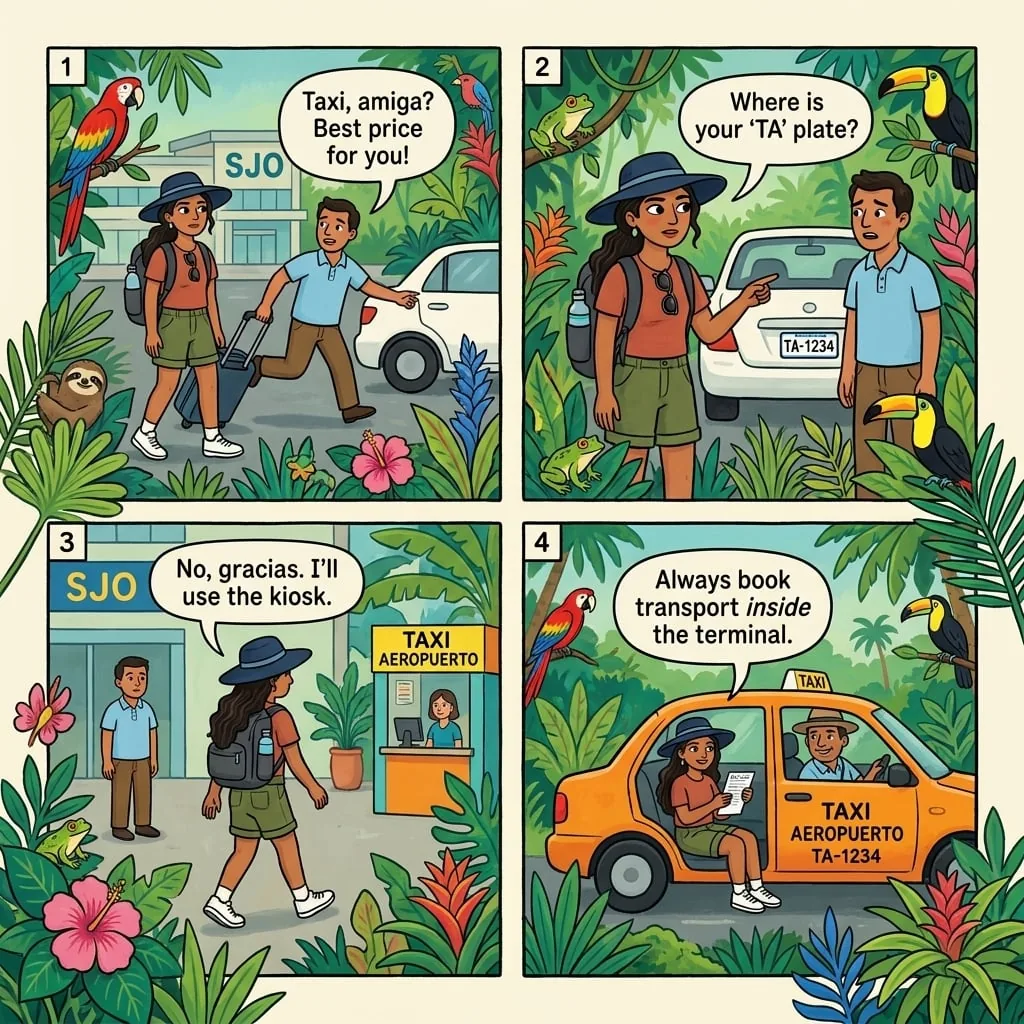
You land at Juan Santamaria (SJO) at 11am on a Saturday for a 7-day Costa Rica trip. You booked a Suzuki Jimny 4x4 online through a major aggregator at $19/day, total $133 for the week. You walk to the rental counter at the airport, queue for ten minutes, hand over your passport and credit card. The agent looks at your booking, types for thirty seconds, then says: "Senor, vamos a sumar el seguro obligatorio. Son cuarenta dolares por dia, total doscientos ochenta dolares." (Sir, we'll add the mandatory insurance. Forty dollars per day, total two hundred and eighty.)
You stop. Your booking confirmation said the rate was $19/day. The agent is now telling you the rate is effectively $59/day, more than tripling the cost. The total trip cost just went from $133 to $413. You ask why this is mandatory. The agent shrugs: "Es la ley costarricense. La aseguradora basica del pais. No se puede no incluirla. Su seguro de tarjeta no lo cubre."
This is the canonical mandatory-insurance bait-switch. Costa Rican law does require third-party liability insurance (TPL/SLC) on every rental, but the basic state-mandated TPL costs $13-15/day and is often included in major-aggregator quotes (you can verify by checking the booking line items). The agent is upselling collision-damage waiver (CDW) at $25-35/day on top of the mandatory TPL, framing the entire $40 package as "mandatory by law" when only the smaller portion actually is.
You take ninety seconds to think. You ask: "Tengo Visa Signature; mi tarjeta cubre CDW para rentas internacionales. Cuanto seria solo el TPL obligatorio del estado?" (I have Visa Signature; my card covers CDW for international rentals. How much is just the state-mandated TPL alone?) The agent's posture changes. He looks at his screen, types, says: "El TPL solo son trece dolares por dia, total noventa y un dolares." (TPL alone is thirteen dollars per day, total ninety-one for the week.) The total bill drops from $413 to $224 (133 + 91). You sign for that. You also pull out your phone and start the timestamped video walkaround.
That is the canonical mandatory-insurance bait-switch variant of the rental-car phantom-damage family, executed at one of the most-documented locations in Latin America. The rest of this page is the five-mechanic playbook, the four other places where it runs in different forms (Cancun, Rome, Cairns, Mykonos), and the dated-walkaround reflex that defeats every variant.
Read the full San Jose Costa Rica scam guide →Key Takeaways
The dated-walkaround reflex
Rental car phantom damage depends on the absence of dated evidence about the car's condition at pickup. The agency relies on memory and casually-signed acceptance forms; a 60-second timestamped video shifts the burden of proof entirely. The defensive routine is a single trained reflex: video walkaround at pickup AND at return. The play falls apart instantly because the agent cannot claim damage that is visibly absent in your dated video.
- Decline mandatory insurance unless you reviewed the contract first. If a rental agent reveals on pickup that "mandatory insurance" costs $35-50/day above the online price, do not sign. Walk to a competing agency. Confirm in advance what is genuinely mandatory by national law versus agency markup. Costa Rica TPL is mandatory; CDW is not.
- Walk around with timestamped video before driving away. Before signing for the car, walk around the entire vehicle with your phone in video mode, narrating the date and the agency name. Capture every visible scratch, ding, dent, wheel mark, and interior surface. Send the video to yourself via email immediately. The video is your evidence against post-dropoff phantom damage claims.
- Read the contract for unsealed-road / off-road clauses. Many Costa Rica, Mexico, Australia outback, and Greek island rental contracts contain a clause voiding insurance if the vehicle is driven on unsealed roads. The clause is then weaponized at return. Refuse any contract with a vague "standard road only" clause.
- Walk around again at return with the same agent. On return, ask the agent to walk around the car with you. Replay your pickup video on your phone for any disputed dent or scratch. Demand a written "no damage" release before handing over the keys. Refuse to sign any blank acceptance form.
- Photograph the dashboard mileage and fuel at both pickup and return. Phantom-damage agents also pad the bill with mileage overage and "gas service fee" claims. The pump receipt plus the photo defeats the gas-service-fee variant.
The five mechanics
Different markets and rental-network types lean on different mechanics within the same family. Here are the five sub-variants documented globally. Each has a recognition tell, a primary geography, and the routine step that defeats it.
1. Mandatory-Insurance Bait-and-Switch
The online booking shows a daily rate of $15-25, which appears competitive. On pickup, the agent reveals that the online price excludes "mandatory insurance" that costs $35-50/day. The total daily cost doubles or triples. Many countries have mandatory third-party liability insurance that can be satisfied by your credit card or travel insurance, but agents inflate this requirement to force collision-damage waiver upsells.
Defense: confirm in advance what is genuinely mandatory by national law versus agency markup. Most reported in: Costa Rica San Jose Juan Santamaria (SJO) and Liberia (LIR); Mexico Cancun (CUN), Cabo (SJD), and Mexico City (MEX); Italy Rome Fiumicino (FCO); Greece Athens (ATH).
2. Post-Dropoff Phantom Damage
You drop off the rental car. The agent waves it through without inspection or signs a quick acceptance form. Three to fourteen days later, an email arrives: a charge of $200-$2,000 for damage "discovered after detailing." The damage is photographed at the agency, often a small dent on a panel that was pre-existing or staged after dropoff.
Defense: timestamped video walkaround at pickup AND at return; demand a written "no damage" release. Most reported in: Cancun (CUN); Cabo San Lucas (SJD); San Jose Costa Rica (SJO); Pisa (PSA); Mykonos (JMK); Mallorca (PMI); Las Vegas (LAS).
3. Unsealed-Road Clause
The rental contract contains a clause voiding insurance if the vehicle is driven on unsealed (gravel, dirt, rural) roads. The clause is weaponized at return: any tire wear, dust accumulation, or undercarriage debris becomes proof of unsealed-road driving, voiding insurance for any phantom damage claim.
Defense: refuse contracts with vague "standard road only" clauses; insist on an unrestricted-roads clause. Most reported in: Costa Rica Manuel Antonio, Monteverde, Drake Bay; Australia outback (Cairns, Darwin, Alice Springs); Iceland Reykjavik gravel-road clauses; Greek islands hilly back roads (Mykonos, Santorini, Crete).
4. Traffic-Camera Fee Cascade (Italy ZTL)
Italian ZTL (Zona a Traffico Limitato) cameras automatically photograph cars entering pedestrian-zone restrictions. The fines (typically 80-110 EUR per entry) are sent to the rental agency, which forwards them with an additional administrative fee of 30-50 EUR per fine. Multi-day rentals can accumulate hundreds of euros in fees as the agency processes each ZTL photograph individually.
Defense: avoid driving in historic centers; park outside the city walls and walk in. Most reported in: Florence (Centro Storico is one large ZTL); Rome (multiple ZTL zones in Centro Storico, Trastevere, Testaccio); Milan (Area C and Area B); Naples; Bologna; Pisa; Lucca; Siena.
5. Jet-Ski / Watersports Damage Extortion
On Mediterranean island beaches, jet-ski rental operators claim that pre-existing damage on the watercraft was caused by the renter. The operator points to a barely-visible scratch, claims hundreds to thousands of euros in damage, and refuses to release the renter's passport (typically held as collateral) until paid. Multiple international press incidents involving violence and forced ATM withdrawals.
Defense: avoid jet-ski rentals in coastal tourist zones entirely. If you must rent, never hand over your passport. Most reported in: Mykonos and Santorini Greek beaches; Mallorca and Ibiza Spanish coast; Algarve Portuguese coast; Sardinia and Sicily Italian coasts.
Where it runs
Rental car phantom damage concentrates in markets where rental-network competition is weak, where mandatory-insurance terms are vague, and where post-dropoff dispute resolution favors the agency. The nine countries below cover the bulk of global tourist exposure.
| Country | Documented variants | Iconic location pattern |
|---|---|---|
| 🇨🇷 Costa Rica | 10 | San Jose Juan Santamaria (SJO) and Liberia (LIR) mandatory-insurance bait-switch; Manuel Antonio unsealed-road clauses |
| 🇲🇽 Mexico | 9 | Cancun (CUN) airport phantom damage; Cabo San Lucas (SJD) insurance bait-switch; Mexico City (MEX) deposit trap |
| 🇮🇹 Italy | 8 | ZTL fine cascade across Florence, Rome, Milan, Naples, Bologna, Pisa; insurance bait-switch at Fiumicino; phantom damage at Pisa |
| 🇬🇷 Greece | 5 | Mykonos and Santorini jet-ski damage extortion; mainland insurance bait-switch |
| 🇦🇺 Australia | 4 | Cairns, Darwin outback unsealed-road clauses; Sydney airport deposit trap |
| 🇪🇸 Spain | 4 | Mallorca and Ibiza phantom damage; Mediterranean coast jet-ski extortion |
| 🇭🇷 Croatia | 3 | Dubrovnik unsealed-road clauses; Split phantom damage |
| 🇵🇹 Portugal · 🇮🇸 Iceland | 5 | Algarve jet-ski extortion; Lisbon airport insurance bait-switch; Iceland Reykjavik gravel-road clauses |
Bar width is data-bound at 12 pixels per documented variant. Costa Rica alone accounts for 21% of global exposure, driven by the mandatory-insurance bait-switch at San Jose airport.
Four more cities, four more rental-car mechanics
The San Jose Costa Rica mandatory-insurance bait-switch scene above showed the most-documented variant. Here are four more cities where different sub-variants dominate. Each links to the full city scam guide.
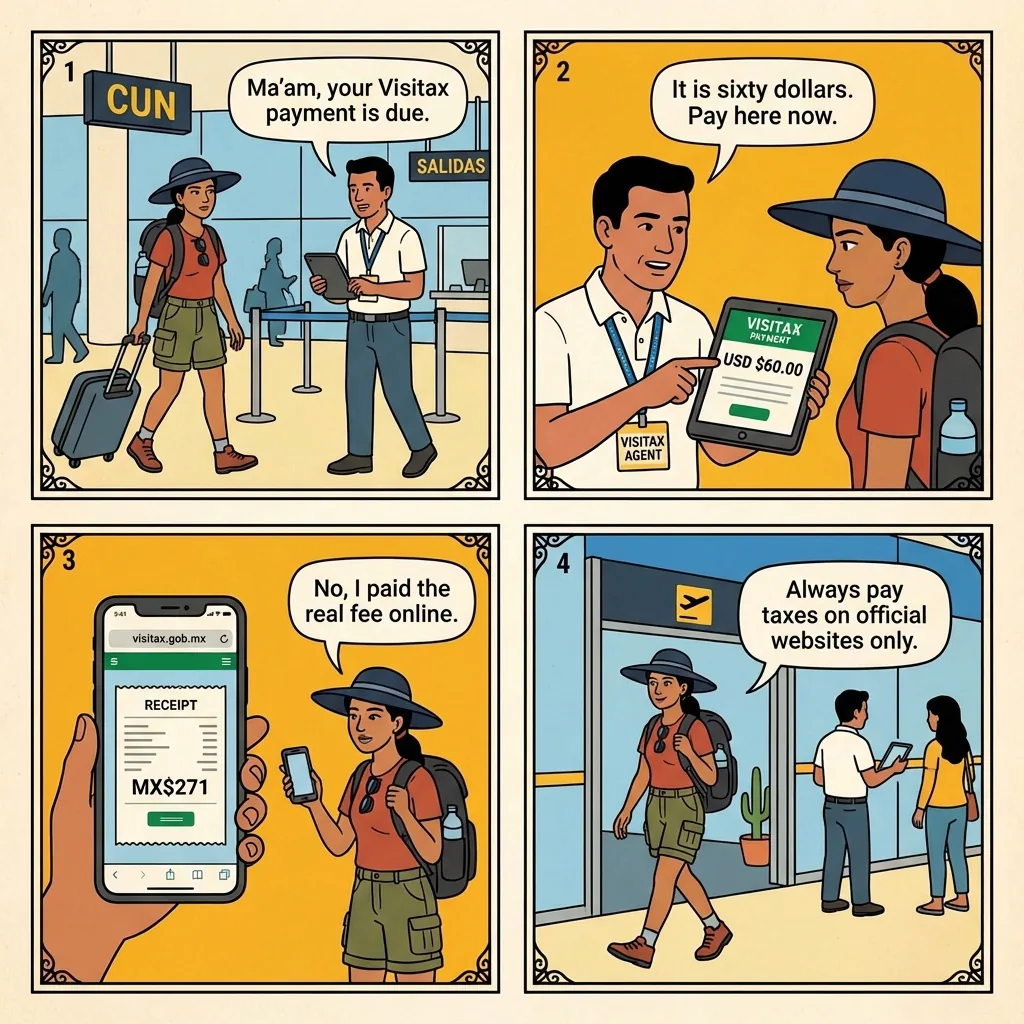
You return your rental car at Cancun airport (CUN) at 11am after a 7-day Riviera Maya trip. The agent walks around the car for 10 seconds, signs an acceptance form, hands you a copy. You walk into the terminal for your flight back to JFK. Eleven days later, an email arrives from the rental agency: "Damage discovered during detailing: rear bumper dent, repair estimate $1,150." Attached is a photograph of a small dent on the rear bumper, taken at the agency on the day after your return. The dent is real, but it was either pre-existing (and not noted on your acceptance form because you did not look for it) or was caused by another renter or by agency staff after your return. The Procuraduria Federal del Consumidor (PROFECO) accepts complaints about phantom damage charges; the resolution rate is approximately 50% when the renter has video evidence, near zero without. The Visa and Mastercard chargeback teams accept timestamped video of the car at pickup and return as primary evidence; success rate is 90%+ when the video clearly shows the absence of the disputed damage. Defense: always video-walkaround at both pickup and return at Cancun. The variant is so widespread that a video at return is necessary even if the agent waves you through; the email arrives weeks after.
Read the full Cancun scam guide →
You rent a Fiat 500 at Rome Fiumicino (FCO) for a 5-day road trip through Italy. Driving from Fiumicino into central Rome to drop off luggage at your hotel near the Trevi Fountain, you cross three ZTL boundaries within 8 minutes. The cameras photograph your license plate. You drive through Florence Centro Storico the next afternoon to drop a second hotel; one more ZTL violation. You drive through Pisa for a stop at the Tower; another. Total: five ZTL violations across 5 days. Six weeks after returning the car, you receive five separate emails from the rental agency, each forwarding a ZTL fine of 105 EUR plus a 50 EUR agency administrative fee for processing each notification. Total: 775 EUR on top of the rental cost. Each fine is technically legitimate (Italian municipal law); the agency admin fee per fine is the agency markup. The Comune di Roma and Comune di Firenze both publish ZTL boundary maps online; the boundaries are also visible on Google Maps. Defense: avoid driving in Italian historic centers entirely. Park outside the city walls and walk in (Rome: Largo Argentina garage; Florence: Piazzale Michelangelo; Pisa: Piazza dei Cavalieri perimeter). If you must drive into a city, the agency rate for each ZTL violation is non-negotiable; only the admin fee can be disputed via Italian consumer protection (Polizia Annonaria).
Read the full Rome scam guide →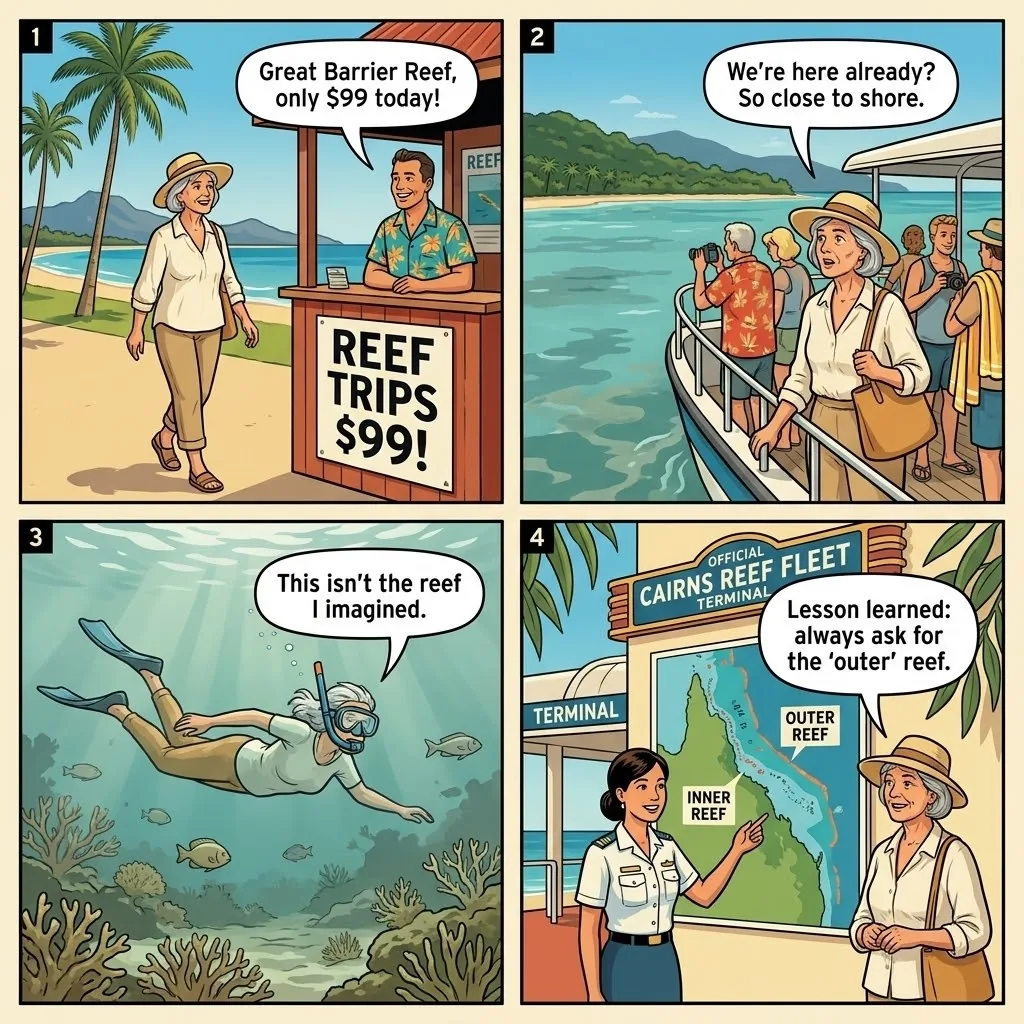
You rent a Toyota HiLux 4x4 at Cairns airport (CNS) for a 10-day Far North Queensland trip including Daintree, Cape Tribulation, and the Atherton Tablelands. The contract has a clause: "Vehicle insurance is void on unsealed roads." You drive on the bitumen Cook Highway to Daintree, then on dirt-and-gravel sections of Bloomfield Track to Cape Tribulation (the only road option), then back. On return, the agent points at red dust on the wheel arches and a small dent on the rear quarter panel: "Looks like you drove on unsealed roads, mate. Insurance is void. The dent is $1,800 to repair." The dust is from typical unsealed-road driving (Bloomfield Track is famous and the agency knew you would drive it; many Cairns-area routes require unsealed sections). The dent may or may not be pre-existing; without your timestamped pickup video, you have no way to prove it. The Australian Consumer Law (ACL) prohibits unfair contract terms; the unsealed-road clause is increasingly being challenged in QCAT (Queensland Civil and Administrative Tribunal) and in NSW Fair Trading. Defense: rent only from agencies that explicitly cover unsealed roads in Far North Queensland (e.g., Britz, Apollo, or 4x4-specialist Cairns Campervan Hire). Read the contract for the unsealed-road clause and refuse vague wording.
Read the full Cairns scam guide →
You rent a jet-ski at Paradise Beach Mykonos for one hour at a posted rate of 80 EUR. You hand over your passport as a deposit. You ride for an hour on a calm sea, return to the beach, hand the watercraft back to the operator. The operator walks slowly around the jet-ski, then points to a barely-visible scratch on the lower portside hull and says: "Big damage. You hit something. Two thousand euros. Where is the money?" You did not hit anything; the scratch may have been pre-existing or may have come from the operator's beaching the watercraft. The operator refuses to release your passport. The Hellenic Police Tourist Division 1571 has logged hundreds of cases on Mykonos, Santorini, and Paros beaches; multiple international press incidents have involved physical detention and forced ATM withdrawals. The Greek government has issued advisories warning tourists about Mykonos jet-ski rentals specifically. Defense: avoid jet-ski rentals in Greek coastal tourist zones entirely. The asymmetric risk (passport seizure plus extortion) does not justify the activity. If you must rent, never hand over your passport (offer a printed photocopy plus a cash deposit instead). Video the watercraft from every angle before mounting; have a friend present as witness. The Tourist Police 1571 line takes English-language emergency reports.
Read the full Mykonos scam guide →Red flags
If two or more of these signals fire when you are renting a car or watercraft, route around the encounter or document aggressively. The compounding rule: a single signal might be a coincidence; two signals are a script.
- The online booking rate is significantly below market for the country
- The agent reveals "mandatory insurance" only at the pickup counter
- The agent will not break down the insurance line items separately
- The agent waves you through at return without inspection
- The agent asks you to sign a blank or partial acceptance form
- The contract has a vague "standard road only" or "sealed road only" clause
- The country requires a passport as deposit for jet-ski / watersports rentals
- The watercraft has visible pre-existing scratches the operator does not document
- The agency is a small unbranded shop near a major tourist beach or airport
- The agency cannot show you a written ZTL or traffic-camera handling policy in Italy
The phrases that shut it down
Refusing rental-car phantom damage works when you signal you have video evidence and you know which insurance is genuinely mandatory. The phrase pattern is the same in every language: I have video, show me the contract clause.
If you got hit
The post-dropoff email arrived; the agency is charging $1,200 for damage you do not recognize. Rental car phantom damage is highly recoverable through credit-card chargeback when you have timestamped video, partially recoverable through national consumer-protection authorities, and rarely worth pursuing in the country of incident through small-claims court. The first 24 hours matter for evidence preservation.
Within twenty-four hours of the dispute email: respond in writing to the agency contesting the charge. Cite your timestamped video at pickup and return. State explicitly that you do not authorize the charge and intend to dispute it via credit card chargeback. The written record is your evidence trail.
Within seven days: file a credit-card chargeback claim. Visa and Mastercard chargeback windows are 60-120 days from the transaction date. The grounds: "service not as described" or "fraudulent charge." Submit your timestamped pickup video, the timestamped return video, the agency's damage photo, and your written dispute response. Success rate is approximately 90% when video evidence clearly contradicts the agency claim.
Within thirty days: file a consumer-protection complaint with the local authority if the variant involved an unfair clause (unsealed-road void) or an excessive admin fee (ZTL cascade). Italian Polizia Annonaria, Australian Consumer Law via QCAT, Costa Rican PROCOMER, Mexican PROFECO all accept English-language complaints.
- Costa Rica: PROCOMER (consumer protection); INS (Instituto Nacional de Seguros) for insurance disputes; Tourist Police 911.
- Mexico: PROFECO (Procuraduria Federal del Consumidor); +52 555 568 8722 for complaints; CONDUSEF for insurance disputes.
- Italy: Polizia Annonaria via Comune; Carabinieri 112; Polizia di Stato 113; Federconsumatori for ZTL admin-fee disputes.
- Greece: Tourist Police 1571 (24/7, English); INKA (Hellenic Consumer Federation); Greek consulate emergency line for jet-ski extortion.
- Australia: Australian Consumer Law via QCAT (Queensland), NCAT (NSW), VCAT (Victoria); Fair Trading state offices.
- Spain: Direccion General de Consumo (each region); Mossos d'Esquadra Tourist Help, +34 932 903 000.
- Croatia: Drzavni inspektorat (State Inspectorate); Ministry of the Sea for jet-ski incidents.
- Iceland: Reykjavik Consumer Protection; Iceland Tourist Board emergency line.
Credit-card chargeback resolves 60-90 days after submission with success rates of 80-95% when video evidence is clear. National consumer-protection complaints resolve in 90-365 days with lower success rates (40-60%) but can result in agency penalties beyond the renter's individual recovery. Travel insurance carriers (Allianz Travel, World Nomads, AIG Travel Guard) cover rental-car phantom damage only with a police report and explicit pre-trip CDW coverage.
Related atlas entries
Sister entries in the Scam Atlas. Rental car phantom damage is a transport-rental cousin of taxi meter manipulation; airport arrival scams cover the curb-level transport family; rideshare fare inflation is the modern app-era equivalent.
Sources
- PROCOMER and INS Costa Rica, San Jose airport mandatory-insurance bait-switch enforcement bulletins (Costa Rica, ongoing).
- PROFECO Mexico, Cancun airport phantom-damage investigation reports (Mexico, 2020-2025).
- Polizia Annonaria Comune di Roma and Comune di Firenze, ZTL camera fee cascade complaints (Italy, ongoing).
- Hellenic Police Tourist Division 1571, Mykonos and Santorini jet-ski extortion logs (Greece, ongoing).
- Australian Consumer Law via QCAT and NCAT, unsealed-road clause challenges (Australia, 2019-2025).
- The Tico Times and La Nacion CR, Costa Rica rental-car insurance bait-switch coverage (Costa Rica, ongoing).
- El Universal and Reforma, Cancun airport phantom-damage investigative coverage (Mexico, 2021-2025).
- La Repubblica, Italy ZTL fine cascade reporting (Italy, 2020-2025).
- r/travel, r/CostaRica, r/Mexico, r/Italy, r/Greece, r/Australia continuing thread monitoring 2018-2026.
Get the full rental-car-scam playbook for your destination.
Each Travel Safety atlas covers every documented transport and rental scam in one country, plus the country's full scam catalog: airport, taxi, ATM, restaurant, fake authority. Buy once, lifetime updates as scams evolve. $4.99 on Kindle.