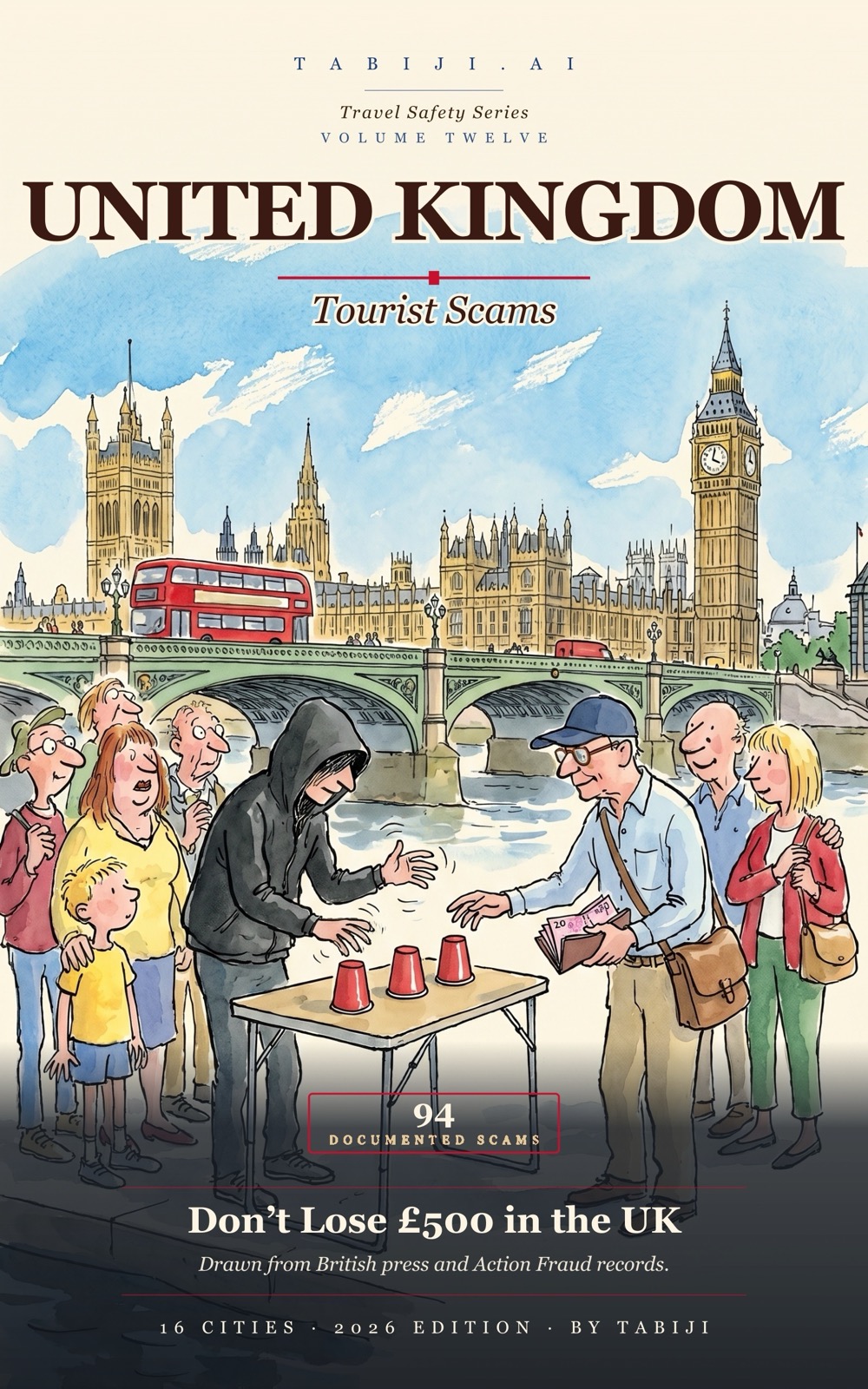
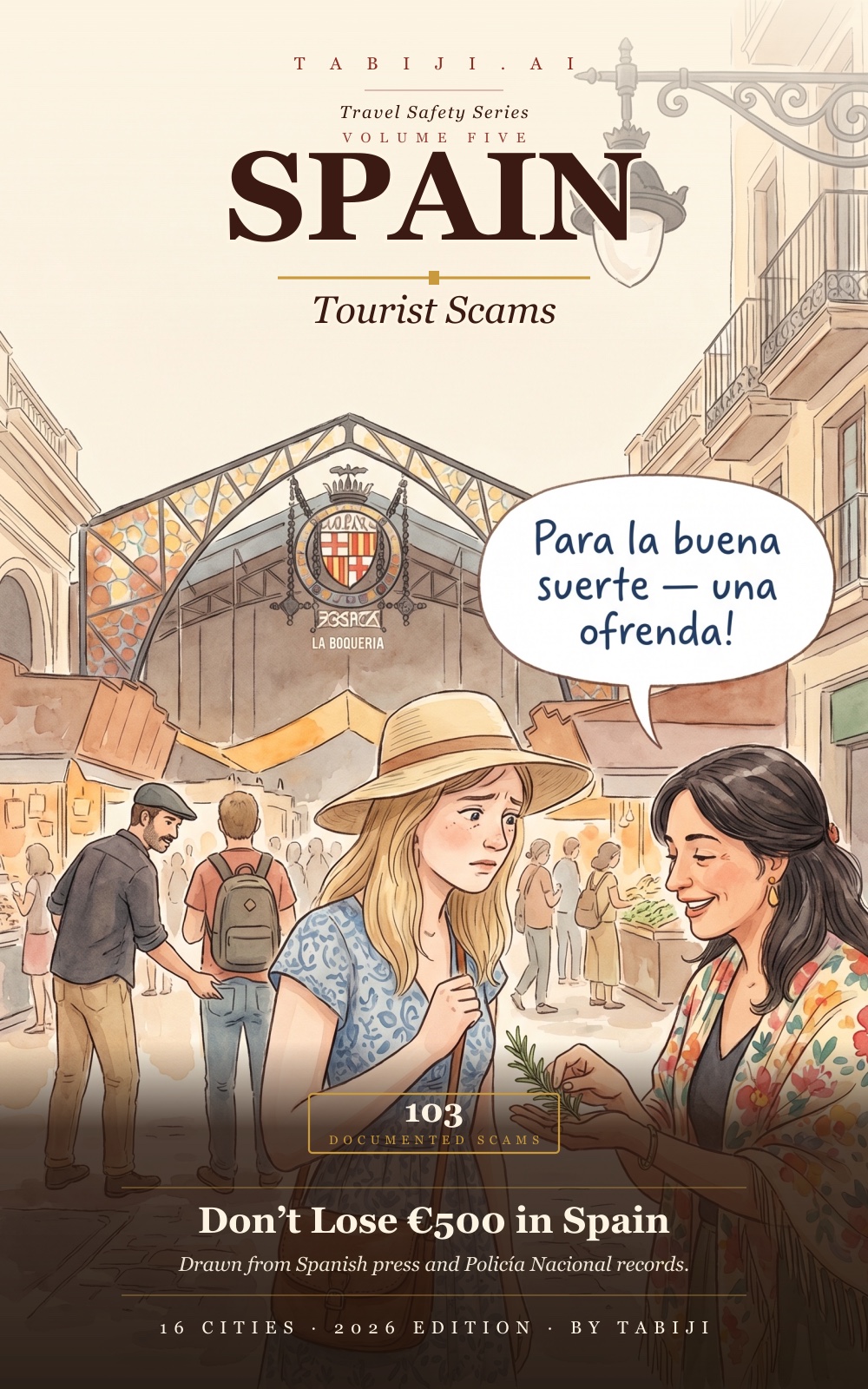
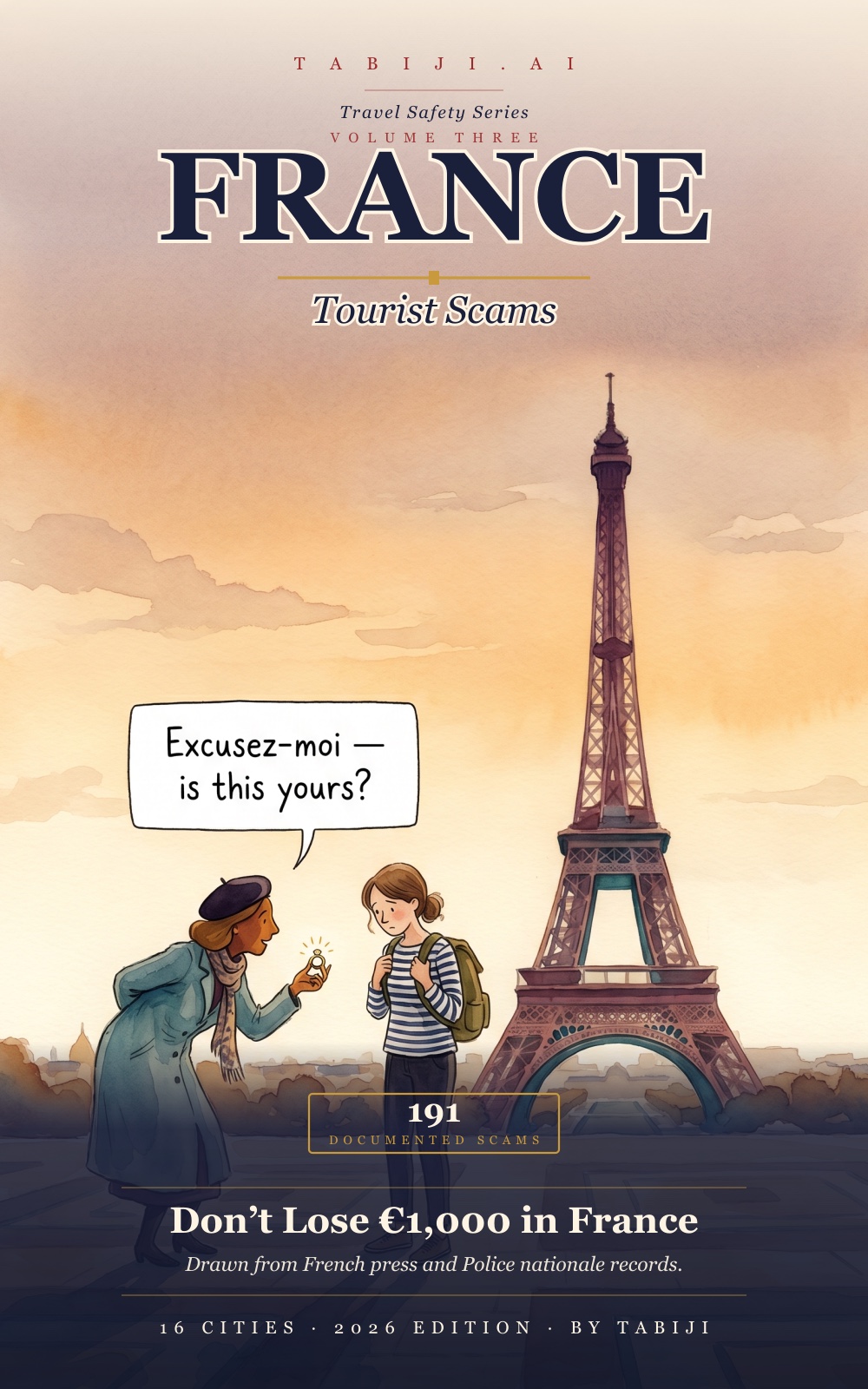
Three-card monte and the shell game, four mechanics in the centuries-old street short-con.
A folding table on Oxford Street with three cards face down. A coin under one of three plastic shells on Las Ramblas. A "winning" crowd of accomplices celebrating loudly on the Champs-Elysees. A lookout with a phone scanning Plaza Mayor for police. Four mechanics across 8 countries, defeated by the same physical reflex: walk past without slowing.


Three-card monte and the shell game run four mechanics across 8 countries: cards (find-the-queen), three-shells (cup-and-ball), crowd-shill lure, and lookout-and-runner crew. The universal defense is one physical reflex: walk past any street game with three objects on a flat surface. The game is unwinnable across centuries of documented play. The defense in depth is recognizing the crowd-shill (5-8 accomplices "winning" to lure new tourists), refusing to bet even small amounts, and keeping hands in pockets near any street game because the surrounding crowd is a working pickpocket team.
"Find the lady, twenty quid, easy money mate, watch closely."
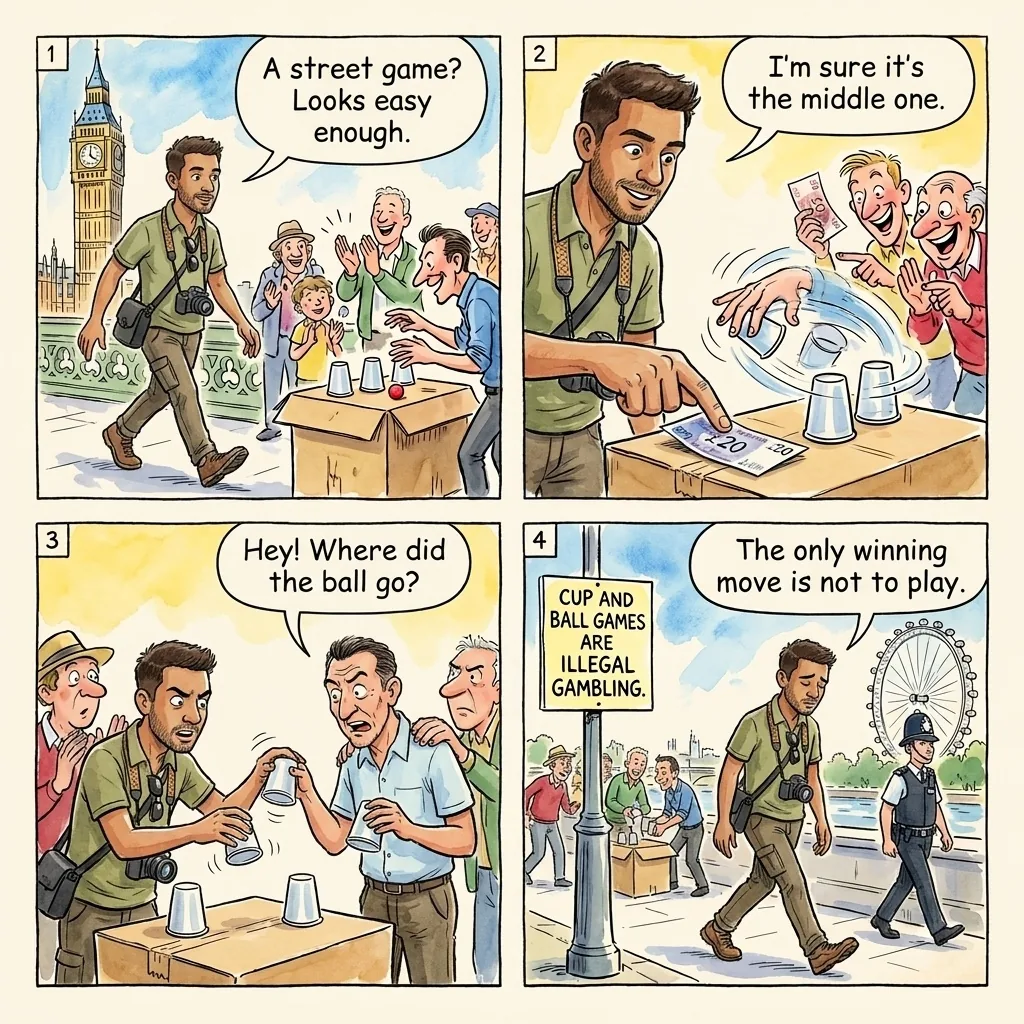
You walk west on Oxford Street near the Bond Street station entrance at 4pm on a Saturday. The crowd is dense; the late-afternoon sun is on your face. You hear shouting and laughing thirty meters ahead and see a small crowd of about eight people gathered around a folding cardboard table set against the wall outside a closed-up shopfront. A man in a black tracksuit is bent over the table, sliding three playing cards face down across the surface in fluid arcs. He looks up, makes eye contact with you, smiles wide.
"Mate, find the lady, twenty quid, easy money. Look, the queen, here. I show you." He flips the middle card; it's the Queen of Hearts. He flips it back, then slides all three cards in three arcs. "Where she now? You point, you win twenty quid."
You watched closely. The queen ended up on the right. A man in the crowd, slightly ahead of you, says: "Right one." The operator turns the right card. It's the Queen. The man wins, gets handed forty quid, slaps the operator's hand, walks off smiling. The crowd cheers a little. You take a step closer; you watched even more closely the second time.
"Now you mate. Twenty quid, find the lady. I show you again, look." He flips the queen, slides the cards. The arcs are slower this time. You can clearly see the queen go to the left. "Where?" You point at the left card. He turns it. Three of clubs. He turns the middle. Queen of Hearts. He shrugs, smiles. "Twenty quid please mate."
What happened: during the third arc, the operator used the Mexican turnover, a sleight-of-hand exchange in which the queen was swapped for a different card during the final placement gesture. The "winner" before you was a crowd shill, one of seven crowd accomplices who alternate fake wins to demonstrate the game is winnable. The Met Police runs sweeps of Oxford Street and Leicester Square three-card-monte tables continuously; the lookout (a man with a phone standing twenty meters away) signals when patrols approach. The setup folds and the crew disperses in five seconds.
You take ninety seconds to think. You hand over the twenty pounds because the operator and several of the "crowd" are now standing close enough that walking away is uncomfortable. You walk on. Within forty meters, you have replayed every detail and realized you were watching a coordinated team perform centuries-old short-con choreography.
That is the canonical cards variant of the three-card-monte family, executed at the most-documented street-short-con location in Europe. The rest of this page is the four-mechanic playbook, the four other cities where it runs in different forms (Barcelona, Paris, Madrid, Rome), and the walk-past reflex that defeats every variant.
Read the full London scam guide →Key Takeaways
The walk-past reflex
Three-card monte depends on you stopping to watch the game. The crowd, the cards, the gestures, the rapid talking: all of it is choreographed to slow you to a stop and then commit you to a bet. The defensive routine is a single trained reflex: walk past without slowing. The play falls apart because the operator and crowd cannot work a moving target.
- Walk past any street game with three objects on a flat surface. Three cards face down, three shells with a hidden ball, three cups with a hidden coin: any of these on a folding table or cardboard box on a tourist-zone sidewalk is the universal cue to walk past without slowing. The game is rigged at the level of basic geometry; no tourist has ever won across centuries of documented play.
- Recognize the crowd-shill lure. If you see a crowd of 5-8 people gathered around a street game with someone repeatedly winning small bets, the crowd is part of the play. The "winners" are accomplices who keep playing to demonstrate the game is winnable. Real crowds at unrigged games disperse after one or two rounds; rigged crowds re-form continuously.
- Do not bet, even small amounts. Operators allow tourists to win 1-2 small bets early to build commitment. Once the tourist commits to a larger bet, the operator's hand-skill ensures the tourist loses. The game cannot be won. Even if you "see" the queen / coin / ball clearly, the operator switches it during the placement gesture.
- Watch your wallet during any game encounter. Three-card-monte crowds are working pickpocket teams. While you watch the cards, an accomplice in the crowd works the back pockets of every spectator. Hands in pockets, wallet in front pocket, daypack zipped, when you see any street game even if you have no intention of playing.
- Move on within 10 seconds if you stopped to watch. The longer you stand watching, the higher the probability of a pickpocket lift or an aggressive bet pitch. Walk on; you have seen the play.
The four mechanics
Different cities and operator crews lean on different presentations within the same family. Here are the four sub-variants documented globally. Each has a recognition tell, a primary geography, and the routine step that defeats it.
1. Cards (Find the Queen / Lady)
Three playing cards (typically two red and one black, or two number and one queen) are placed face down on a folding table or cardboard box. The operator shows the queen, then slides the three cards across the surface in fluid arcs. The tourist bets on which card is the queen. Through the Mexican turnover (a sleight-of-hand exchange) or palming, the queen is never where the tourist points. Most-documented variant in English-speaking and Western European tourist zones.
Defense: walk past. The cards variant is unwinnable across centuries. Most reported in: London Oxford Street, Leicester Square, Westminster Bridge; Paris Champs-Elysees; Madrid Plaza Mayor; Rome Spanish Steps perimeter.
2. Three Shells (Cup-and-Ball)
Three plastic shells (or sometimes upturned cups, walnut shells, or bottle caps) cover a small ball or coin. The operator shows the ball under one shell, slides the shells in fluid arcs, asks the tourist to bet on which shell hides the ball. Through palming or false transfer, the ball is removed from under any shell during the slide; on reveal, the chosen shell is empty. Most-documented variant in Mediterranean and Eastern European tourist zones.
Defense: walk past. Same family of unwinnable game as the cards variant. Most reported in: Barcelona Las Ramblas central walkway and Plaza Catalunya; Athens Plaka and Monastiraki; Lisbon Rossio; Prague Old Town Square; Budapest Vaci Street.
3. Crowd-Shill Lure
The operator works with 5-8 accomplices who pose as random crowd members. They place small bets and "win" loudly, sometimes celebrating with high-fives or cheers. They demonstrate to passing tourists that the game is winnable. They then step back and gesture at the tourist to try. When the tourist commits to a larger bet (typically 50-200 EUR / GBP), the operator's hand-skill ensures the tourist loses. The crowd "wins" again to encourage the tourist to recover the loss.
Defense: recognize the crowd-shill. Real crowds at unrigged games disperse after 1-2 rounds. Most reported in: the same iconic locations as the cards / shells variants, with operator density highest at high-foot-traffic tourist plazas and pedestrian streets.
4. Lookout and Runner Crew
Three-card-monte and shell-game operations on tourist streets in major Western European cities run with a 4-7 person crew: the operator (working the table), 5-8 crowd shills (the lure and continued bets), and a lookout (with a phone or radio, scanning approaching uniformed police or plainclothes patrols). When the lookout signals, the entire setup folds in 4-6 seconds: the operator pockets the cards, the table is collapsed and shoved into a backpack, the crowd disperses in different directions.
Defense: the structural enforcement difficulty makes individual police reports low-yield. Report the location and time to tourist-police lines so patrols can target the operator's next setup. Most reported in: all iconic locations; the structural lookout pattern is universal.
Where it runs
Three-card monte concentrates at high-foot-traffic Western European tourist streets and plazas where the lookout-and-runner geography (large open public space, multiple side streets for dispersal) supports the structural enforcement difficulty. The eight countries below cover the bulk of global tourist exposure.
| Country | Documented variants | Iconic location pattern |
|---|---|---|
| 🇬🇧 United Kingdom | 5 | London Oxford Street and Leicester Square (cards); Westminster Bridge approach; Tower Bridge approach |
| 🇪🇸 Spain | 4 | Barcelona Las Ramblas central walkway and Liceu metro entrance; Madrid Plaza Mayor and Sol; Sevilla Triana Bridge |
| 🇫🇷 France | 3 | Paris Champs-Elysees, Pont des Arts, Sacre-Coeur stairs perimeter; Nice Promenade des Anglais |
| 🇮🇹 Italy | 2 | Rome Spanish Steps perimeter, Trevi area; Milan Duomo perimeter; Naples Spaccanapoli |
| 🇬🇷 Greece | 2 | Athens Plaka and Monastiraki; Piraeus port approach |
| 🇵🇹 Portugal | 1 | Lisbon Rossio and Praca do Comercio; Porto Ribeira |
| 🇨🇿 Czech Republic | 1 | Prague Old Town Square; Wenceslas Square |
| 🇭🇺 Hungary | 2 | Budapest Vaci Street and Castle District approach |
Bar width is data-bound at 25 pixels per documented variant. UK alone accounts for 25% of global exposure, driven by the Oxford Street operator concentration. Historical density was much higher in NYC Times Square (1980s) but NYPD enforcement has reduced volume.
Four more cities, four more street-short-con presentations
The Oxford Street cards scene above showed the canonical find-the-queen variant. Here are four more cities where different sub-variants dominate. Each links to the full city scam guide.
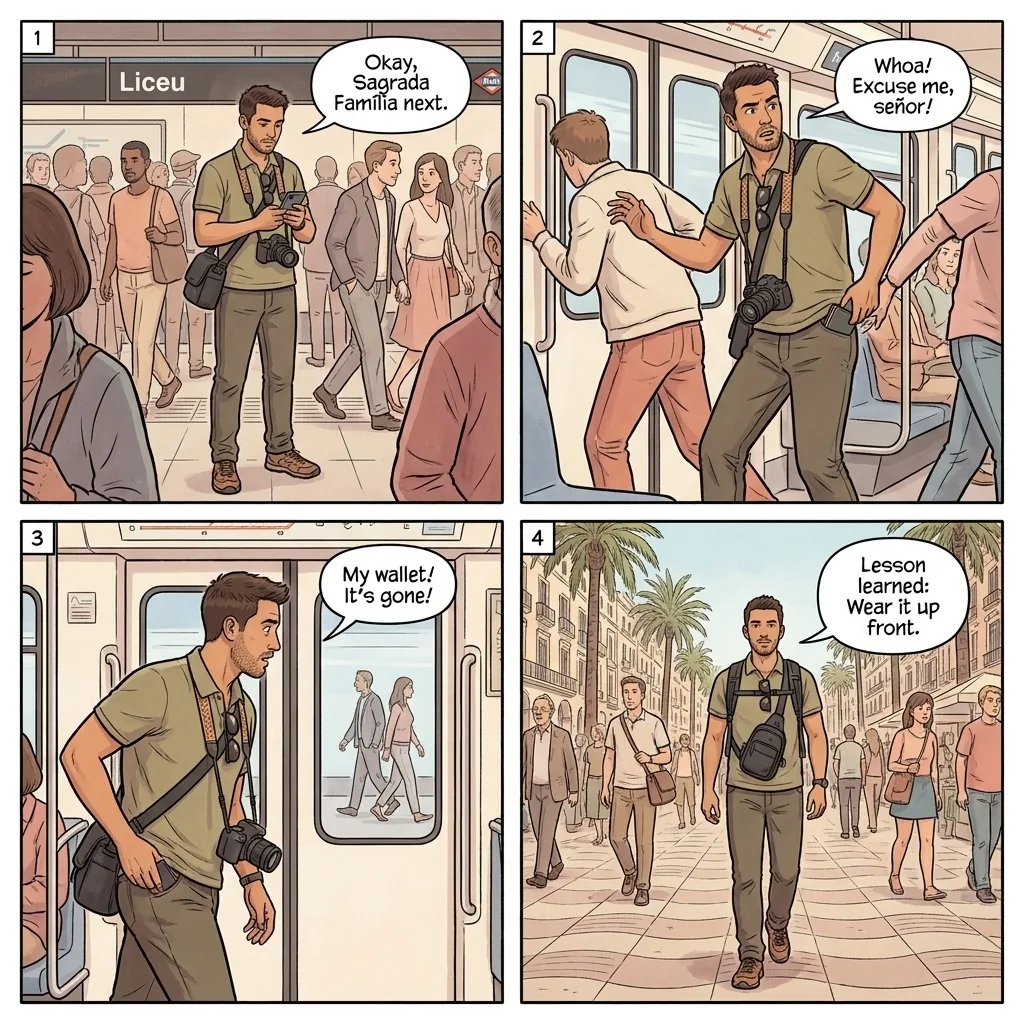
You walk south on Las Ramblas from Placa de Catalunya at 11am on a Tuesday. Twenty meters past the Liceu metro entrance, you see a folding table on the central walkway with three plastic shells in a row. An operator slides the shells in tight arcs while a crowd of about ten people watches. A man at the front of the crowd places a 50-euro bet, points at the middle shell. The operator lifts the middle shell; the small ball is there. The man takes 100 euros, smiles, walks off, returns thirty seconds later from the same direction and watches again. The Mossos d'Esquadra Tourist Help line at +34 932 903 000 (24/7, English-speaking) accepts complaints about Las Ramblas street games; the Mossos run intermittent enforcement during peak summer months. The Comune of Barcelona issues annual press releases warning of the variant, with the same crowd-shill lure structure documented continuously since the 1990s. Defense: walk past Las Ramblas folding tables without slowing. The shells variant runs continuously through tourist season at three or four locations on the central walkway; do not stop to watch even out of curiosity. Pickpocket accomplices in the crowd work the back pockets of distracted spectators.
Read the full Barcelona scam guide →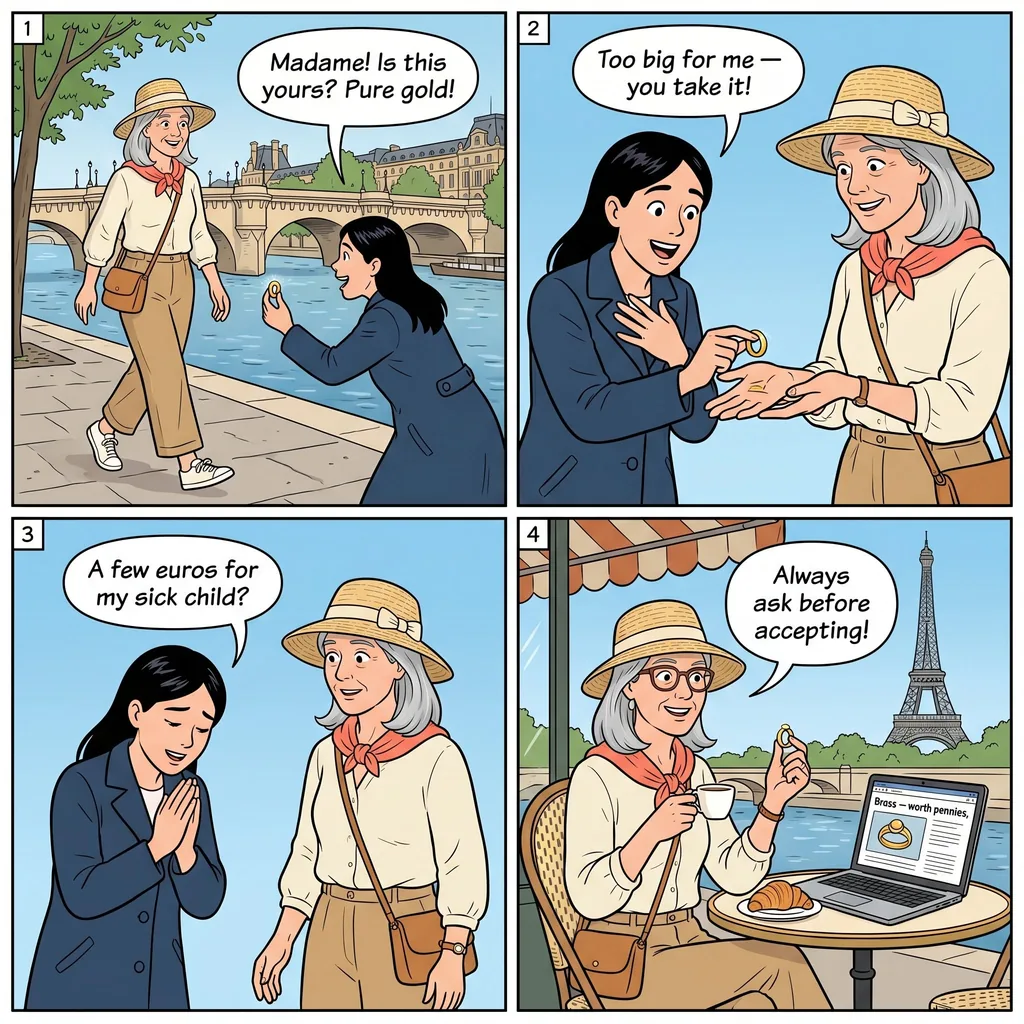
You walk west on the Champs-Elysees from Place de la Concorde at 5pm on a Friday. Halfway between rond-point des Champs-Elysees and the Arc de Triomphe, you see a small crowd of eight people around a folding cardboard box pressed against the wall outside a closed shopfront. An operator is sliding three playing cards. A crowd member places a 100-euro bet, "wins" 200 euros, hands a 50 to a different crowd member walking past, walks off. The Prefecture de Police 17 takes complaints; the SARIJ commissariats including 10 boulevard Strasbourg-Saint-Denis accept walk-in reports. Le Parisien publishes monthly arrest counts for Champs-Elysees and Pont-des-Arts three-card-monte operators; the operator network is concentrated in the 8th and 1st arrondissements where tourist density is highest. Defense: walk past Champs-Elysees folding boxes. The variant runs continuously between rond-point and the Arc, with operator density highest from 4pm to 8pm on weekends.
Read the full Paris scam guide →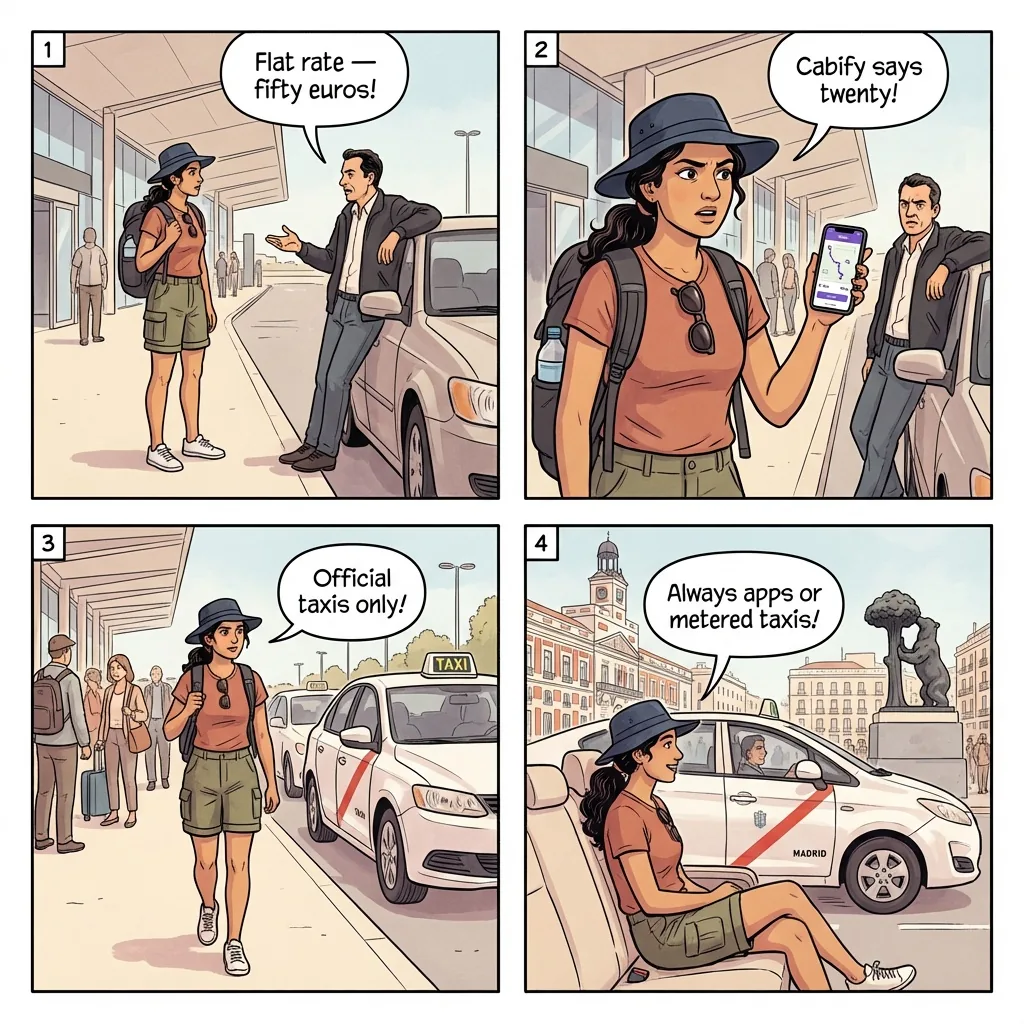
You walk into Plaza Mayor from Calle del Arenal at noon on a Sunday. In the southwest corner of the plaza, a crowd of about twelve people stands around a folding cardboard box where an operator slides three cards. As you watch from twenty meters away, a man with a phone standing at the entrance to Calle Toledo signals to the operator with a slight head-tilt. The operator immediately scoops up the cards, kicks the cardboard box over, the crowd disperses in five different directions. Three Policia Municipal officers walk into the plaza thirty seconds later; the table and crew are gone. The variant is structurally enforcement-resistant: the SATE (Sala de Atencion al Turista Extranjero) at Calle Leganitos 19 publishes annual incident summaries with three-card-monte in the top five but with conviction rates below 5%. Defense: in Plaza Mayor, walk through the central area without stopping at the southwest corner. The variant runs there continuously during peak hours; the lookout-and-runner geography (multiple plaza exits, dense pedestrian flow) supports the structural problem.
Read the full Madrid scam guide →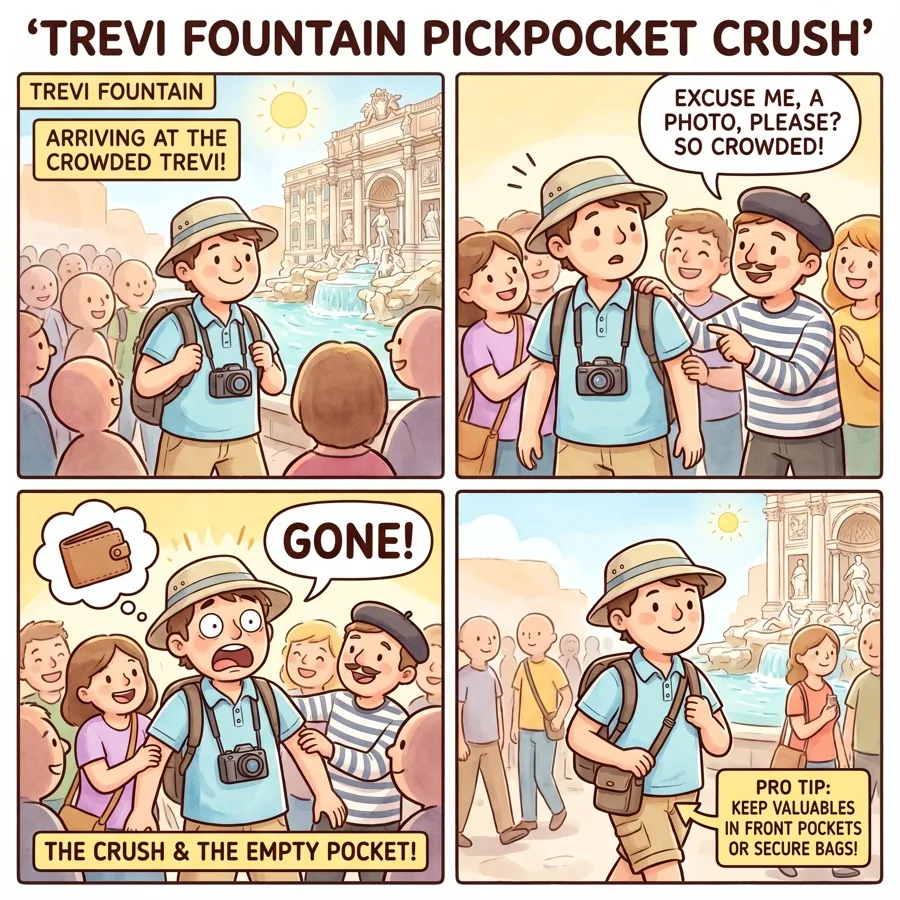
You walk to the Spanish Steps from Piazza di Spagna at 7pm on a Saturday. Near the base of the steps, a small crowd is gathered around a folding box. An operator slides three cards. While you stop to watch (just out of curiosity), an accomplice standing behind your right shoulder works the back pocket of your jacket. He lifts your wallet in three seconds while you focus on the cards. The Carabinieri 112 takes English-language reports; the Polizia di Stato 113 runs intermittent enforcement at the Spanish Steps and Trevi areas. La Repubblica publishes monthly arrest counts for Spanish Steps area operators; the volume of complaints has remained high enough that the Comune of Rome has installed additional CCTV around Spanish Steps perimeter (the cards setup folds when CCTV positions become visible). Defense: hands in pockets at any Spanish Steps or Trevi street game. The pickpocket overlap is the bigger risk than the bet; refer to the Distraction Theft and Pickpocketing Tactics atlas entries for the broader defense pattern.
Read the full Rome scam guide →Red flags
If two or more of these signals fire when you are walking through a tourist street, route around the encounter. The compounding rule: a single signal might be a coincidence; two signals are a script.
- You see three cards or three shells or three cups on a folding box / table
- The setup is on a sidewalk pressed against a wall or shopfront
- A crowd of 5-12 people is gathered, with someone repeatedly winning
- The "winner" walks off then returns from the same direction within 30 seconds
- An operator slides cards or shells in fluid arcs while talking rapidly
- Someone in the crowd is standing 20+ meters away with a phone, watching
- The operator makes direct eye contact and gestures you closer
- A nearby man asks if you want to "watch the lady" or "find the ball"
- You are at Oxford Street, Las Ramblas, Champs-Elysees, Plaza Mayor, or similar tourist plaza
- Multiple people in the small crowd are wearing dark/tracksuit clothing and visibly fidgeting
The phrases that shut it down
Refusing the game does not require a verbal refusal. The most effective response is to walk past without making eye contact with the operator or any of the crowd. If pressed verbally, the phrase is the same idea in every language: not interested.
If you got hit
You bet 50 GBP / EUR on the queen and lost it. Three-card-monte cash losses are almost never recoverable. The variant is structurally enforcement-resistant: operator and crew disperse in 5-7 seconds when police approach, the cash is paid on the spot with no transaction record, and conviction rates across major Western European tourist zones are below 5%. The actionable response is preventive for the next encounter, not recovery for this one.
If you witness or experienced a three-card-monte loss, the most valuable action is to report the location and time to the local tourist-police line so the patrol can target the operator's next setup. Photographs of the table mid-play (taken from 30+ meters away) are accepted by police as supporting evidence; do not approach the table to photograph closer.
If you also lost a wallet or phone to a pickpocket accomplice during the encounter, the standard recovery sequence applies: card freezes within 5 minutes, phone remote-wipe within 30 minutes, police report within 1 hour for travel-insurance claims. Most pickpocket-during-monte losses involve coordinated teams; the phone and wallet are sold to known fences within hours.
- London: Metropolitan Police 999 (emergency); 101 (non-emergency); West End Central Police Station, Saville Row, for Oxford Street incidents.
- Barcelona: Mossos d'Esquadra Tourist Help, +34 932 903 000 (24/7, English).
- Madrid: SATE (Sala de Atencion al Turista Extranjero), Calle Leganitos 19, +34 91 548 8537.
- Paris: Prefecture de Police 17 (24/7); SARIJ commissariats including 10 boulevard Strasbourg-Saint-Denis.
- Rome: Carabinieri 112; Polizia di Stato 113; Spanish Steps perimeter Polizia office.
- Athens: Tourist Police 1571 (24/7, English-speaking dispatch).
- Lisbon: PSP Tourist Help, Praca dos Restauradores, +351 21 342 1623.
- Prague: Mestska Policie Praha; Tourist Service points in Old Town Square.
The cash loss is rarely worth pursuing through official channels; the variant is structurally enforcement-resistant. The actionable response is preventive: walk past every street game, hands in pockets near every crowd, refuse to bet even small amounts. Tourist-police lines accept location-and-time reports that help patrol routing across crews; individual recovery rates are near zero.
Related atlas entries
Sister entries in the Scam Atlas. Three-card monte sits in the Distraction & Confidence section alongside named distractions and confidence games; the pickpocket overlap connects it to the Pickpocketing Tactics and Distraction Theft entries.
Sources
- Metropolitan Police London, Oxford Street and Leicester Square three-card-monte enforcement bulletins (UK, ongoing).
- Mossos d'Esquadra Catalonia, Las Ramblas shell-game and pickpocket-overlap quarterly reports (Barcelona, ongoing).
- SATE Madrid (Sala de Atencion al Turista Extranjero), Plaza Mayor and Sol incident summaries (Spain, ongoing).
- Prefecture de Police de Paris, Champs-Elysees and Pont des Arts patrol logs (Paris, 2018-2025).
- Le Parisien and Le Figaro, Paris three-card-monte arrest reporting (France, 2020-2025).
- El Pais and La Vanguardia, Las Ramblas street-game investigative coverage (Spain, 2018-2025).
- The Guardian and Evening Standard, Oxford Street three-card-monte coverage (UK, ongoing).
- Mathematical Gazette and Cambridge probability research on the Mexican turnover and palming techniques (academic, multi-decade).
- r/travel, r/london, r/Barcelona, r/madrid, r/Paris continuing thread monitoring 2018-2026.
Get the full street-short-con playbook for your destination.
Each Travel Safety atlas covers every documented street-game and confidence scam in one country, plus the country's full scam catalog: pickpocket, taxi, ATM, restaurant, fake authority. Buy once, lifetime updates as scams evolve. $4.99 on Kindle.